
The complete guide
How to Choose and Fit an Under Cabinet Wine Glass Rack
The problem with storing wine glasses
Wine glasses are awkward. They are tall, they are fragile, and the part that makes them useful, the stem, is also the part that snaps. Stand them upright in a cupboard and they eat the full height of a shelf while using almost none of its depth. Stand them upside down and the rims take the weight and pick up dust from the shelf. Either way, you end up reaching past them for the mugs.
Then there is the clinking. Glasses crowded together knock each other every time you open the door. Over a few years that is how most sets lose a glass or two, not through a dramatic drop but through small, repeated contact.
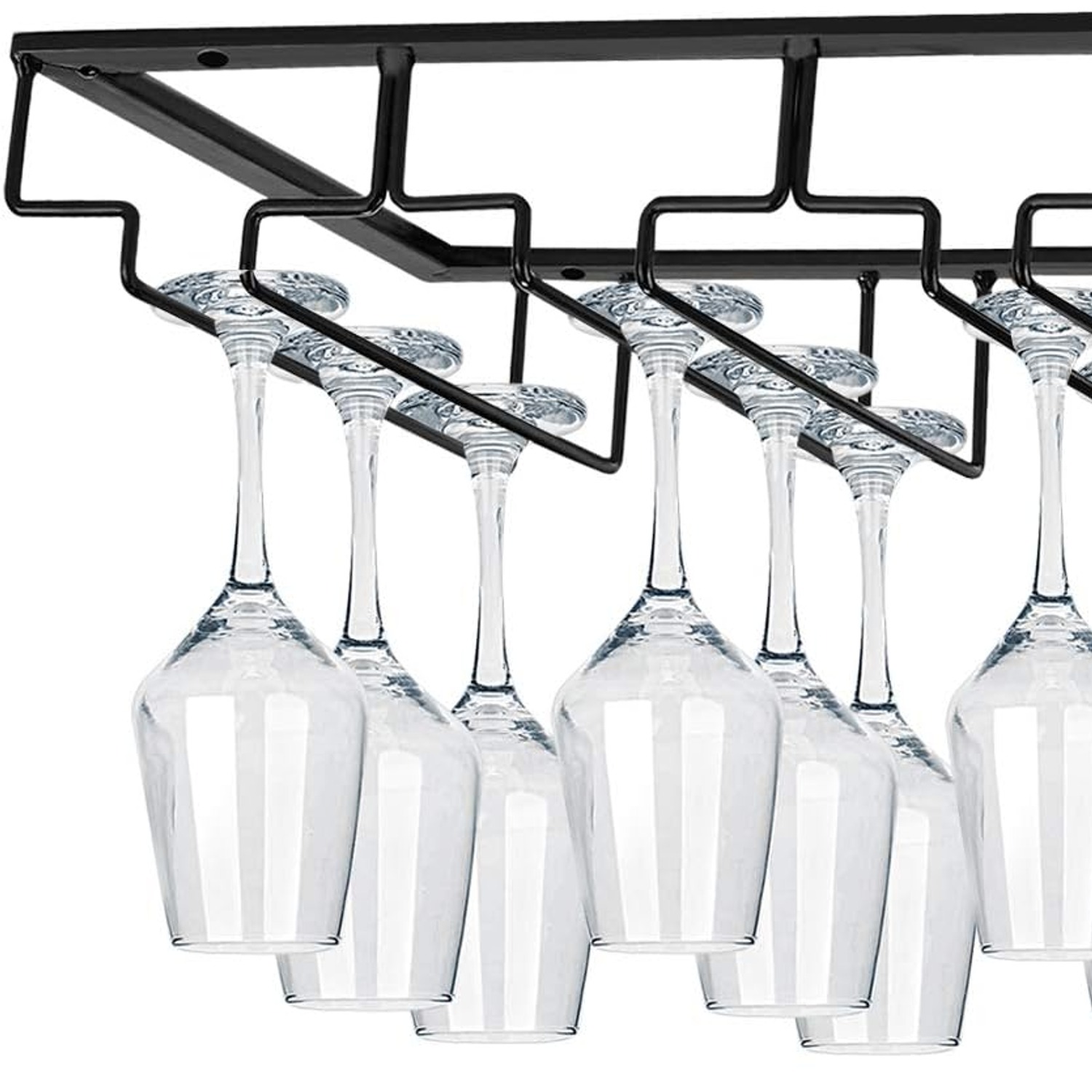
An under cabinet rack solves all of that in one move. It takes the glasses out of the cupboard entirely and hangs them in the gap beneath it, a strip of space that is otherwise doing nothing at all. The glasses hang free, nothing stacks on top of them, and you can see your whole set at a glance.
How a hanging stemware rack works
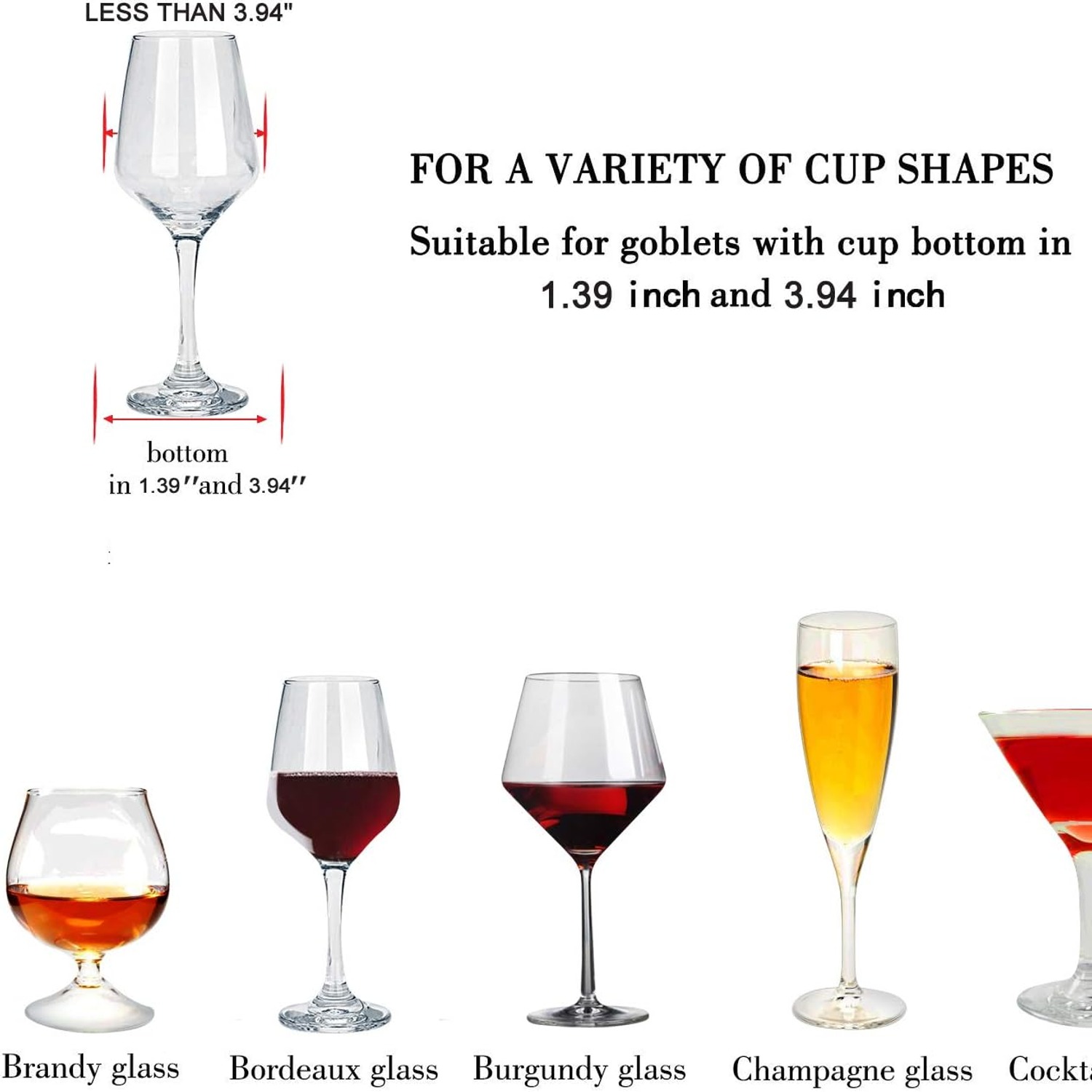
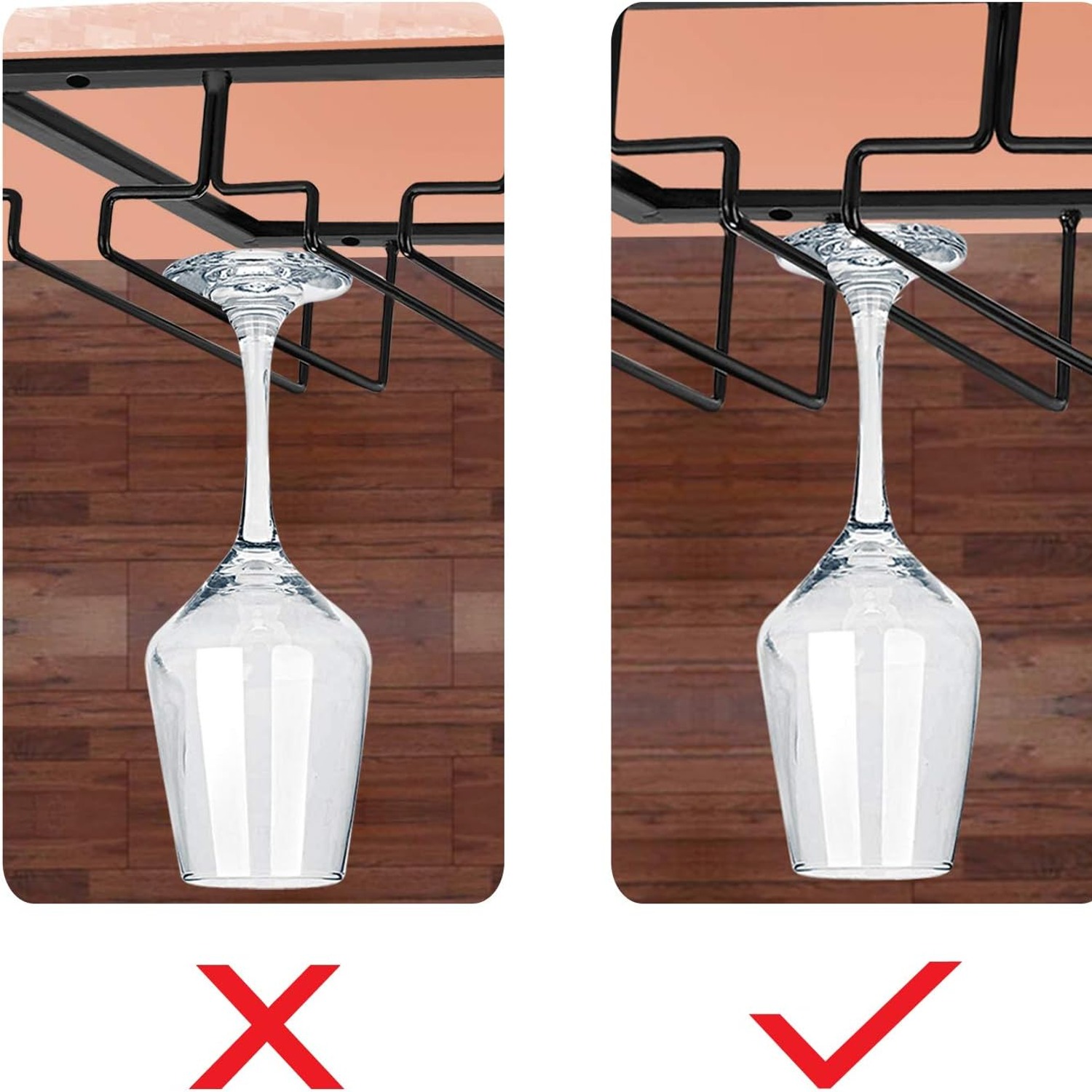
The mechanism could not be simpler. The rack is a frame with rails running across it, in this case four rows. Each pair of rails leaves a channel narrower than the base of a wine glass but wider than its stem. You slide the stem into the channel from the open end, the foot catches underneath the rails, and the glass hangs there bowl down.
Nothing grips the glass. There are no clips to break and no springs to lose tension. The glass is held by its own shape and its own weight, which is why bars and restaurants have used this method for decades.
Hanging bowl-down has a side benefit people often overlook. Dust settles on the underside of the foot instead of the inside of the bowl, so a glass pulled down after a month is in far better shape than one taken off an open shelf. Any water left after washing drains out and the inside air dries.
Who this rack suits
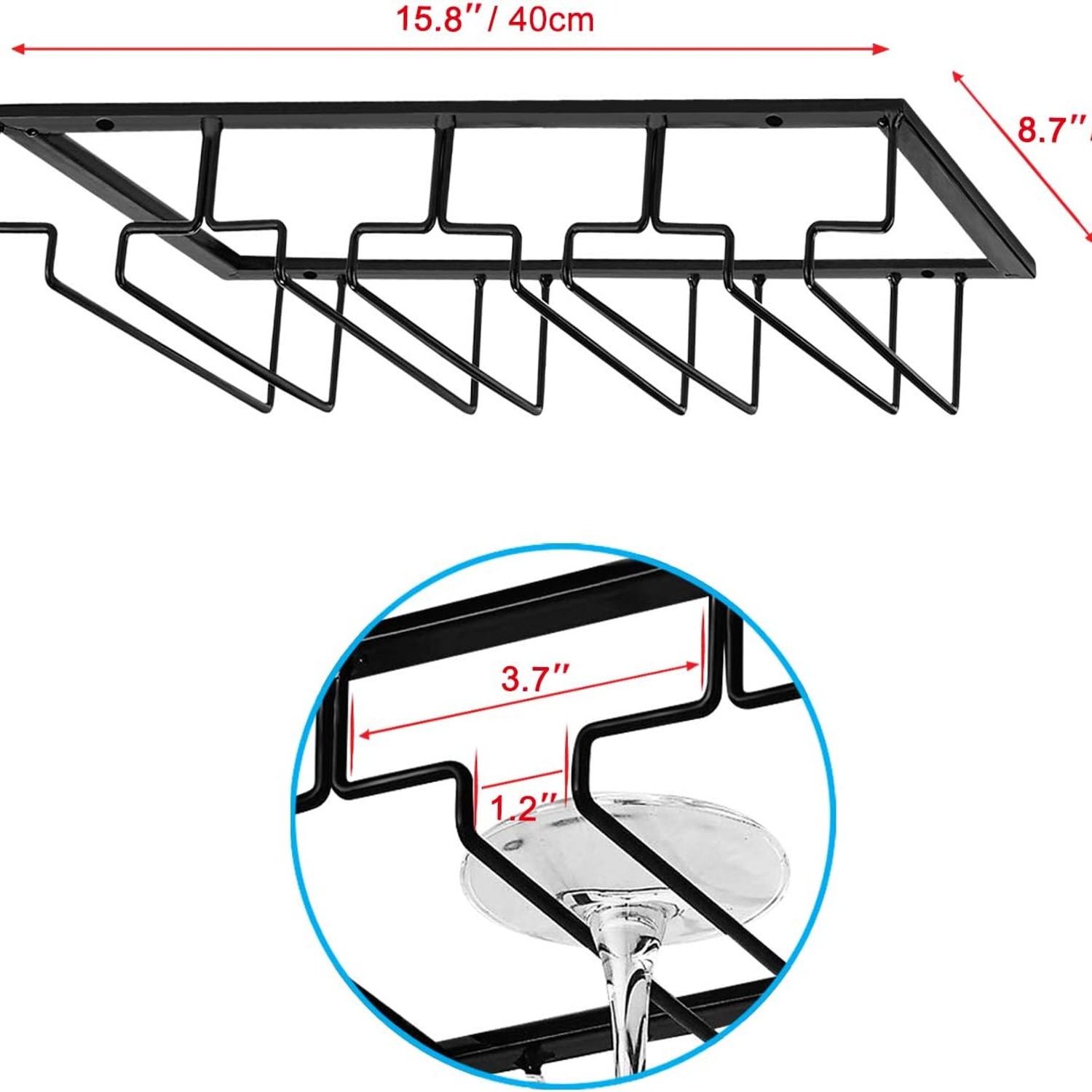
This is a compact unit at 22.1 cm wide, 6 cm deep and 6 cm high. It is not a full-wall statement piece. It is a neat strip that tucks into a small run of cabinet underside, which makes it a good fit for a few situations in particular.
Small kitchens benefit most. If your cupboards are already full and you are tired of shuffling plates to reach the wine glasses, this frees up real shelf space without you buying any new furniture. People hunting for the best space saving glassware rack usually land on something like this.
Home bars are the other natural home. Under a bar shelf, the rack puts glasses at eye level and arm's reach, which is how you want things set up when you are pouring for other people. The best bar cart stemware rack is simply the one that keeps glasses off the surface you need for bottles and mixing.
It also works in dining rooms, sideboards and butler's pantries. Anywhere with an overhang and a reason to keep stemware handy is a candidate.
Measuring before you buy
Two measurements matter, and both take thirty seconds.
First, the width of the mounting surface. You need at least 22.1 cm of flat cabinet underside, and ideally a little more so the screws are not right at the edge of the board. If your run is longer, you can fit two racks side by side and double your capacity.
Second, the hanging clearance. Measure from the underside of the cabinet down to whatever is below, usually the countertop. Then measure your tallest glass from foot to rim. You need the glass height plus a few centimetres of lift so you can slide it out without catching the rim on the counter. Burgundy glasses and tall flutes are the ones that catch people out.
While you have the tape out, measure the foot diameter of a typical glass. That tells you roughly how many will sit comfortably across each row and whether your widest glasses will slot in at all. The best upside down glass holder is the one matched to the stemware you actually own, not to some generic average.
Fitting it in your kitchen
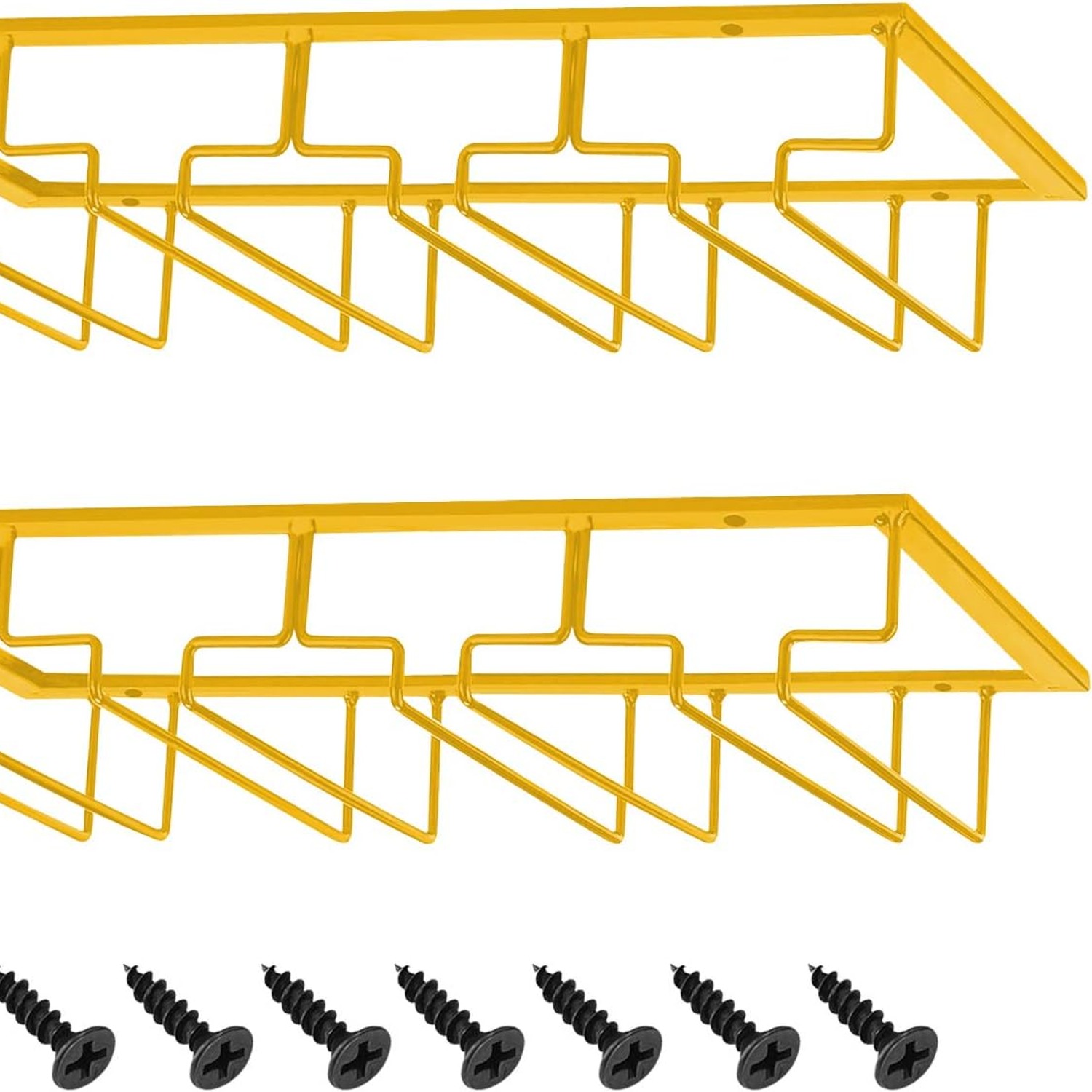
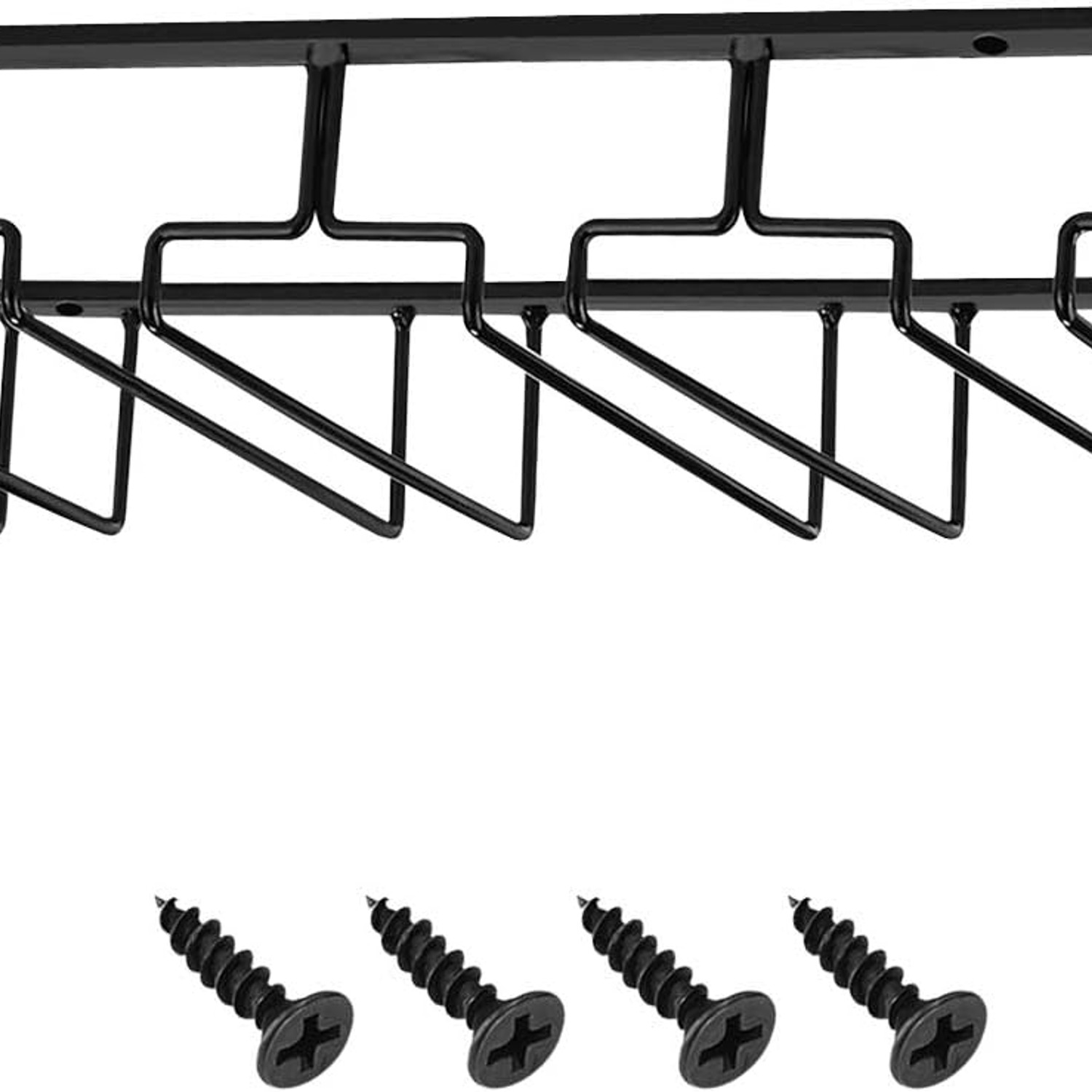
The rack comes fully made, so there is no flat-pack stage. Screws are included. You need a screwdriver and something to mark with.
Hold the rack against the cabinet underside where you want it and mark the screw positions with a pencil. Pull the rack away and start each hole with a bradawl or a small drill bit. Starting the holes stops the screw from wandering and reduces the chance of splitting the board. Then offer the rack back up and drive the screws home, firm but not forced.
One thing worth checking before you commit: the screw length against the thickness of your cabinet base. Cabinet bottoms vary a lot, and a screw that is too long will pop through into the cupboard above. If your board is thin, a shorter screw of the same gauge costs very little at a hardware shop.
Position matters too. Mount the rack toward the front edge of the cabinet and the glasses will be easy to reach but may be in the way when you work at the counter. Mount it further back and they sit out of the traffic but need a longer reach. Most people settle somewhere in the middle, slightly forward of centre.
Living with it day to day
Load it gently. Slide each glass in rather than dragging the foot across the rails, and lift slightly as you pull a glass out. That habit protects both the stem and the finish, and it becomes automatic after a week.
Spread the load across all four rows rather than filling one and leaving the rest empty. Even spacing looks better and keeps glasses from touching.
Cleaning is straightforward. A damp cloth and a dry-off handles the rails, and a mild soap solution deals with any grease if the rack is anywhere near a cooktop. Skip scouring pads and strong solvents, since those are what dull a powder coated surface over time. The white finish shows kitchen grime a little sooner than a dark one, but it also wipes back to clean very easily.
Every few months, give the screws a check. Racks that get used daily can work a fraction loose, and a quarter turn with the screwdriver puts it right.
Keep it indoors. The product is specified for indoor use, and constant damp or salt air is hard on any coated finish.
Pairing it with the rest of your storage
A single rack handles a core set of wine glasses. If you also own flutes, coupes, cocktail glasses and a few odds and ends, think about how you want to split them. One approach is to hang the glasses you use weekly and keep the occasional ones boxed. Another is to run two racks and give each glass type its own territory.
If you have a drinks trolley, a rack under its upper shelf turns the whole thing into a working bar. People searching for the best home bar storage idea often find the answer is not more furniture, just better use of the space under what they already own.
The short version
This is a small, honest piece of kitchen hardware. Four rows, 22.1 cm wide, white powder coated, screws included, nothing to assemble. It mounts under a cabinet or shelf and hangs your wine glasses out of harm's way.
Measure your cabinet width and your hanging clearance before you order. Check the screw length against your board thickness before you fit. Load the glasses gently and wipe the rails now and then.
Do those four things and you get back a shelf, stop chipping rims, and have your stemware ready whenever someone opens a bottle.