
The complete guide
How to Choose a Countertop Wine Rack That Actually Fits Your Kitchen
The problem with bottles on the counter
Wine has a habit of colonising a kitchen. One bottle appears next to the kettle, another gets left on the dining table, a third goes flat in a cupboard because nobody could see it. Within a month you have four bottles in four places and no idea which one you opened.
The irritating part is that none of this is a storage problem in the real sense. You do not need a cellar. You need somewhere obvious to put four bottles so they stop drifting around the house.
That is the job a countertop wine rack does. It is a small piece of furniture with one task, and it does it well enough that you stop thinking about it after the first week.
How a cradle rack works
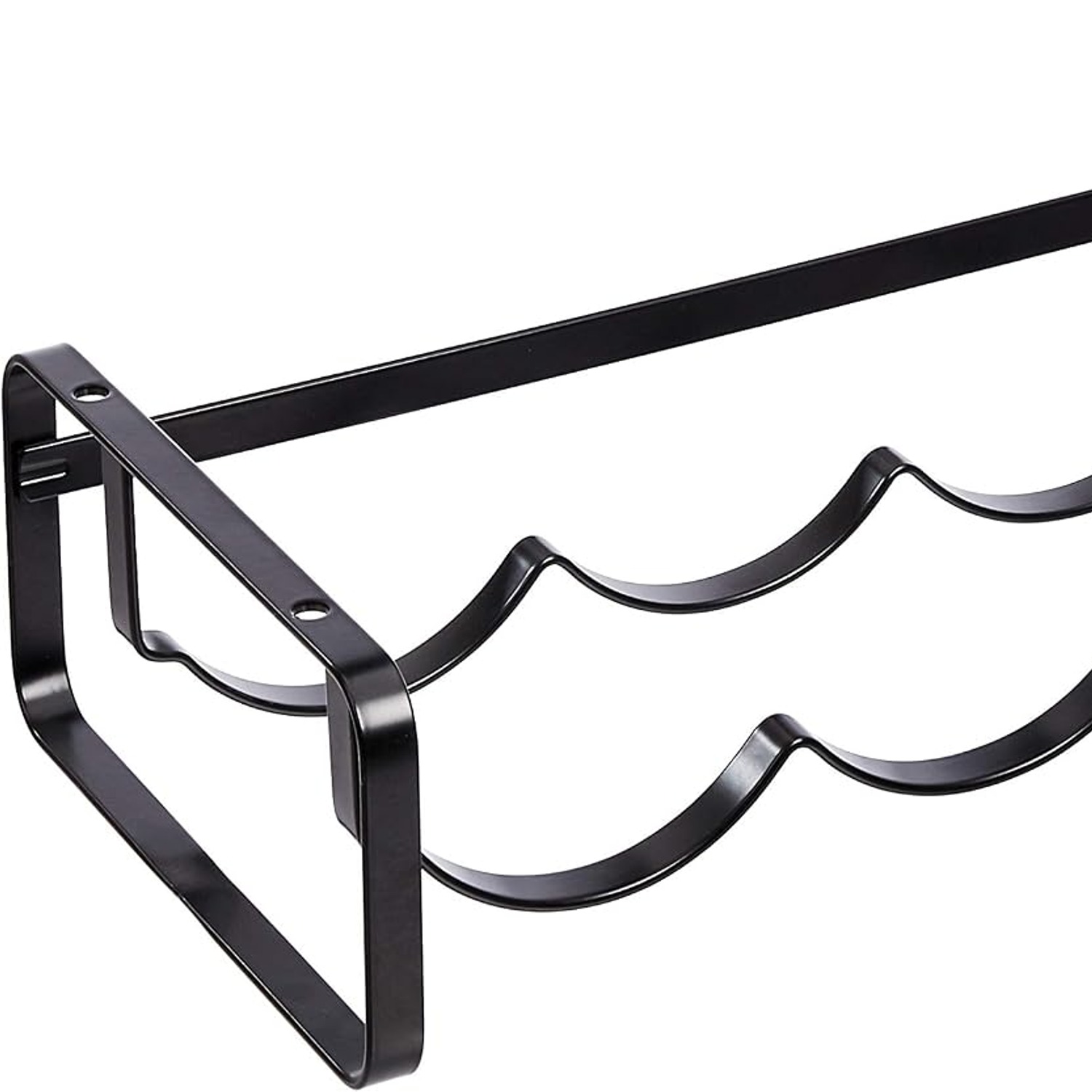
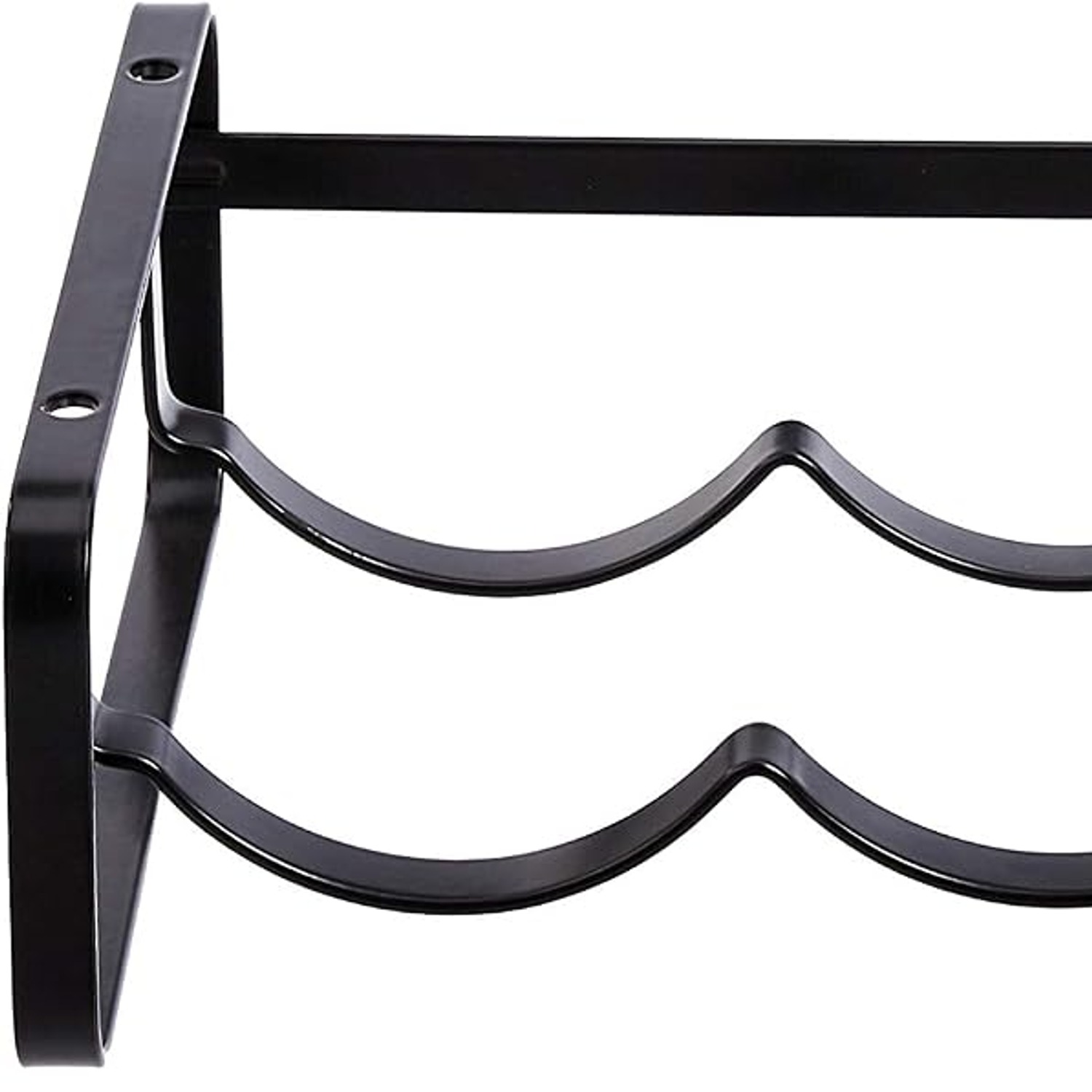
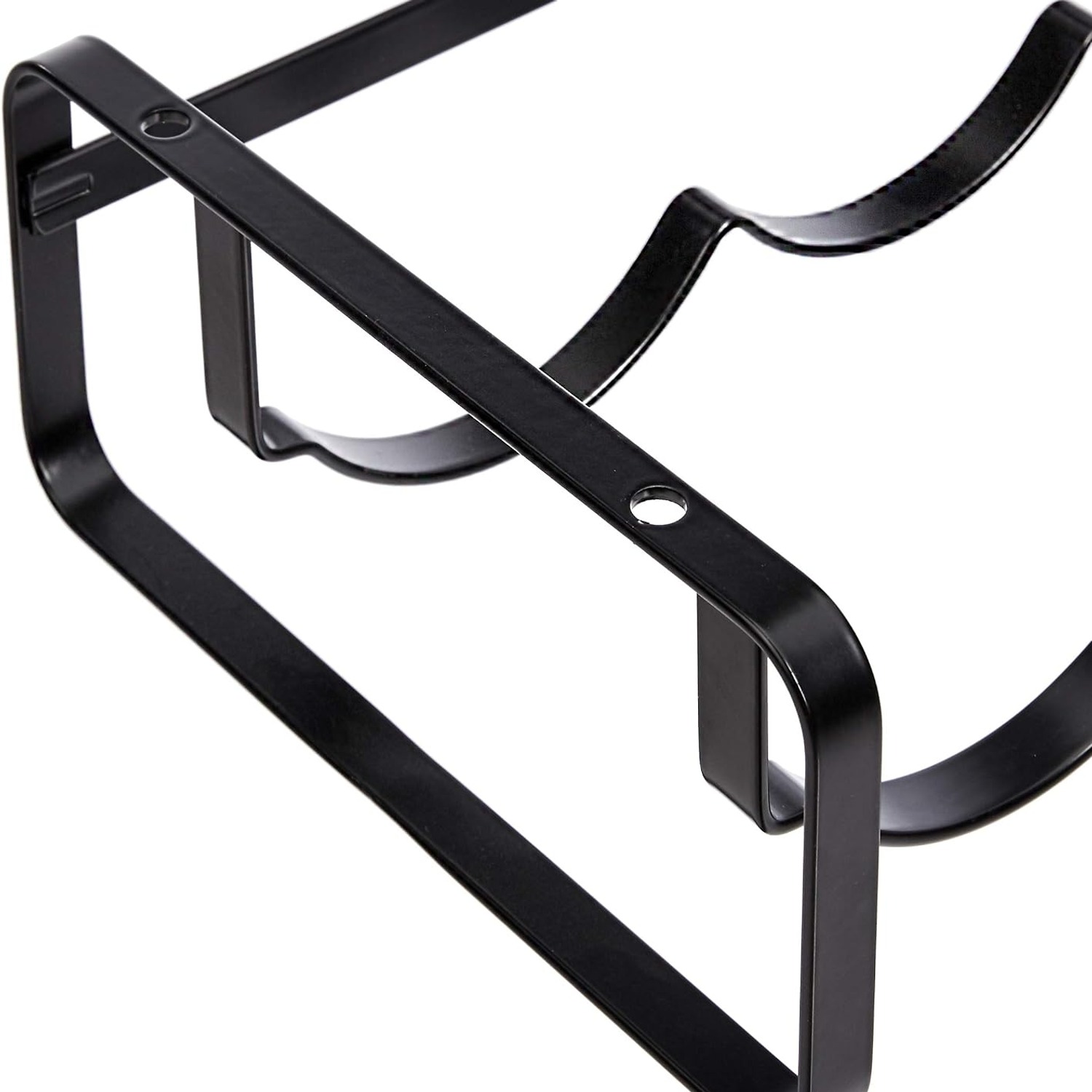
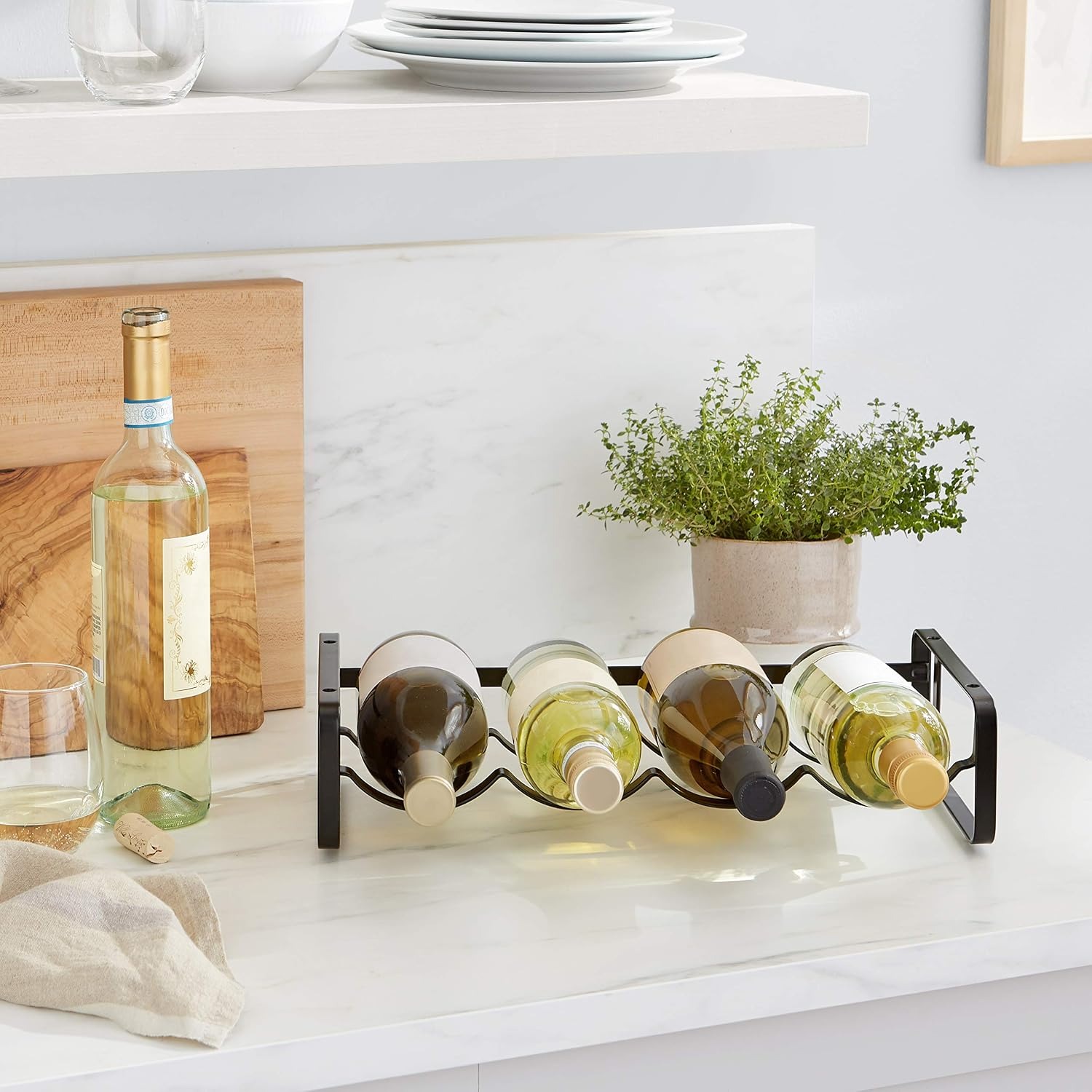
Not all small racks hold bottles the same way. Some use bars or wires that bottles rest across. Others, like this one, use shaped recesses that each bottle drops into.
The recess matters more than it looks. A wine bottle is a cylinder, and cylinders roll. On a polished stone counter, a nudge from a drawer or a slammed cupboard door is enough to start one moving. The dip in the metal stops that before it begins, which is why recessed designs tend to be the best metal wine rack option for open counters rather than enclosed shelves.
Lying flat also does something useful for the wine itself. If the bottle has a cork, contact with the liquid keeps the cork swollen and sealed. A dry cork shrinks, lets air in, and the wine goes tired faster than it should. For screw caps it matters less, but horizontal storage still uses space better, so there is no reason to do it differently.
Why stacking beats buying bigger
The usual mistake with small wine storage is buying one large rack for a capacity you think you will need eventually. Then it sits half empty for a year, taking up counter space you want back.
Stacking flips that. You buy four bottles of capacity now. When four stops being enough, you add a second rack on top, then a third if you get serious. Each tier adds four bottles and zero extra counter width, which is the whole appeal of a modular design.
Three tiers is the limit here, and that is sensible. Twelve full bottles is a reasonable weight to have sitting on one spot, and anything taller starts to feel top-heavy in a busy kitchen. If you need more than twelve, you are into floor-standing territory and should shop accordingly.
Measure before you buy
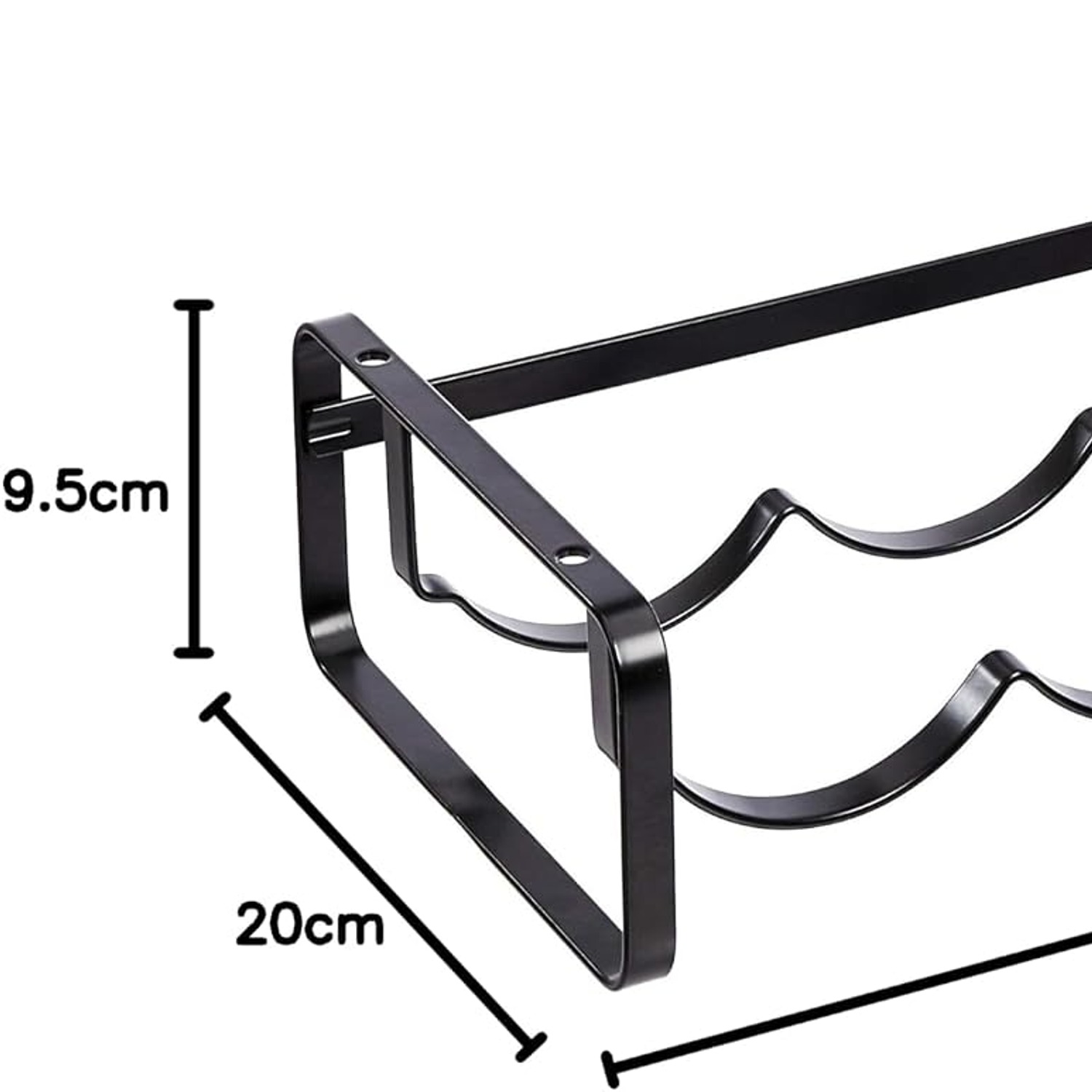
This rack is 40 cm wide, 9.5 cm deep and 20 cm high. Those numbers decide whether it works in your kitchen, so spend thirty seconds with a tape measure.
Depth is the one people forget. A standard kitchen counter is around 60 cm deep, and most of that is working space. At under 10 cm, this rack runs along the back edge and leaves you plenty of room to chop, knead and stack plates. Deeper racks eat into that and quietly make the counter less useful.
Height matters if you are putting it under an overhead cupboard. Check the gap between counter and cupboard. You need 20 cm clear for one tier, and you need to multiply if you plan to stack. Many kitchens have 40 to 45 cm of clearance, which comfortably takes two tiers but not three.
Width is the easiest. 40 cm is roughly the length of a chopping board, so if you can picture a board sitting there without getting in the way, the rack will fit.
Who this suits
Apartment kitchens are the obvious case. Counter space is tight, there is no cellar, and a floor rack would block a walkway. A compact unit that holds four and grows to twelve is about right for that life, which is why this shape shows up so often on lists of the best wine rack for apartments.
It also suits people who entertain in short bursts. Four bottles covers a dinner party, and the rack gives you somewhere to line them up in the hour beforehand instead of balancing them next to the sink.
Home bars and sideboards are a third fit. At 635 g empty, the rack is easy to move while you rearrange, and the shallow depth means it does not hang off the back of a narrow cabinet.
Where it suits less well is long-term ageing. A kitchen counter gets warm, bright and loud with temperature swings, none of which are kind to wine over years. For bottles you are keeping for a decade, use a dark cupboard or a proper wine fridge. For bottles you will drink in the next few months, a counter rack is fine.
Choosing between materials
Wine racks come in timber, wire, plastic and steel, and each has a trade-off.
Timber looks warm but takes up more room for the same capacity, because the structure has to be thicker. It also reacts to humidity over time.
Thin wire is cheap and light, but it can flex under four full bottles, and flex is how racks end up lopsided.
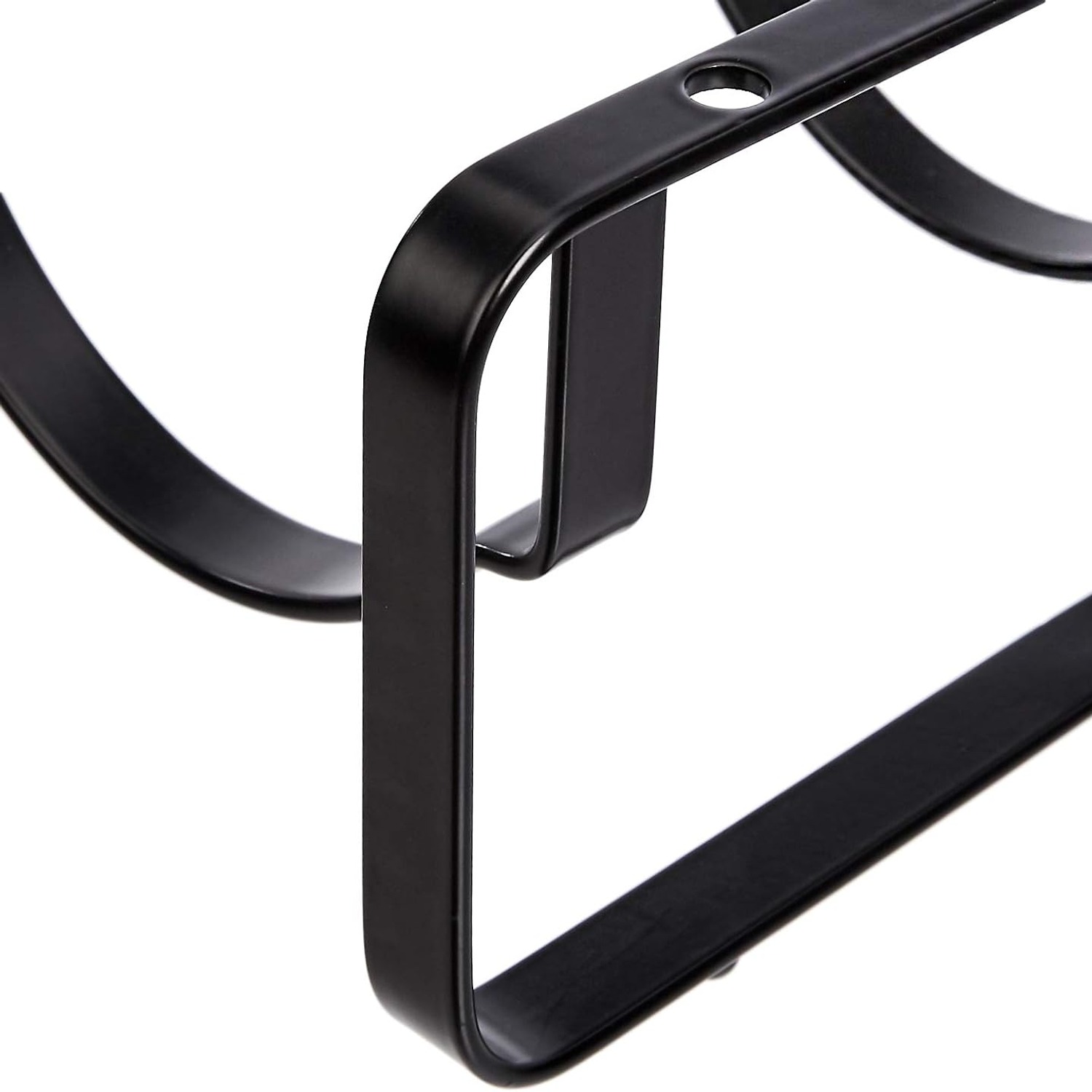
Steel sits in the middle. It holds its shape under load, it is thin enough to stay compact, and a painted or coated finish wipes clean. This one is metal alloy steel in black, which is a safe colour because it recedes against dark counters and reads as a deliberate accent against pale ones.
Living with it
Care is genuinely simple. The stated instruction is to wipe with a dry cloth, and for most of the year that is all it needs. Dust settles, you wipe it off.
When wine drips (and it will), catch it reasonably soon with a barely damp cloth and then dry the spot. The enemy of any coated steel is moisture that sits for days, usually in a corner where it is hard to see. Dry it and nothing happens.
Avoid scouring pads and strong solvents. They can dull or scratch the finish, and once that starts it does not stop. Lift bottles in and out rather than sliding them along the metal for the same reason.
One habit worth building: when you take the last bottle out, wipe the empty cradles. It takes five seconds and saves you ever having to do a proper clean.
Small details that make a difference
Put the rack toward the back of the counter, not the edge. Bottles at the edge get caught by elbows and tea towels.
If you stack, load the bottom tier first and keep weight even. A stack with three bottles on top and one underneath is less stable than the reverse.
If your counter is delicate stone or oiled timber, slide a thin felt pad or a placemat under the rack. The rack will not damage the surface in normal use, but grit trapped underneath can, and a pad removes the risk entirely.
And check your bottle shapes before you assume four will fit. Bordeaux bottles are slim and will always work. Burgundy and some sparkling bottles are noticeably wider, so you may get three in comfortably rather than four. That is true of every compact rack, not a fault of this one.
The short version
If bottles are scattered around your kitchen and you want them in one spot, this does the job without needing a renovation. It holds four, it is shallow enough to stay out of your way, it arrives ready to use, and it stacks to three tiers when four bottles stops being enough.
Measure the gap under your overhead cupboards, check your usual bottle shapes, and decide whether you want one tier now or two from the start. Then wipe it with a dry cloth every so often and forget about it.