
The complete guide
How to Choose a Countertop Wine Rack That Actually Fits Your Kitchen
The problem with wine and countertop
Wine is bulky in an awkward way. One bottle is nothing. Six bottles is suddenly a logistics problem, especially in a kitchen where every flat surface is already doing a job. Most of us solve it badly. Bottles go on the pantry floor, stand upright in a cupboard where they are hidden and forgotten, or line up along the splashback until someone knocks one with an elbow.
A countertop wine rack solves the visibility problem and the stacking problem at the same time. Bottles stop rolling, you can see what you own, and the pile stops spreading across the kitchen. The catch with most racks is that they are permanent. You buy a wooden frame, you give up a piece of counter, and that piece of counter is gone whether you have ten bottles or none.
That is the gap a foldable wooden wine rack fills. It holds the bottles when you need it and disappears when you do not.
How a folding rack works
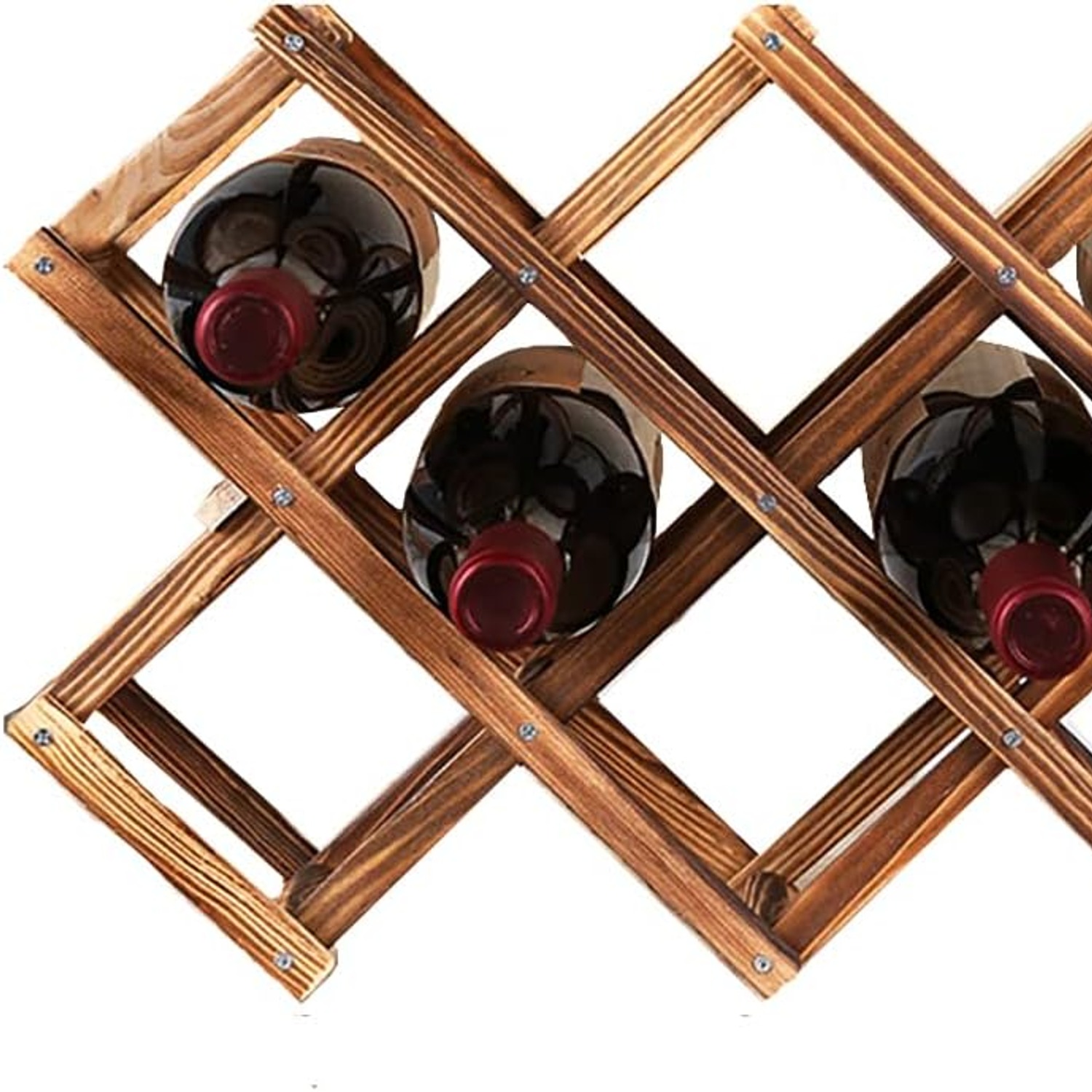
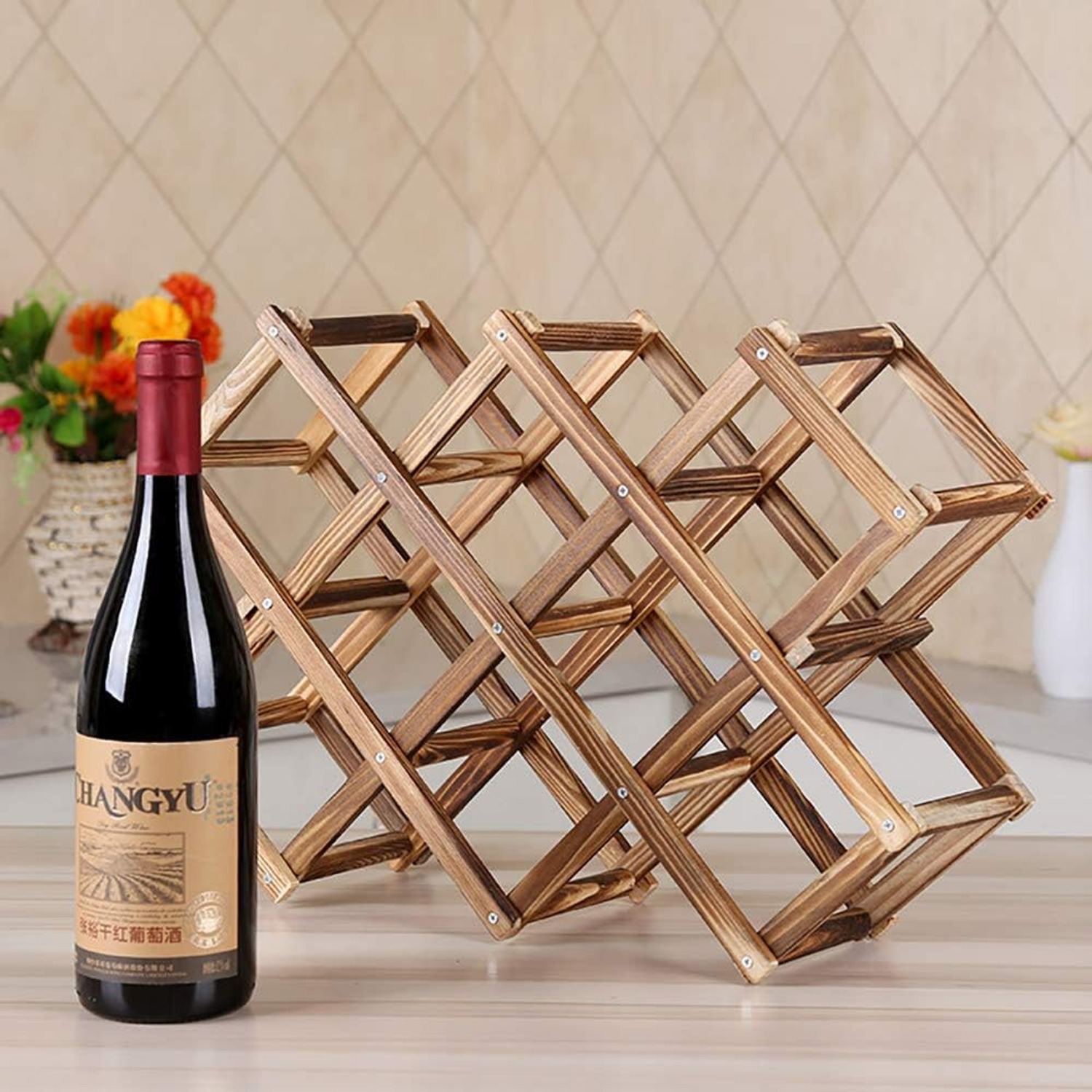
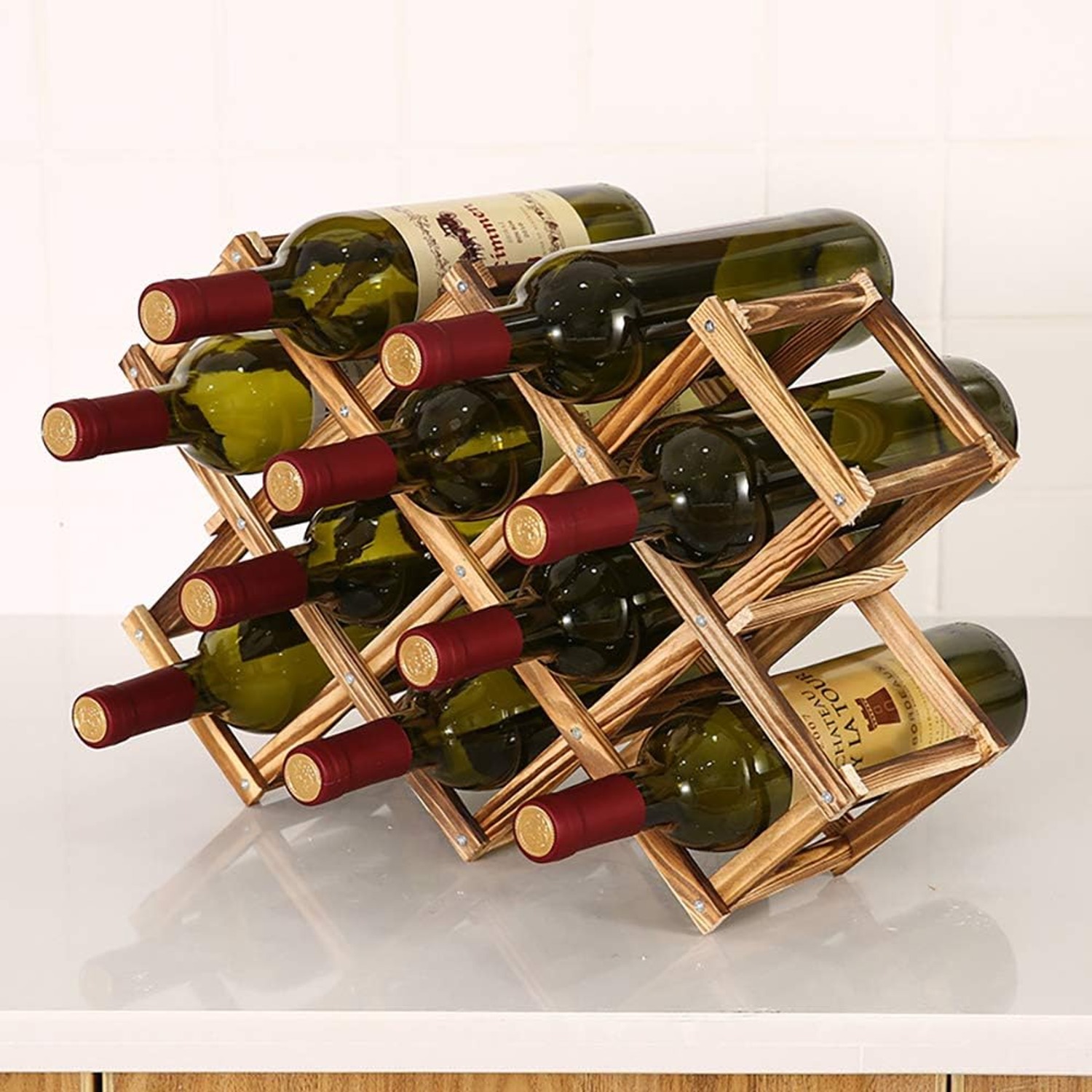
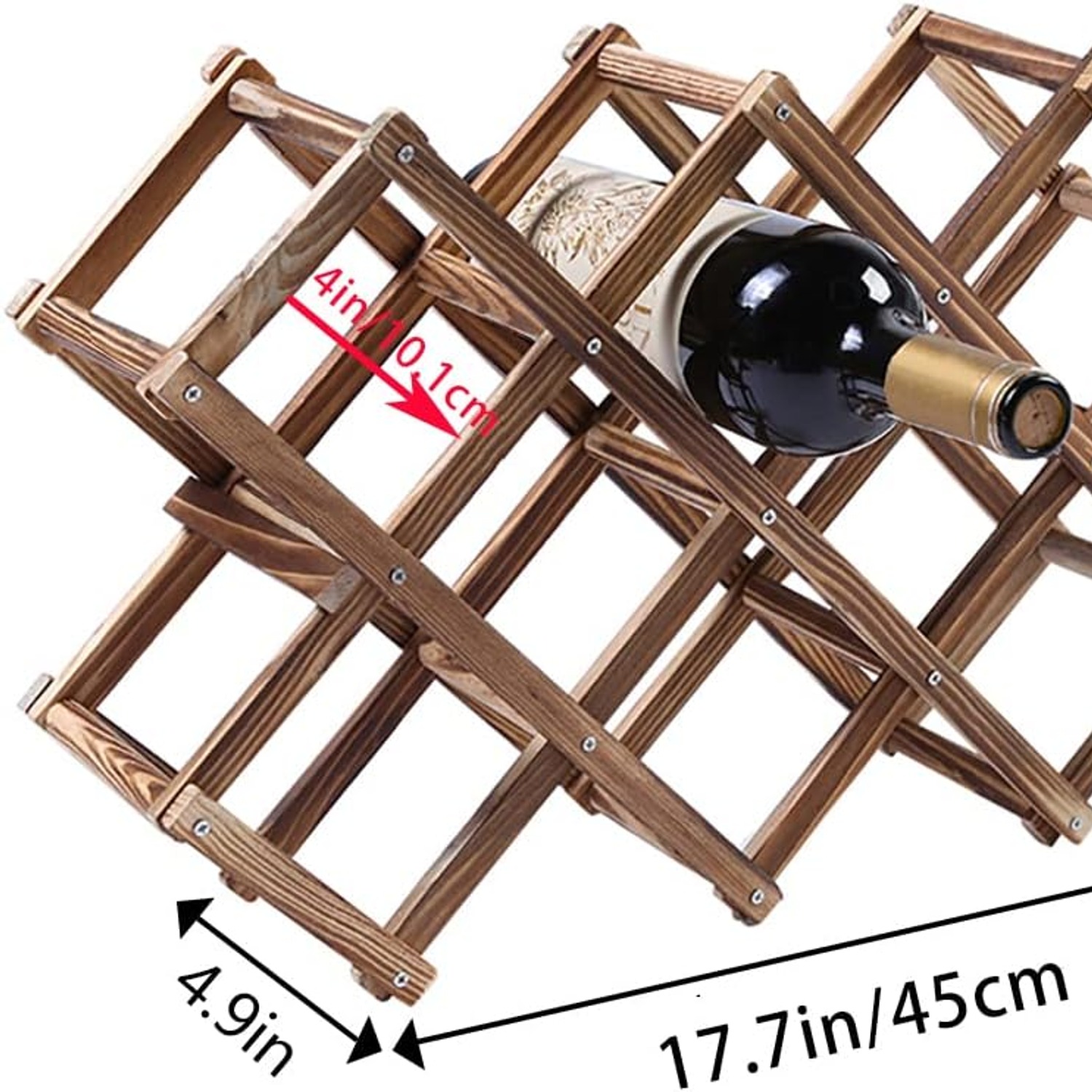
The frame opens out like a concertina. Unfolded, it stands around 44.5 cm tall, 30.5 cm wide and 12.7 cm deep, with slots arranged so each bottle lies on its side. The slots are cut to cradle the barrel of a standard 750 ml bottle, and the neck sticks out at the front where you can read the label.
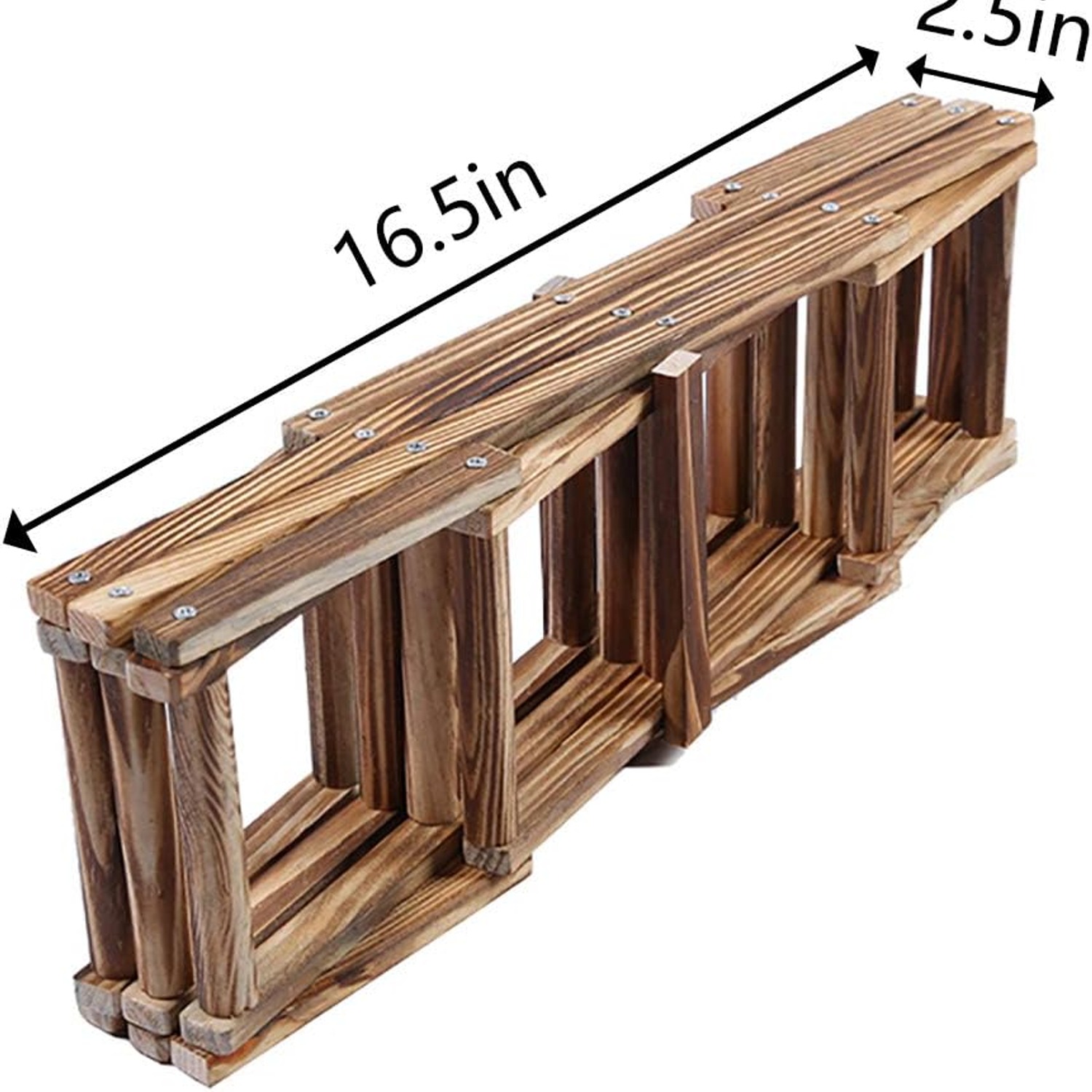
Folded, the same frame collapses to roughly 43 x 12.7 x 6.3 cm. At that size it slips behind a cupboard door, stands up beside a fridge, or goes flat in a drawer. The whole thing weighs 540 g, so moving it is a one-hand job when it is empty.
There is no assembly. That is worth saying plainly, because a lot of flat-pack wine storage arrives as a bag of dowels and a diagram. This one comes ready. Take it out, open it, stand it on something level, load it.
Why horizontal storage matters
Every slot holds the bottle sideways, and that is deliberate. When a bottle lies down, the wine stays in contact with the underside of the cork. A damp cork keeps its seal. A cork that dries out shrinks slightly, and once air gets past it, the wine starts to oxidise and go flat and sour.
For a bottle you will open on Friday, none of this matters. For the good bottle you are saving for someone's birthday in eight months, it does. Storing horizontally costs you nothing and removes one of the few things you can control at home.
Screw caps are a different story. They do not dry out, so a screw-cap bottle is fine standing up. Lying it down still makes sense here, because the rack is built that way and it keeps everything consistent.
Who this suits
Apartment dwellers get the most out of it. In a small kitchen, every surface is shared between the kettle, the chopping board, the fruit bowl and whatever is defrosting. A rack you can fold away when you need the counter is worth more than one with an extra two bottle slots.
Renters are the second group. Nothing mounts to a wall. No brackets, no drill, no filling holes when the lease ends. You put it down and that is the installation.
It also suits people who entertain in bursts. If you run a bar cart for parties and clear it the rest of the time, a collapsible rack matches that rhythm. The supplier lists bars, hotels and restaurants as settings too, and in a venue it works as a service-side holder rather than a display wall.
Who it does not suit: serious collectors. If you have fifty bottles and you are ageing them for years, you need a cellar or a temperature-controlled cabinet, not a counter rack. Ten bottles is a working stash, not a collection.
How to choose and where to put it
Start with measurements, not pictures. Pull out a tape measure and check the clear run of counter you have, then compare it against 30.5 cm wide and 12.7 cm deep. The one people forget is height. At 44.5 cm, it will not slide under a standard overhead cupboard with a bottle in place, so an open stretch of counter, a sideboard or the top of a low cabinet works better.
Next, think about heat and light. Wine does not care about the rack nearly as much as it cares about where the rack sits. Avoid the space next to the oven, the spot above the dishwasher where steam vents, and any window that gets afternoon sun. A cool, shaded corner is better than a prettier position in the light.
Then think about traffic. A loaded rack is a few kilos of glass. Keep it out of the lane where people swing past with plates, and off the end of a counter where a bag could catch it.
If you are choosing between racks generally, three practical things separate a good one from a cheap one. Does it stand flat without rocking. Do the slots hold the bottle without letting it slide out at an angle. Can you load and unload without disturbing the bottle next to it. Capacity matters less than people expect, because most households rotate the same handful of bottles.
Loading it properly
Load from the bottom up. The lowest slots carry the weight best and keep the centre of gravity low, which is what stops a rack tipping when someone brushes against it. If you are only putting three bottles in, put them on the bottom row, not spread across the top.
Keep a gap in the front row for the bottle you are drinking this week. That way you are not pulling bottles out and rearranging every time you want a glass, which is when accidents happen.
Do not push or drag the rack while it is full. Unload it, move it, reload it. It takes thirty seconds and saves a bottle.
Looking after the wood
Care is simple. Wipe with a dry cloth. That is the instruction from the manufacturer and it covers most of what the rack will meet in daily life, which is dust and the occasional fingerprint.
For anything stickier, a barely damp cloth followed immediately by a dry one is fine. The rule is not to leave moisture sitting on timber. Do not soak it, do not run it under a tap, and keep it out of the dishwasher. Wood swells, warps and loses its finish when it gets wet repeatedly.
Spilled red wine should be wiped straight away. Timber is porous and a red stain that sits for an hour is much harder to lift than one you catch in a minute.
When you fold it away, store it somewhere dry. The cupboard under the sink is the one place not to choose, because of the moisture from pipes and cleaning products. A linen cupboard, a pantry shelf or behind a bookcase all work better.
The short version
This is a wooden rack that holds up to ten bottles on their side, stands on a counter or a floor, needs no assembly and folds to a flat panel about 43 cm long when you are done with it. It is brown wood with a brushed finish, it weighs 540 g, and it measures 12.7 by 30.5 by 44.5 cm set up.
Buy it if you want your bottles organised and visible without permanently surrendering counter space, and if you move things around your kitchen more than most. Look elsewhere if you are storing wine for years or you have more than ten bottles in rotation.
Measure your counter first. That one step prevents almost every disappointment people have with countertop wine storage.