
The complete guide
How to Choose and Fit a Wall Wine Rack with Glass Holder
The problem with keeping wine in a cupboard
Wine has a habit of ending up in awkward places. A few bottles go flat in the back of a low cupboard where you cannot read the labels. A couple stand upright on the counter, slowly getting in the way. One lives on top of the fridge. The glasses, meanwhile, take a whole shelf in the overhead cupboard and still pick up dust because nobody uses the good ones often enough.
None of that is a disaster. It is just wasted space and a small daily annoyance. The fix is to stop treating wine as something to hide and start treating it as something to store properly and on display, using wall area that is currently doing nothing.
That is what a wall mounted wine rack is for. It lifts the bottles up to a height where you can see them, holds them flat so corks stay moist, and in this case adds a wine glass holder underneath so the stemware lives in the same place as the wine. One trip to the wall and you have everything you need.
How this rack works
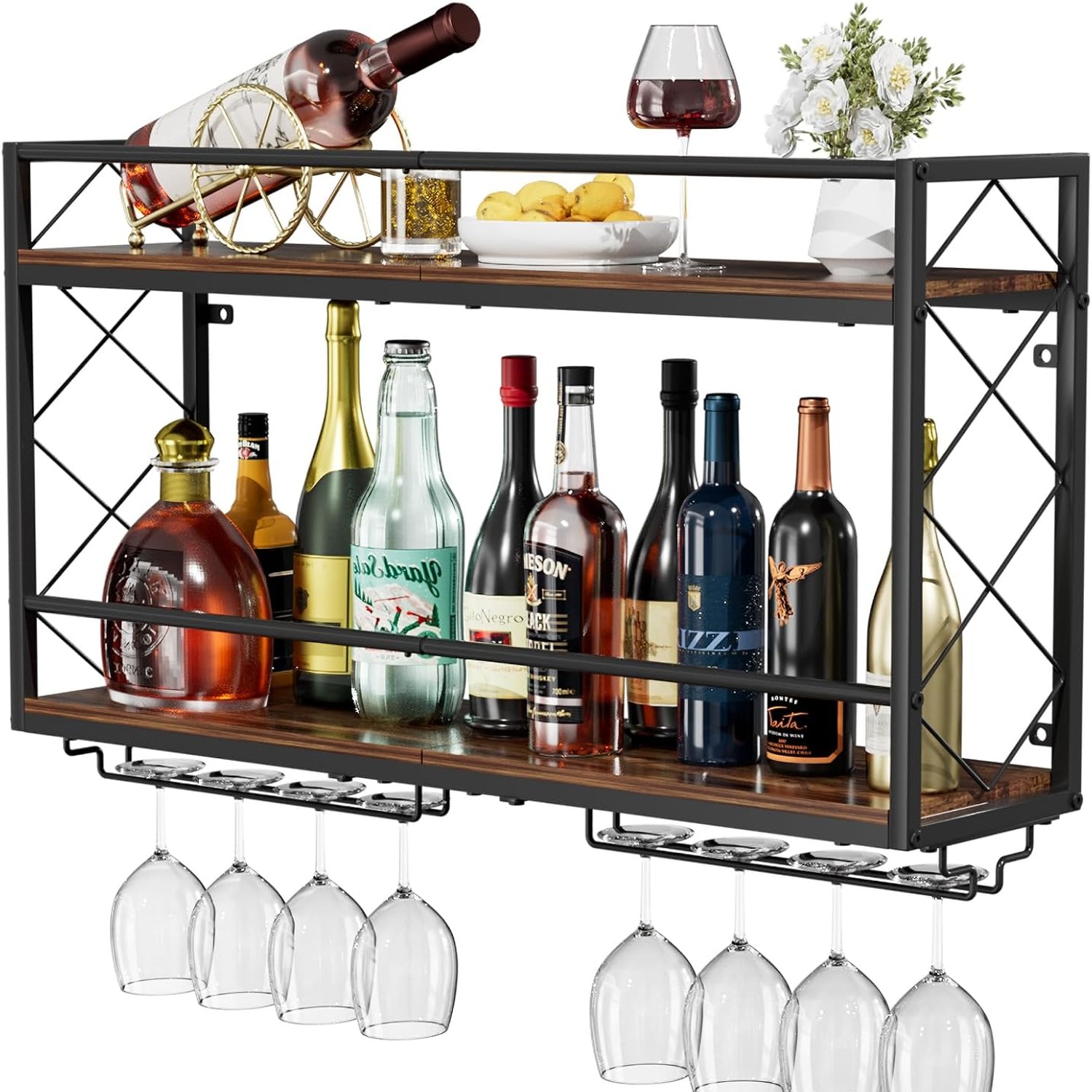
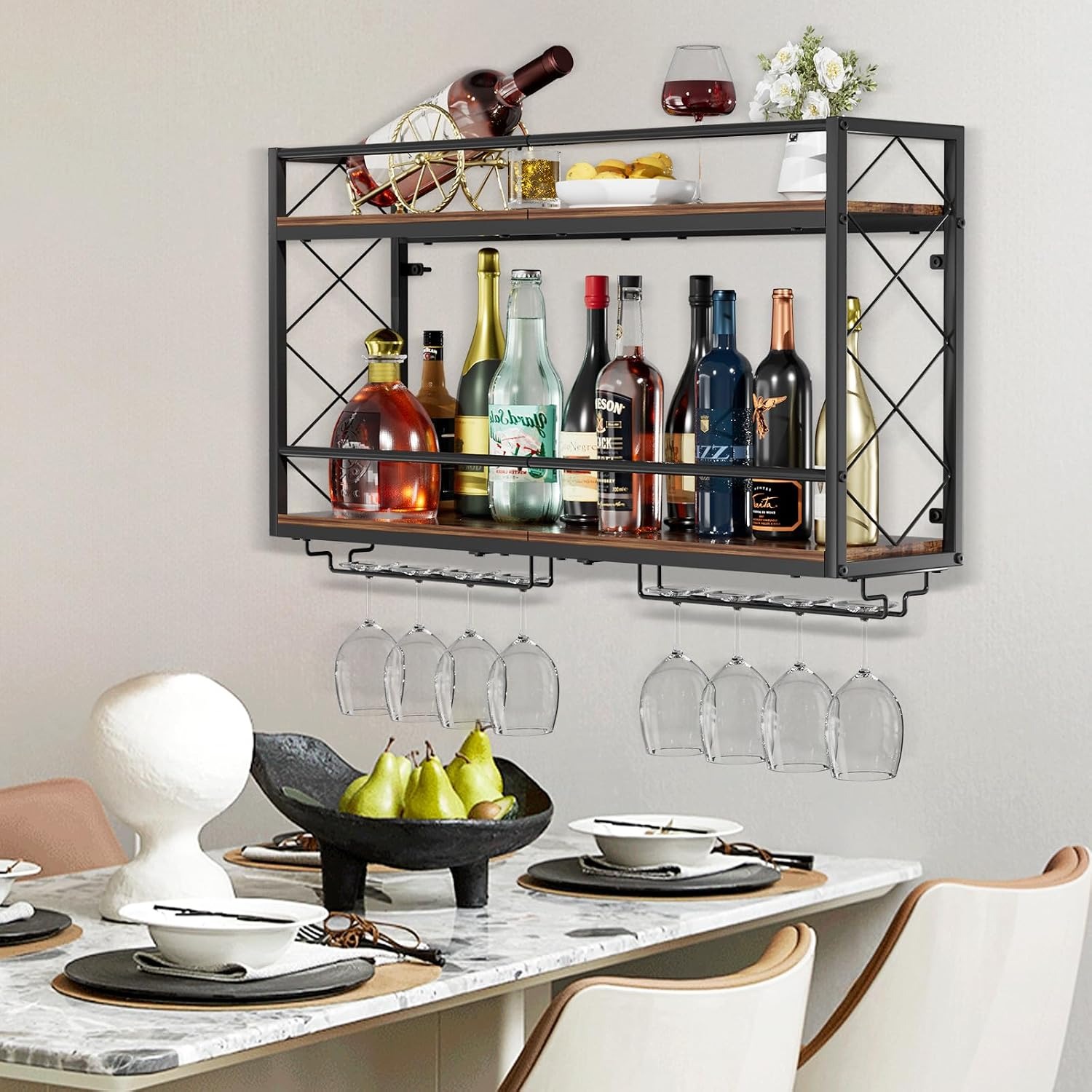
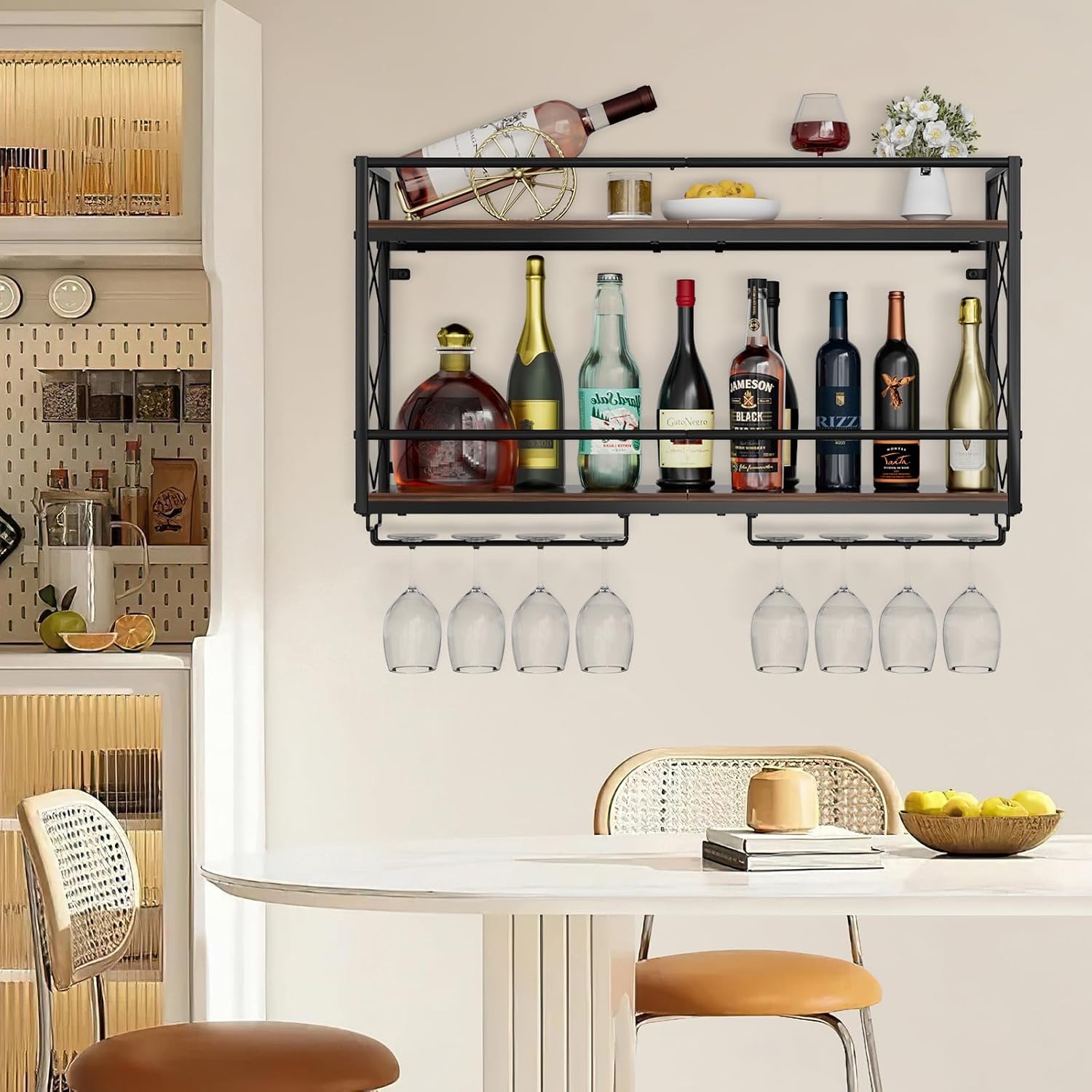
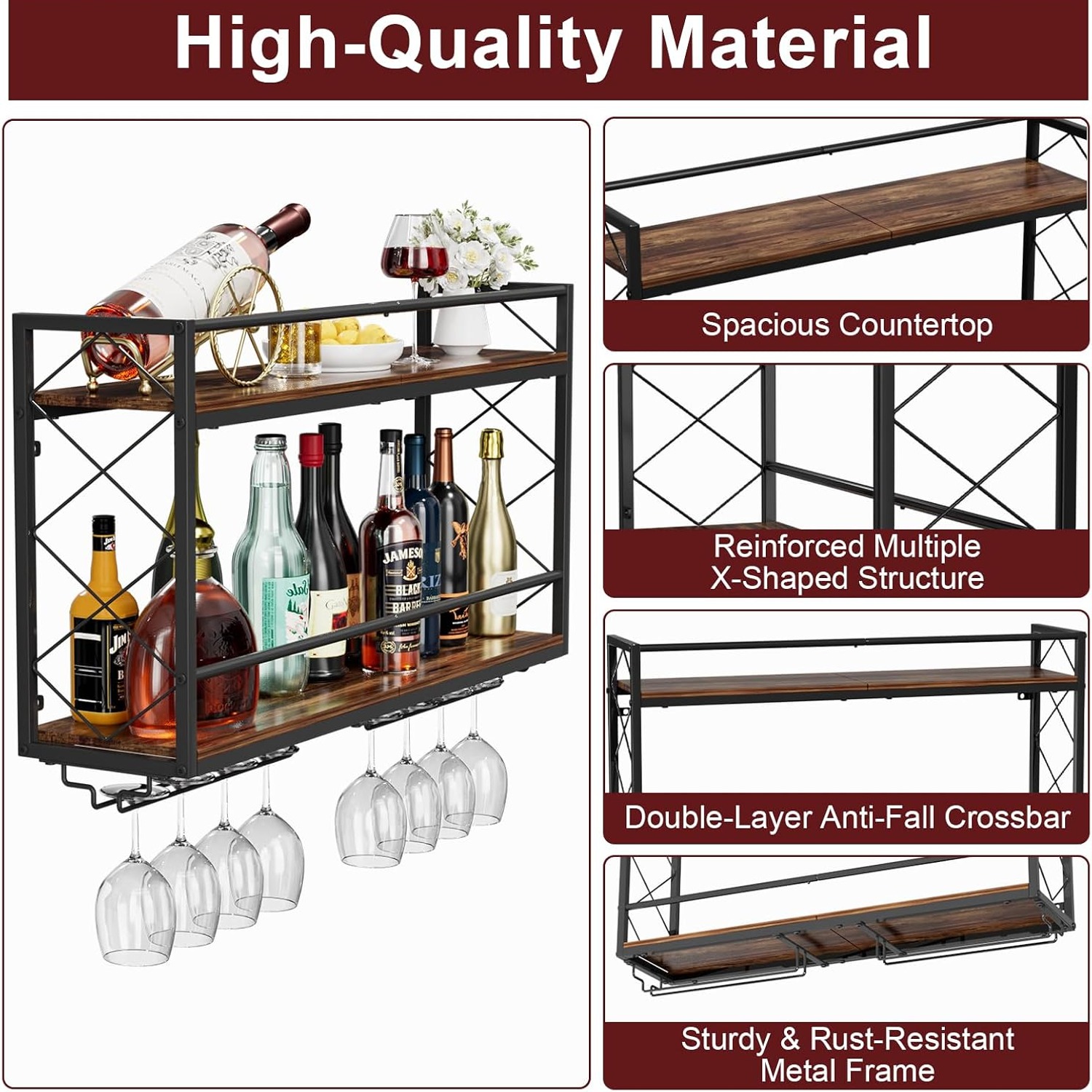
The build is straightforward. A painted metal frame carries two engineered wood shelves. Bottles lie horizontally on those shelves, and the stated capacity is 12. Beneath the shelving, metal channels run the width of the unit. Glasses slide in foot-first and hang upside down by the stem.
Hanging glasses upside down does two useful things. It keeps dust out of the bowl, which matters if you only break out the good glasses now and then. And it keeps the rims from sitting on a shelf surface, which is how glasses pick up that faint cupboard smell.
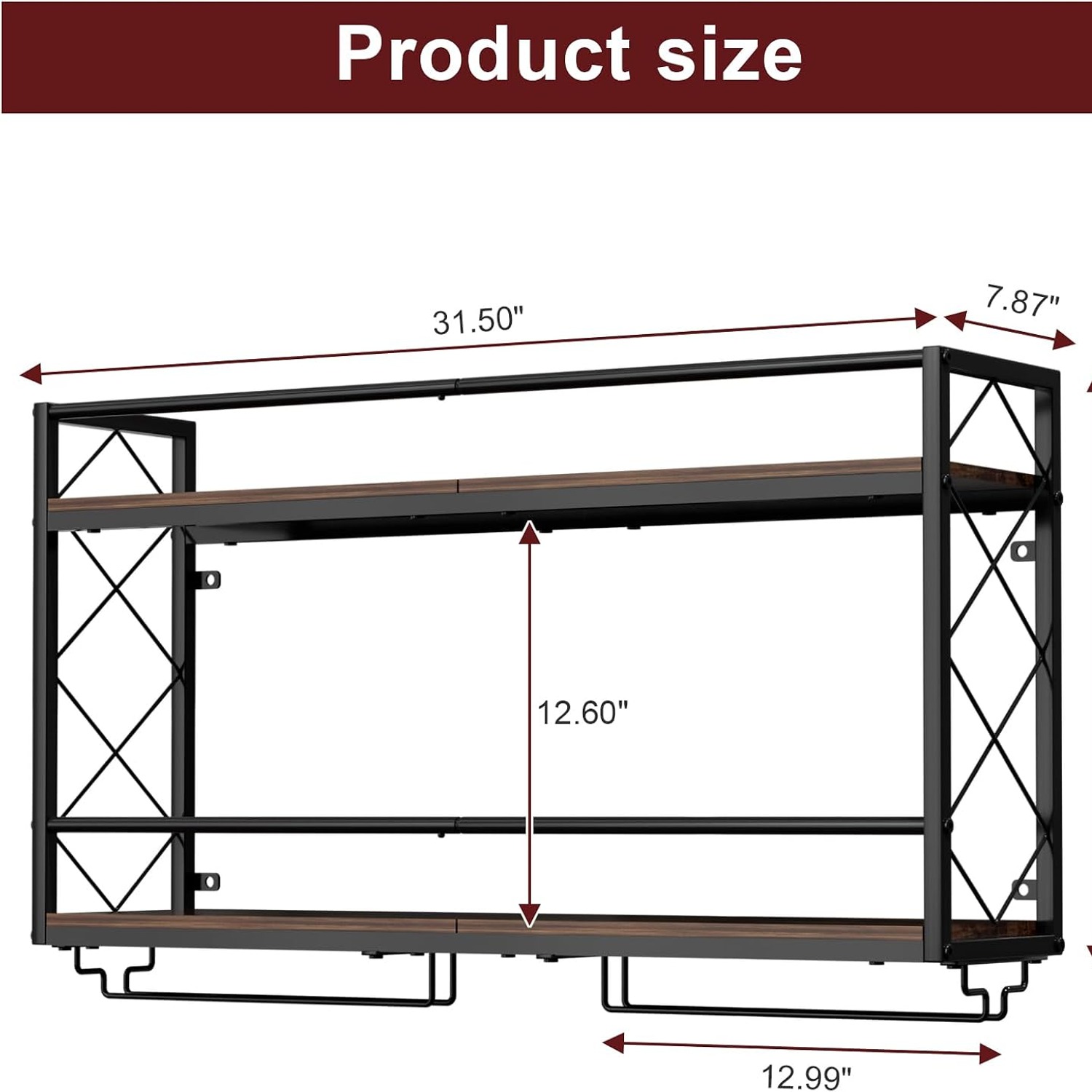
The overall size is 80.5 cm wide, 20 cm deep and 43 cm high. The depth is the number worth noting. At under 21 cm it sits close to the wall, so it does not crowd a narrow kitchen or a hallway the way a floor-standing rack would.
The finish is brown with a vintage look. Warm timber against darker metal is a forgiving combination. It works next to white cabinetry, against a painted feature wall, or in a dining room with older timber furniture.
Who it suits
This kind of rack makes the most sense if you keep somewhere between six and fifteen bottles at a time. That is the normal pattern for most households: a few everyday reds and whites, a bottle or two of something better, and whatever came home from the last dinner party.
It suits renters reasonably well too, as long as you are allowed to put screws in the wall. Fixing holes are small and easily filled, and the rack comes off the wall in a minute when you move.
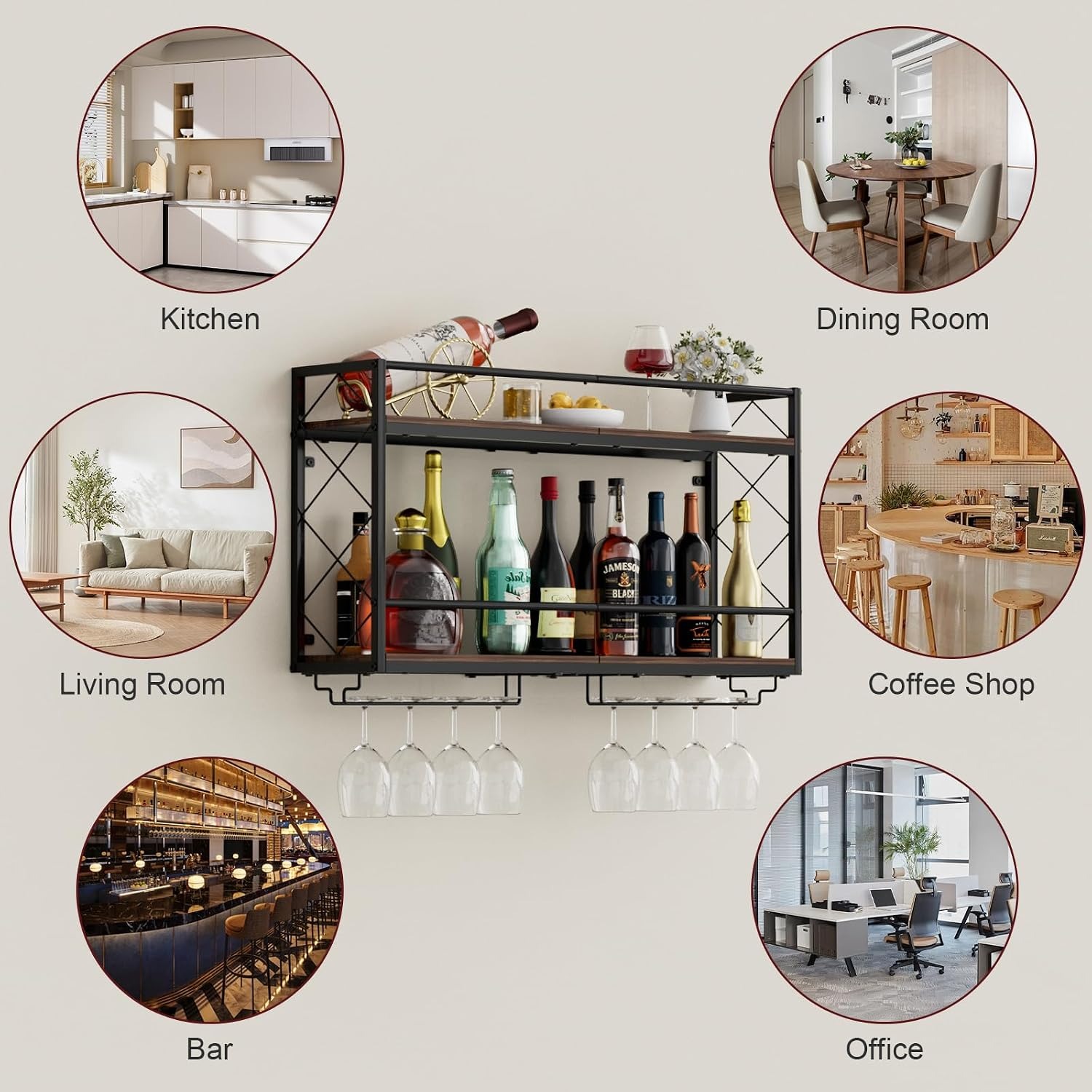
It works in kitchens, dining rooms, living rooms, home offices and hallways. Cafes, bars and restaurants use the same style of rack as a wine display shelf behind a counter. The main thing is that you need a clear, solid stretch of wall roughly a metre wide to work comfortably.
Who it does not suit: anyone cellaring seriously. If you are laying down cases for years, you want a cool, dark, stable environment, not a kitchen wall near a window. This is a working rack for wine you plan to drink in the near future.
Getting the wall right
This is the part worth slowing down for. The rack weighs 4.54 kg empty. Add twelve bottles at roughly 1.2 kg each and a handful of glasses, and the loaded weight climbs well past 20 kg. All of that hangs off whatever is behind the drywall.
If you can find timber studs, use them. A stud finder and a pencil will tell you where they run, usually at regular spacing. Screwing directly into solid timber is the most reliable fixing you can get in a standard wall.
If the studs do not line up with where you want the rack, use heavy-duty anchors rated well above the loaded weight, and give yourself a safety margin. Toggle-style anchors spread the load behind the board better than simple plastic plugs. Brick and masonry walls are easier in one sense: a masonry bit and proper plugs give an extremely strong fixing, though you will need the right drill.
Height is the other decision. Most people mount the shelves so the bottle labels sit somewhere near eye level. Then check the clearance below for your tallest glasses, plus a few extra centimetres so you can lift them out without tilting awkwardly. If the rack goes above a counter, measure from the countertop rather than the floor.
Use a spirit level. A rack that is a degree or two off looks fine on the wall and then makes every bottle appear to be sliding downhill.
Loading it sensibly
Put the heavier bottles toward the ends where the frame is supported, and keep the weight spread across both shelves rather than piling everything on one side. Lie bottles with the label facing out so you can read them without pulling anything down.
For glasses, slide them in with a little space between bowls. Glasses that touch will chime every time someone closes a nearby cupboard door, and eventually one chips. Standard wine glasses fit more per channel than wide burgundy bowls, so group similar shapes together.
If you use the shelves for things other than wine, which plenty of people do, just keep an eye on total weight. Small potted plants, olive oil bottles and spirits all work. A row of heavy decanters is pushing it.
Looking after it
Maintenance is light. Wipe the timber and metal with a soft cloth, dry or barely damp, and dry it straight away. Engineered wood does not like sitting moisture, so do not let spills sit and do not mount it where it will catch steady splash from a sink or kettle.
The painted metal resists corrosion, but abrasive pads will scratch the finish. Mild soap on a cloth handles anything stubborn.
Every few months, give the mounting screws a check. Walls move slightly with seasons and temperature, and a quarter turn now and then keeps everything tight. If you notice any give at all in the rack, take the load off and re-fix before you put bottles back.
Assembly notes
Assembly is required and the instructions are included. The sensible order is to build the unit flat on the floor first, with the frame and shelves together, then mark and drill the wall, then lift and fix. It is a two-person job at the lifting stage, less because of the weight and more because holding a level while driving screws is harder than it sounds.
Have your drill bit sized to your anchors before you start, not after you have already made a hole.
The short version
If your bottles are scattered around the kitchen and your good glasses are hiding in a cupboard, this rack solves both problems in one piece. It holds 12 bottles flat on two timber shelves, hangs your stemware underneath, and sits only 20 cm off the wall.
It is 80.5 cm wide and 43 cm high, weighs 4.54 kg empty, and needs assembly with the included instructions. The one thing that deserves real care is the fixing: find studs or use properly rated anchors, because a loaded rack is heavy.
Get that part right and it will sit there quietly doing its job, looking better than a cupboard ever did.