
The complete guide
How to Choose and Fit an Under-Cabinet Wine Glass Rack
The problem with storing wine glasses
Wine glasses are badly behaved in a cupboard. They are tall, so a single row of them claims the full height of a shelf that could otherwise hold three stacked rows of plates. They are top heavy, so they tip. And they are made of thin glass, so every time you shuffle them to reach the mugs behind, you risk a chip on a rim.
Most people end up with one of three bad arrangements. Glasses crammed upright at the back of a cupboard where nobody can reach them. Glasses laid on their sides, bowls nested, clinking together. Or glasses left out on the counter permanently, collecting dust and getting knocked over by the kettle cord.
Hanging storage fixes all of that, which is why bars have used it for a century. The glass hangs by its stem, bowl down. Nothing touches anything else. Dust lands on the foot instead of the drinking surface. And the whole arrangement sits in the dead air under a cabinet, which is space you are already paying for and not using.
How an under-cabinet rack works
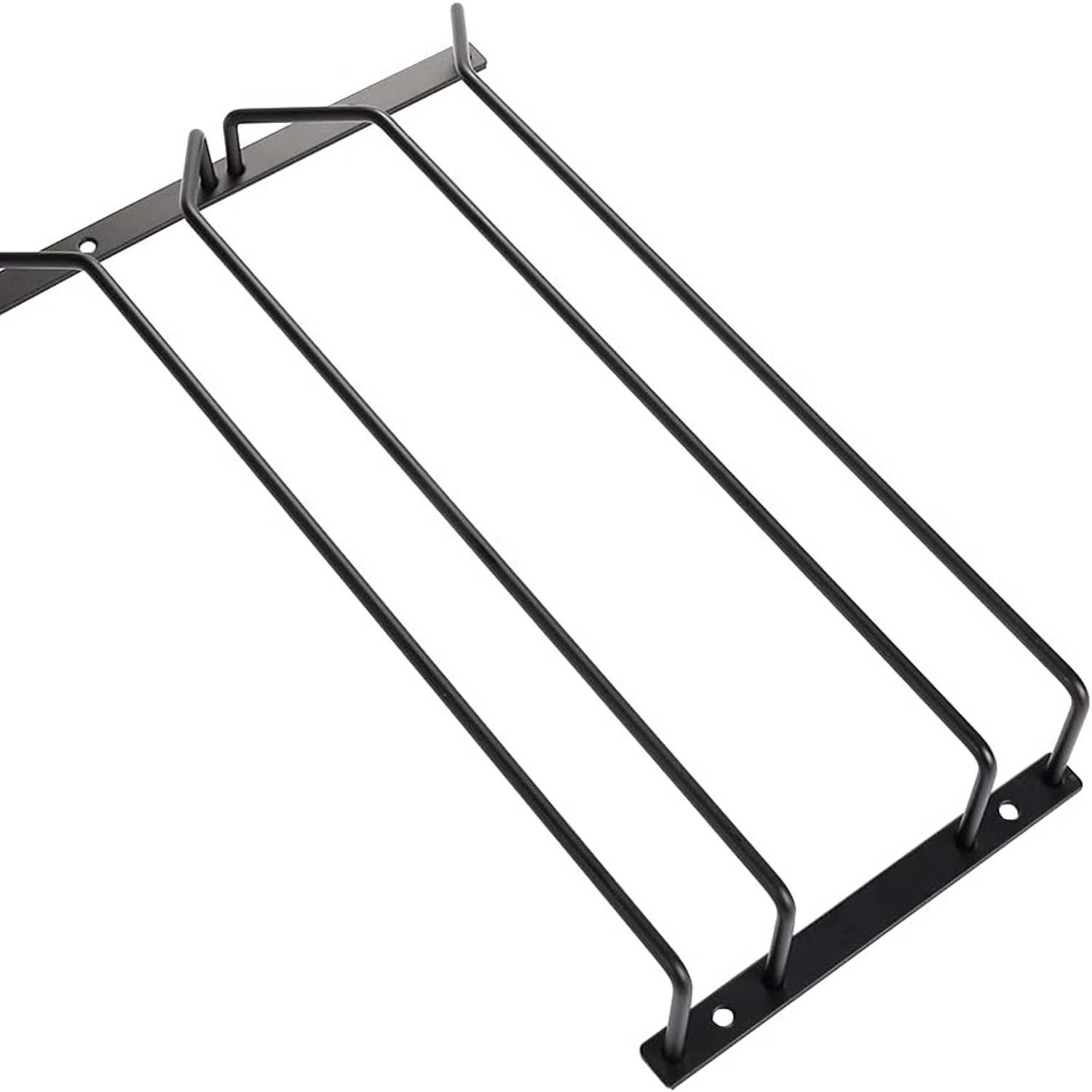
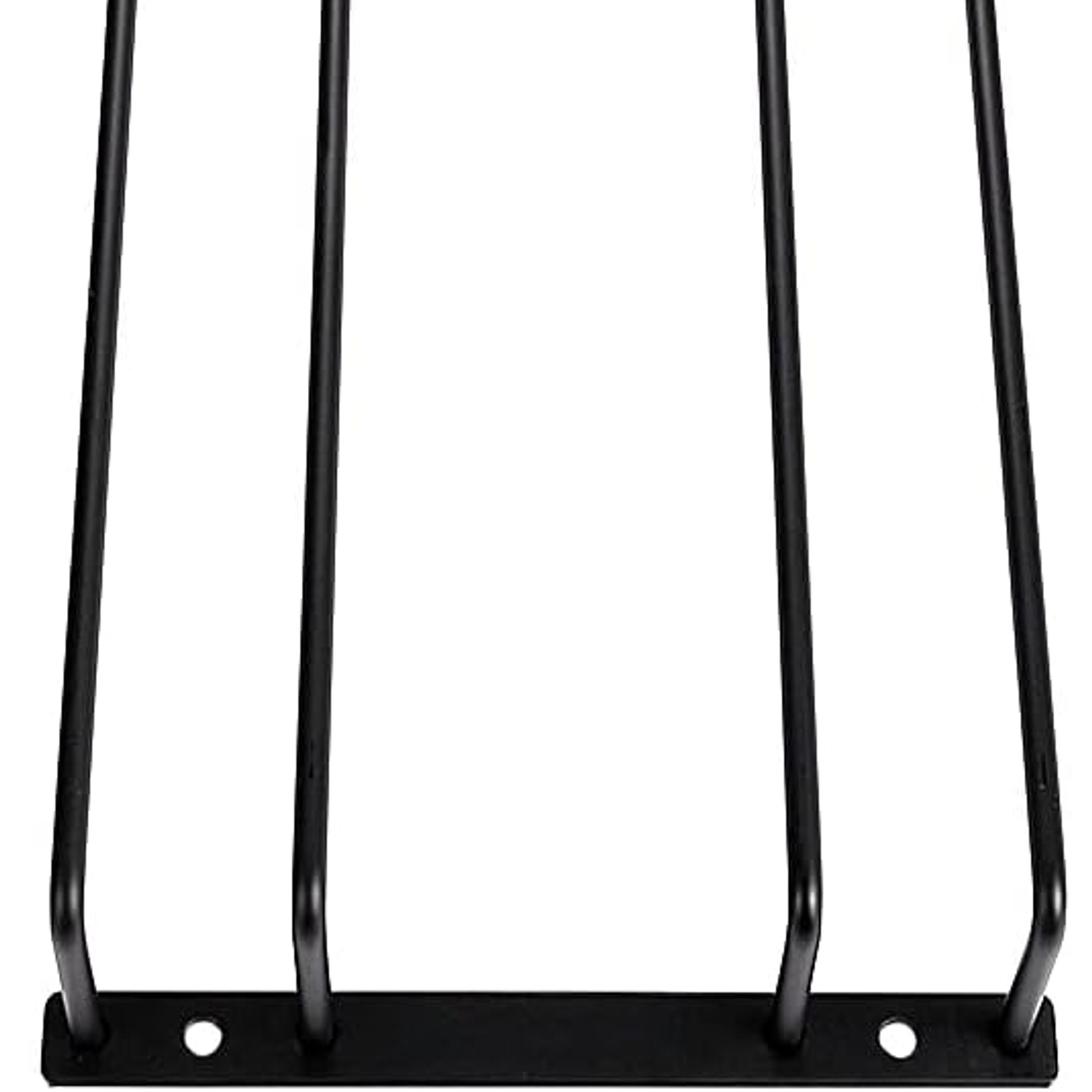
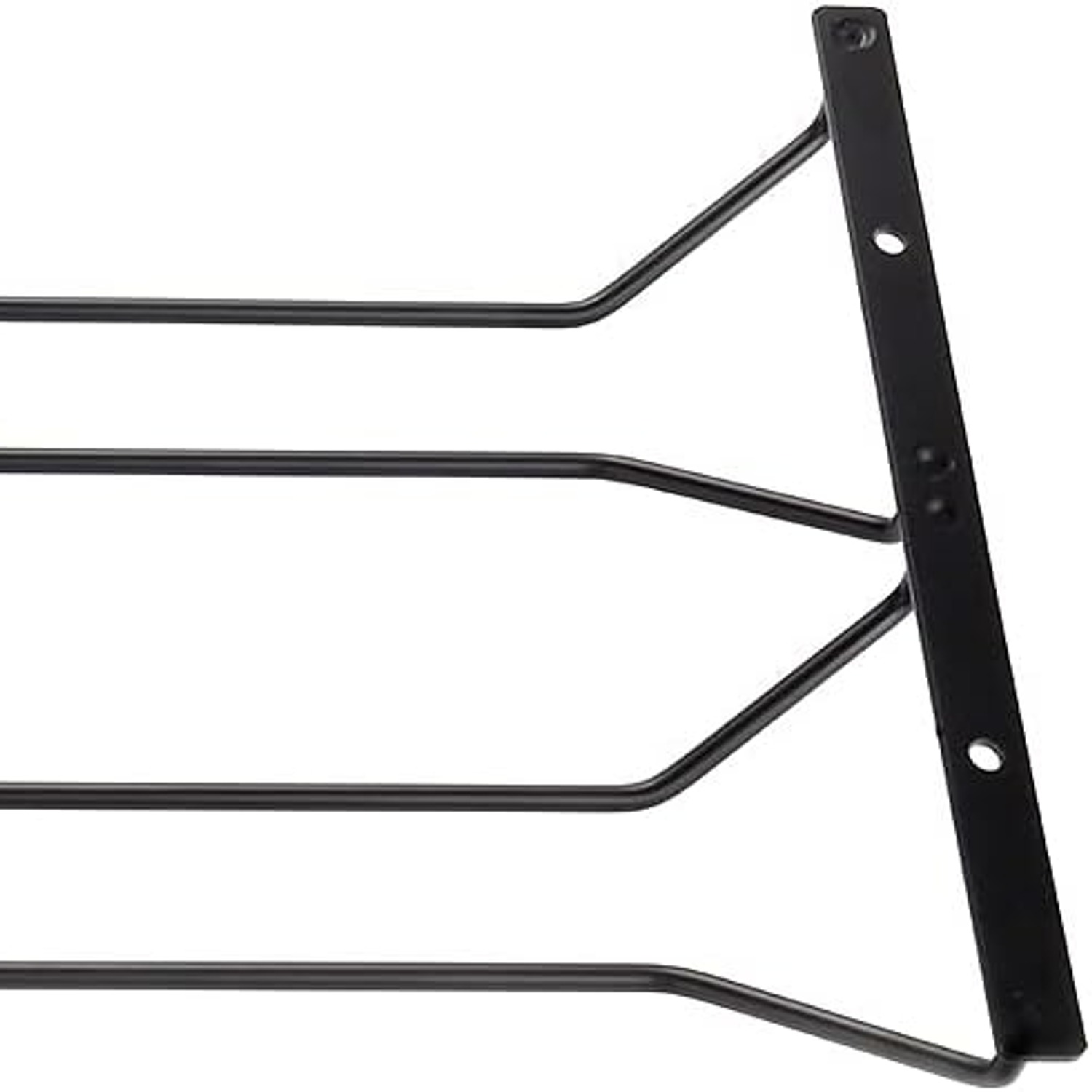
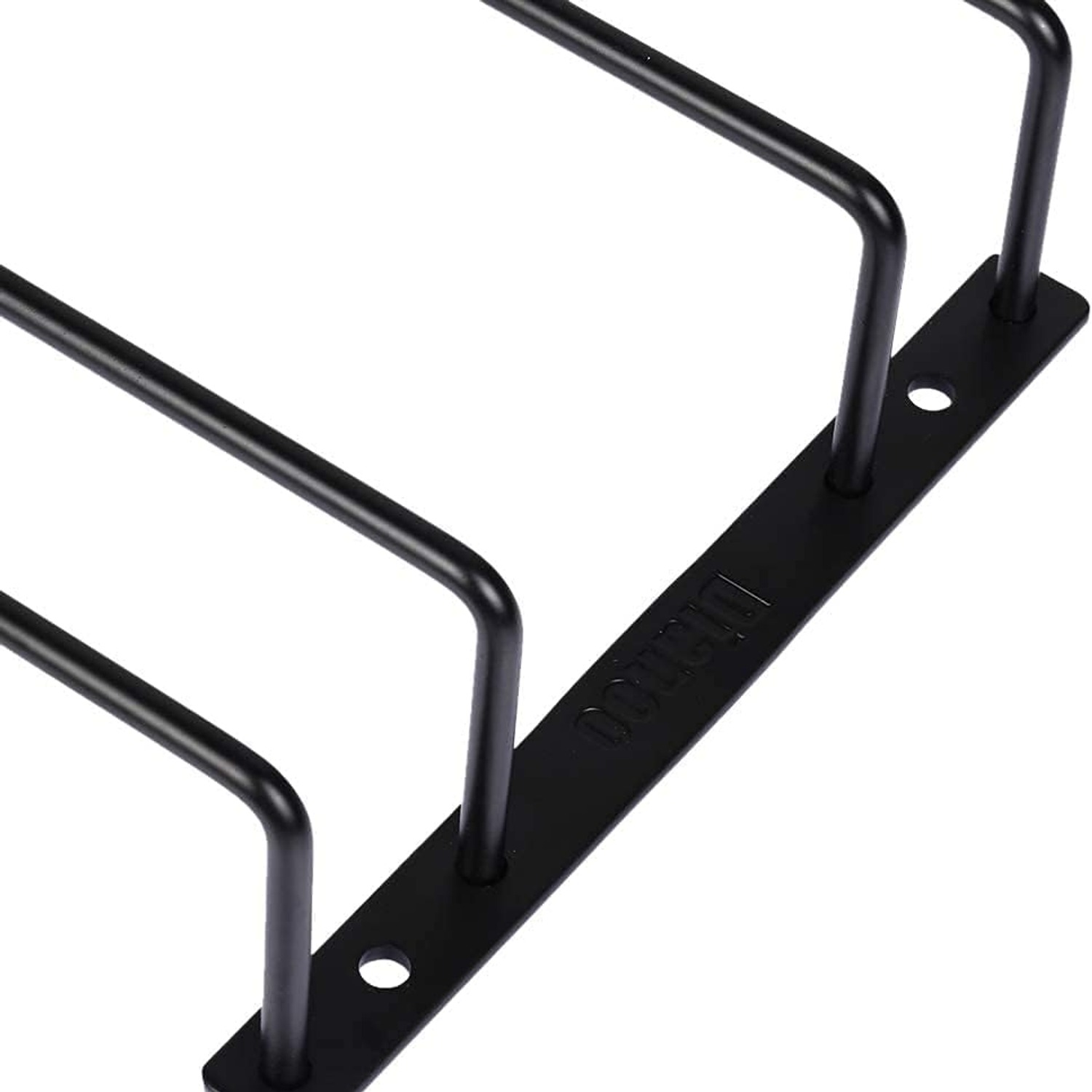
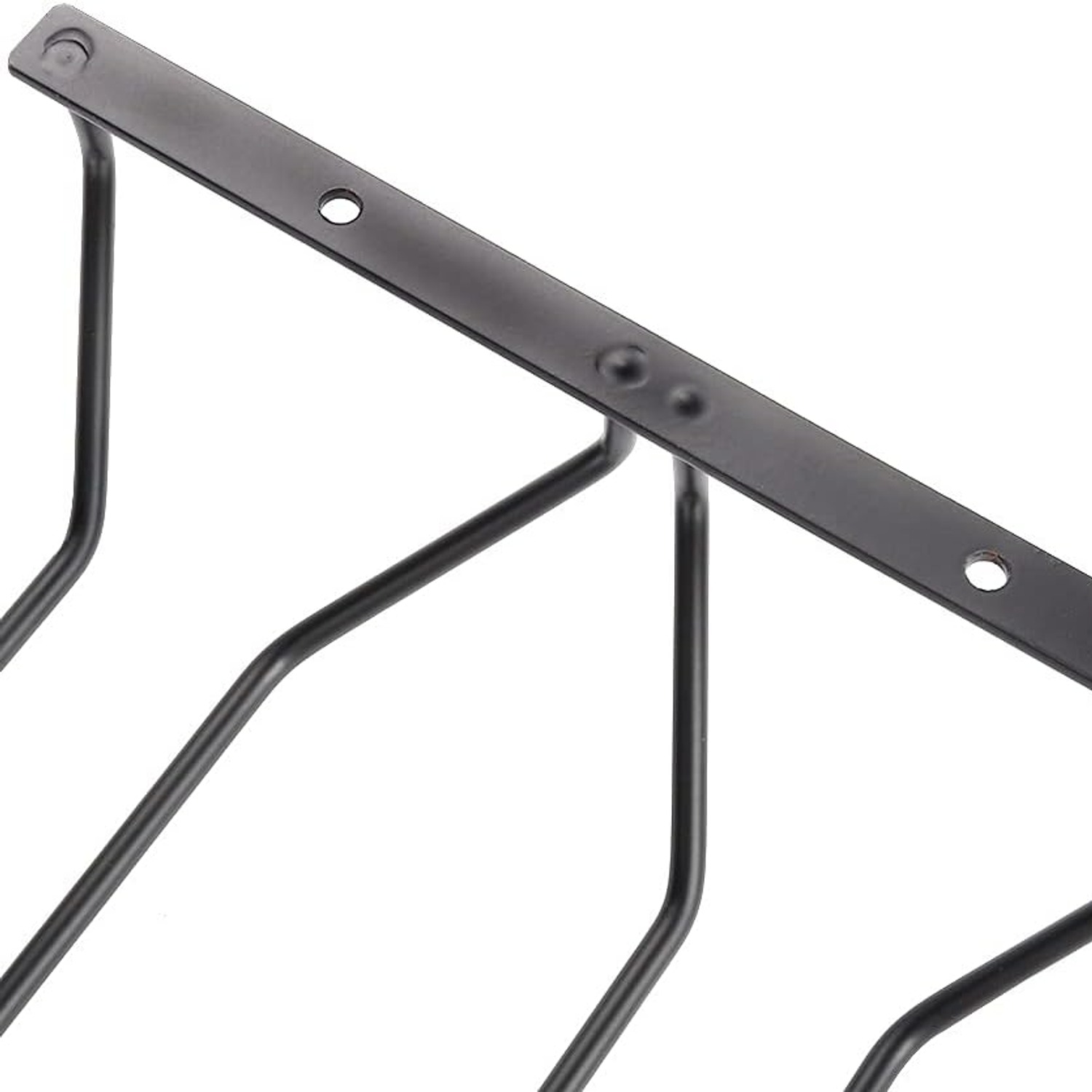
The design is simple. Two parallel rails run the length of the rack with a gap between them. The stem of the glass slides into that gap, and the foot of the glass sits on top of the rails, holding it up. Gravity does the rest.
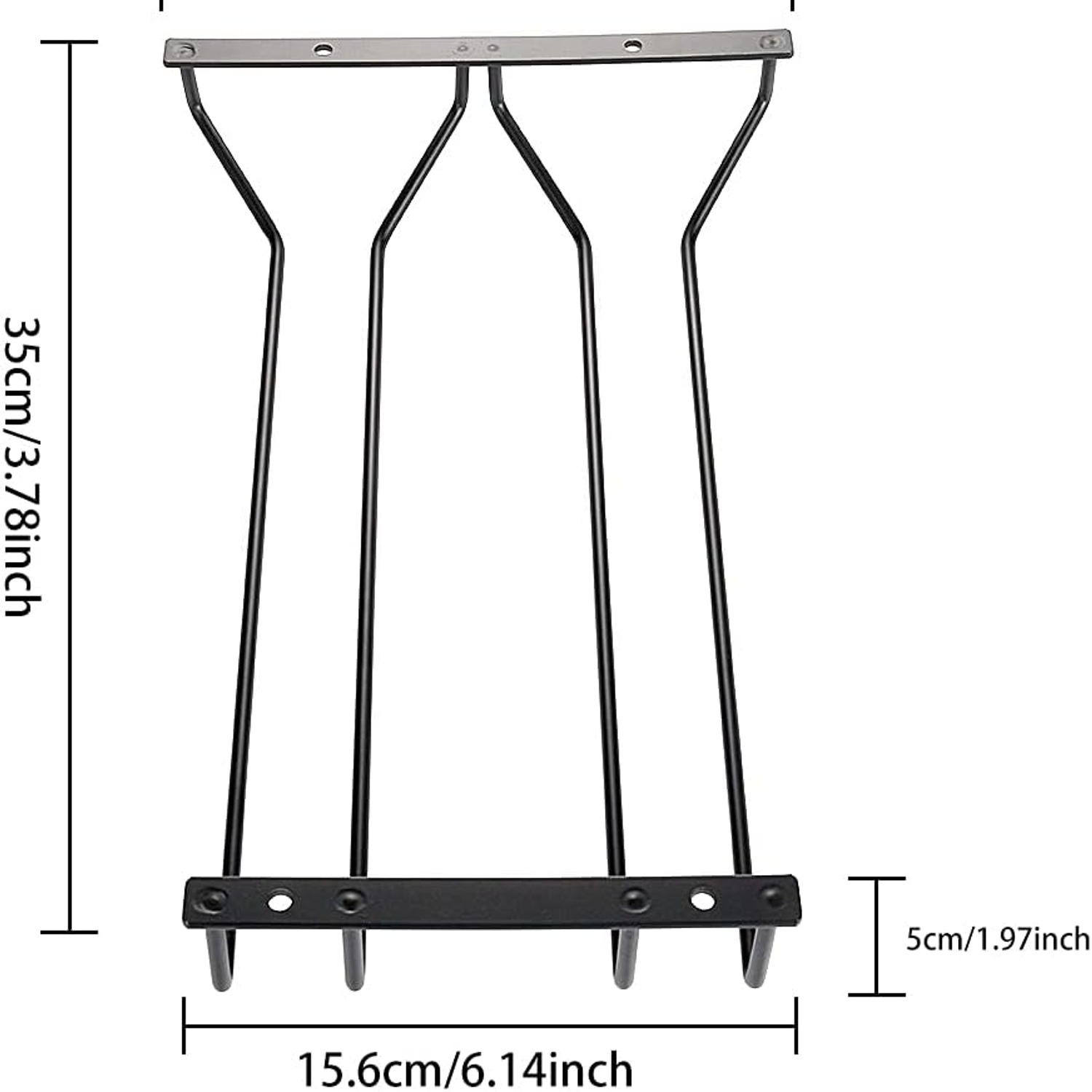
This rack is 35cm long with two rows, so you get two separate channels of hanging space. It is 21.6cm wide and only 5cm deep, which means it sits close under the cabinet and does not add much bulk to the look of the kitchen. It weighs 0.38 kg empty.
The sturdiness of the frame matters more than people expect. A loaded rack can be carrying a kilogram or two of glass. A thin wire frame flexes, and flex means the glasses sway every time the cupboard door above swings. A thicker metal frame holds its shape and the glasses stay put.
How many glasses will actually fit
The honest answer is six to eight, with the variation coming from your glasses rather than the rack.
Think about base diameter. A champagne flute usually has a foot around 6cm to 7cm across. A standard white wine glass is similar or a touch bigger. A large burgundy bowl can have a foot of 9cm or more. Across 35cm of rail, that difference adds up quickly.
If you want a useful number before you buy, do this. Take your most-used glass, measure the foot across its widest point, then divide 35 by that figure. That is roughly how many fit in one row. Double it for two rows and knock one off for breathing room. It is a rough calculation but it gets you close.
A mixed collection is fine too. Put the slim flutes in one row and the wider bowls in the other, so each row stays neat.
Who this suits
Small kitchens benefit most. If cupboard space is tight, moving stemware out of a shelf and into the air underneath often gains you more room than any amount of reorganising. It is a common trick in apartments and it works.
Home bar setups are the other obvious fit. If you have a drinks trolley, a sideboard, or a corner with bottles and a shaker, a hanging stemware rack above it puts glasses exactly where you need them and makes the corner look intentional rather than improvised.
Then there is hospitality. Small cafes, wine bars and restaurants use under-shelf racks behind the service counter because staff can grab a glass one-handed without opening anything. The same logic applies at home when you have people over.
It is less suited to households with small children who might grab at hanging glass, or to anyone whose glasses are all stemless tumblers. No stem, no hang.
Choosing the right spot
Two measurements decide where this goes.
First, height clearance. Measure your tallest glass from the foot to the rim and add two or three centimetres. That total is the gap you need between the underside of the rack and whatever sits below. If the kettle lives under that cabinet, measure the kettle too.
Second, depth. The rack is 5cm deep, but the glasses hanging from it stick out further. Mount it far enough back from the cabinet's front edge that the bowls are not hanging over your counter, where a sleeve or a shopping bag can catch them.
Also think about what is above. Avoid mounting directly over the cooktop, where heat and cooking grease will coat the glasses. Avoid sitting it right where a kettle vents steam. A quiet stretch of cabinet near the sink or the dining side of the kitchen is usually the best spot.
Fitting it properly
The pack includes mounting screws and screw covers, so you have what you need beyond basic tools. You will want a drill, a screwdriver, a tape measure, a pencil and something to check level.
Hold the rack where you want it and mark the screw positions with the pencil. Check the marks are level before you drill, because a rack that sits on a slight angle will let glasses slide toward one end. Drill pilot holes slightly smaller than the screws. Drive the screws in, snug but not over-tightened, then fit the covers.
The important part is what you are fixing into. Solid timber or a proper thick shelf board is ideal. Thin veneer over a hollow core is not, and a loaded rack can pull out of it over time. If your cabinet base is thin, use fixings rated for that material rather than the supplied screws alone, or move to a sturdier mounting point.
Once it is up, load it with one or two glasses first and give the rack a gentle press. If anything shifts, take it down and redo the fixings. Better to find out now than at a dinner party.
Keeping it in good shape
Maintenance is light. Wipe the metal with a soft, damp cloth now and then and dry it straight after. Kitchens generate airborne grease even when you are careful, and a quick wipe stops it building into a sticky film.
Stay away from scouring pads, abrasive powders and strong solvents. They can scratch or dull a painted metal finish, and once that happens there is no undoing it. Warm water with a drop of dish soap handles almost anything.
Take the glasses off before you clean. It saves knocking one and lets you reach along both rails properly.
Every few months, put a screwdriver to the mounting screws and check they are still tight. Cabinet timber moves slightly with humidity and screws can loosen over a year or two. Thirty seconds of checking prevents the one failure that actually matters.
The short version
This is a black metal rack, 35cm long with two rows, that screws to the underside of a cabinet or shelf and hangs six to eight wine glasses by the stem. It weighs 0.38 kg, comes with screws and screw covers, and needs about ten minutes and a drill to install.
Before you buy, measure the base of your glasses to estimate capacity, and measure the height clearance under your chosen cabinet. If both check out, you are converting empty air into proper glass storage and getting a shelf back in the process.