
The complete guide
How to Choose and Install an Under-Cabinet Stemware Rack
The problem with storing wine glasses
Wine glasses are badly shaped for cupboards. The bowl is wide, the stem is long, and the foot is fragile. Stand them upright on a shelf and a dozen glasses swallow an entire cupboard. Lay them down and they roll. Stack them and something chips, usually the piece you like best.
Most kitchens end up with glasses scattered in three places: a few in the cupboard, a few on the counter, and the good ones in a box at the top of the pantry where nobody can reach them. That is how a set of eight slowly becomes a set of five.
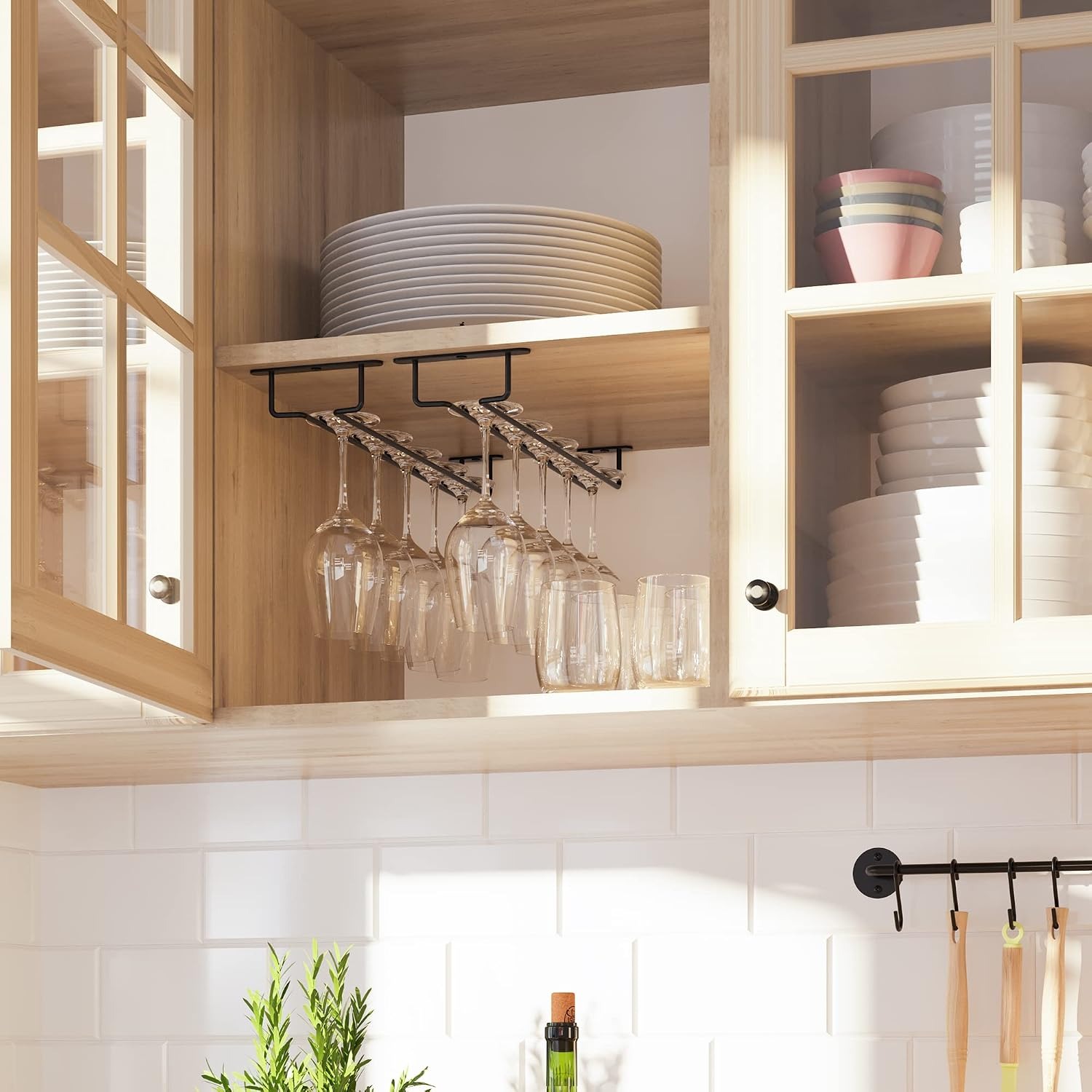
An under cabinet glass holder fixes this by using space that is already there and doing nothing. The gap between the bottom of a wall cabinet and the counter is dead air. Hang a rack in it and your glasses live in a single row, visible, dust-protected and within arm's reach.
How a hanging stemware rack works
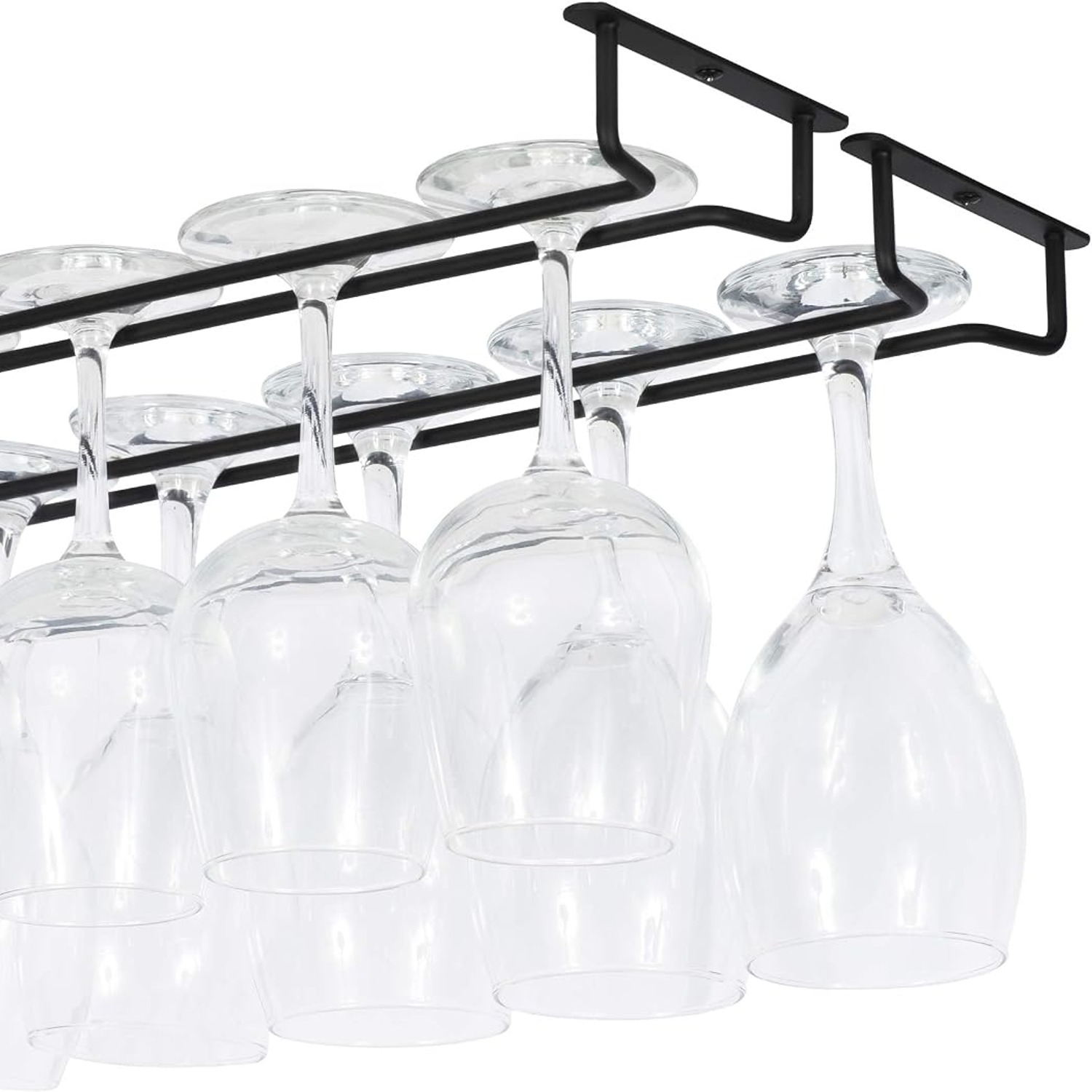
The principle is simple. Two parallel rails sit a short distance apart. The stem of the glass slides between them, the foot rests on top, and the bowl hangs below. Gravity does the rest. There is no clip, no catch, nothing to fiddle with.
Because the glass hangs bowl-down, dust settles on the foot rather than inside the bowl. That is a small thing until you pull out a glass you have not used in months and find it needs a rinse. Hanging storage cuts that problem down.
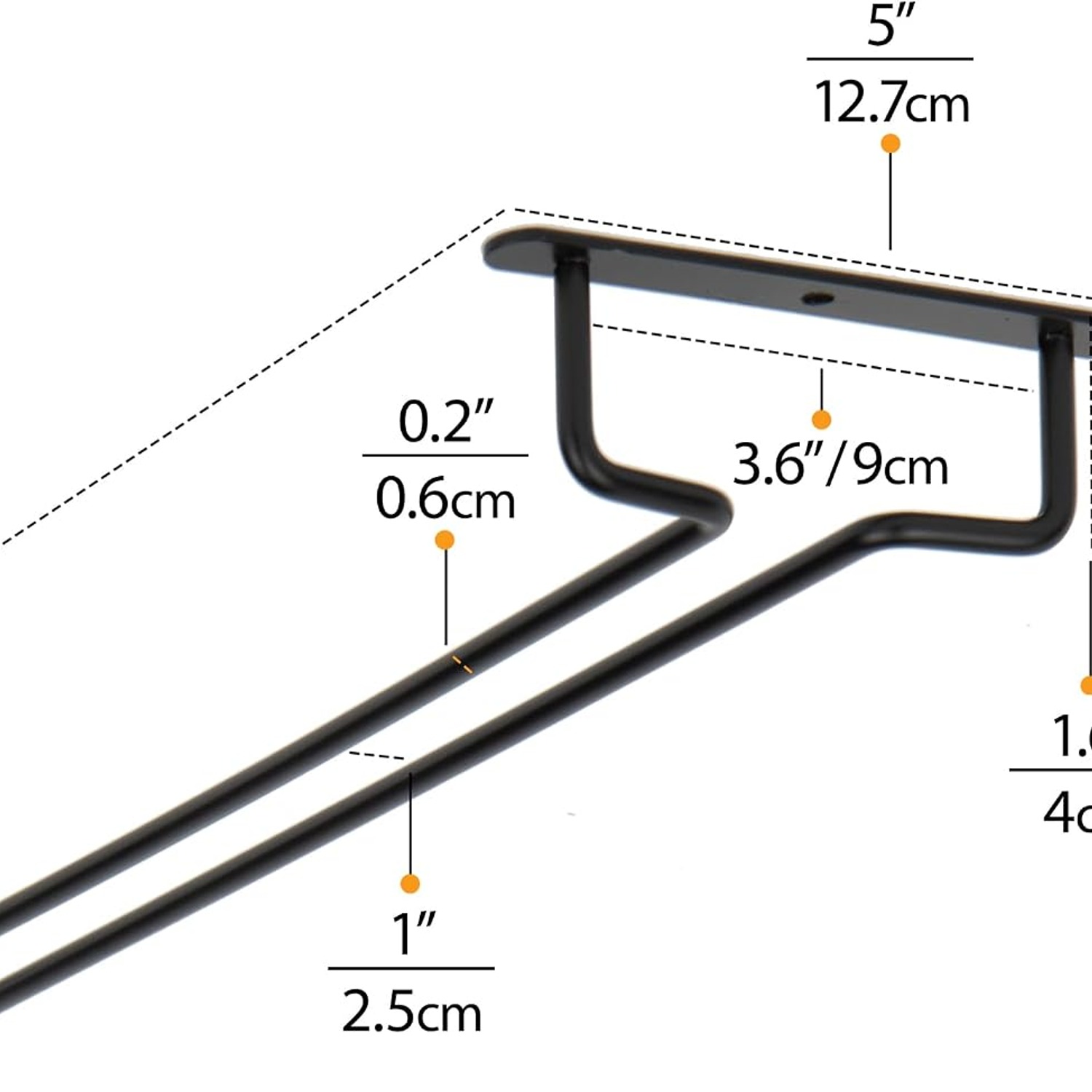
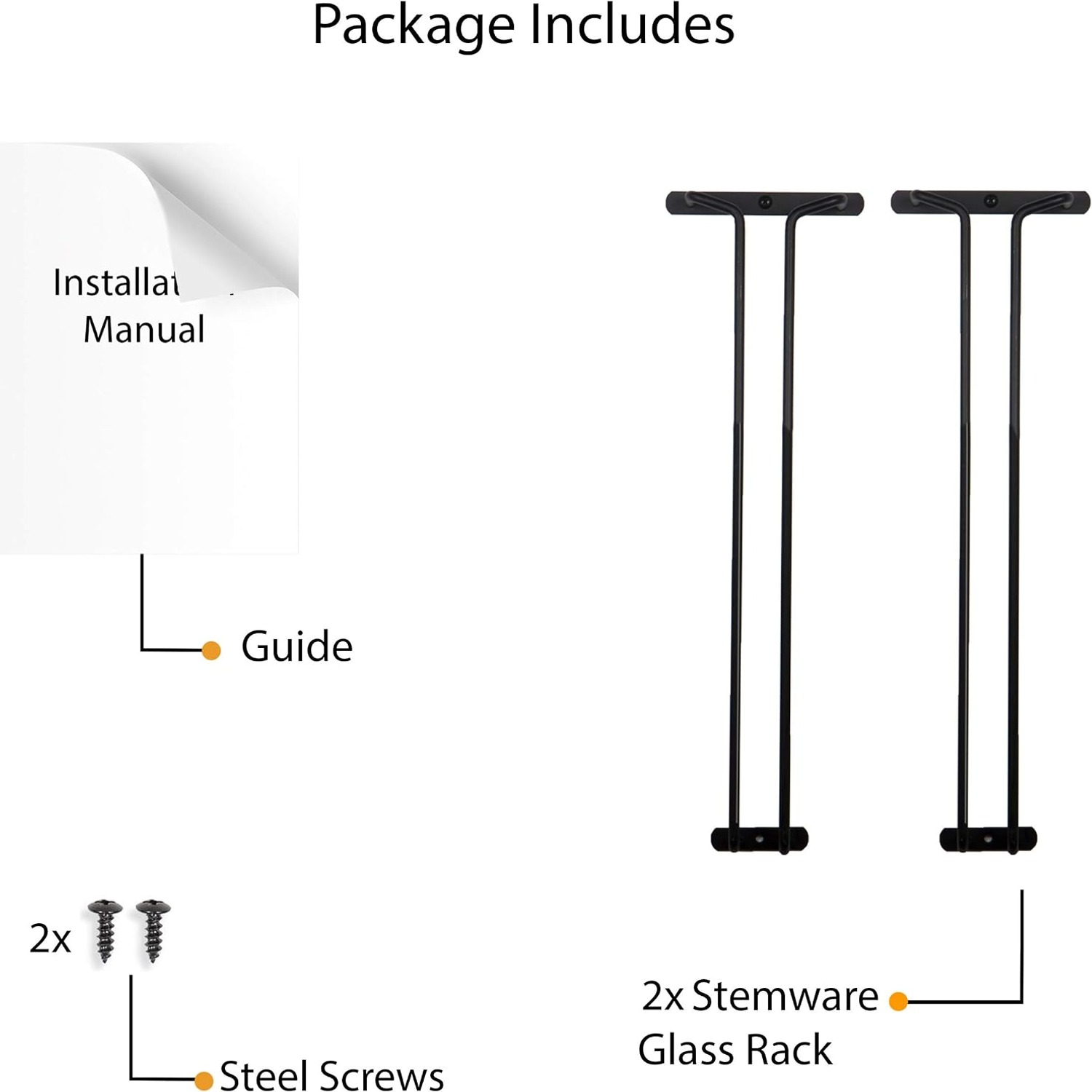
This set gives you two racks, each with two rows. That means four rails in total if you mount them side by side, or two separate two-row stations if you split them between rooms. Each rack is 43.2 cm wide, 12.7 cm deep and 4.1 cm high, with a stated capacity of about 2.3 kg per rack.
Who this suits
If you entertain even occasionally, having glasses hanging and ready changes how the evening starts. No digging through a cupboard, no wiping dust off rims while guests wait.
It also suits small kitchens, where every centimetre of counter matters. Shifting glassware off the counter and into the under-cabinet zone frees up real working space.
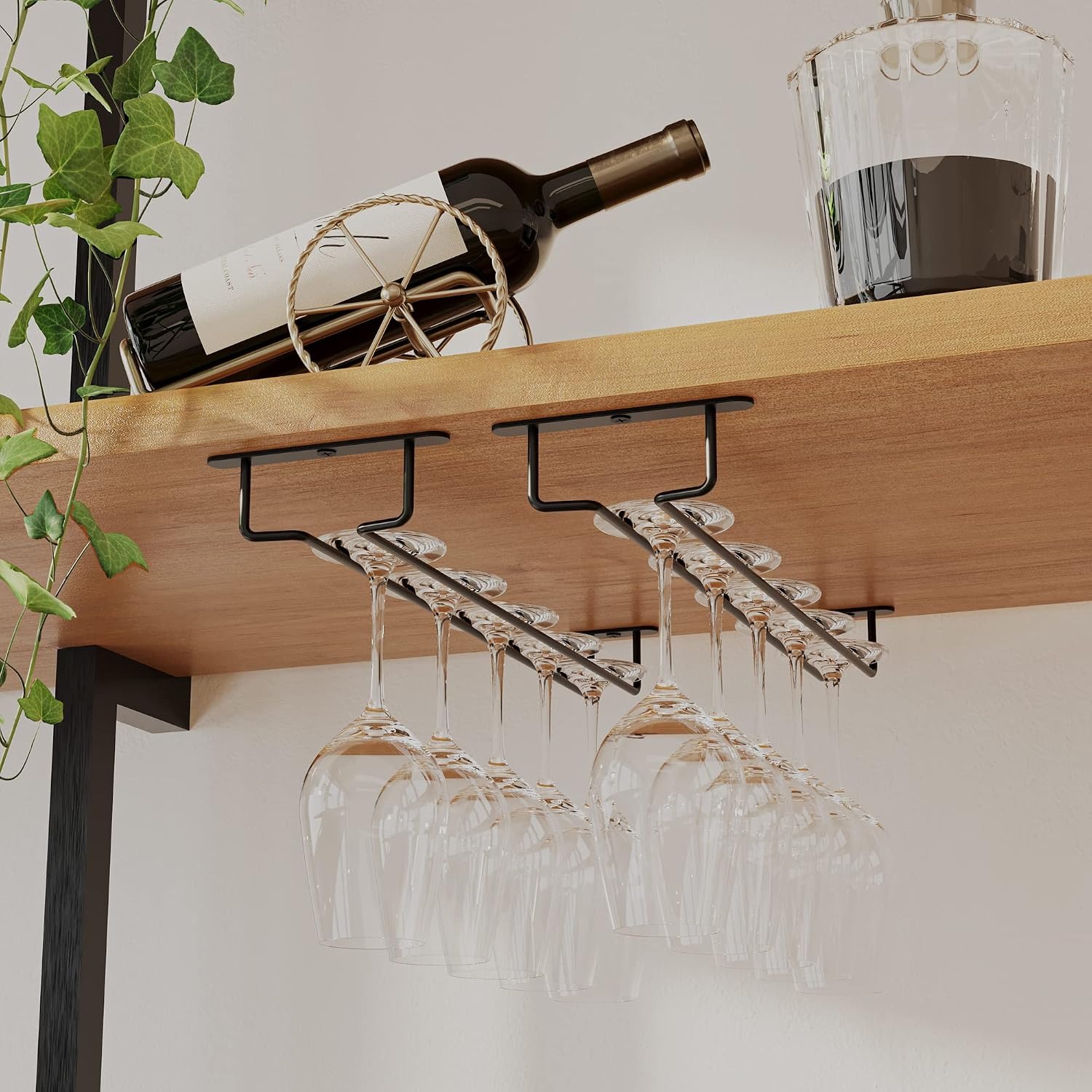
Home bar setups benefit too. Mount a rack under the top shelf of a bar cart, a buffet or a credenza and the whole arrangement starts to look deliberate rather than improvised. The black finish helps here, since it reads as part of the furniture rather than an add-on.
Renters should check their agreement first. The rack fixes with screws. Some people get around this by mounting to a freestanding shelf or sideboard they own instead of to fixed cabinetry.
Measuring before you buy
Three numbers matter.
First, cabinet depth. The rack is 12.7 cm deep. If your wall cabinets are standard depth, that leaves the rack sitting well within the footprint. On a shallow shelf, measure carefully so the rails are fully supported.
Second, the gap below. Measure from the bottom of the cabinet down to whatever sits underneath, whether that is a counter, a kettle or a toaster. Then measure your tallest glass. Add a couple of centimetres on top of that so you can tilt the glass in and out without knocking it. If the sums are tight, consider mounting over a stretch of empty counter instead.
Third, the base width of your glasses. Slim everyday wine glasses and champagne flutes slide in easily and pack more per row. Big burgundy bowls and coupes take up more rail. If you own a mix, plan to hang the wide-bowled ones with a little breathing room.
Installing it
Assembly is required, and the hardware is included. Put both racks together on the counter first. It is far easier than wrestling with parts while holding a screwdriver above your head.
Mark your screw positions with a pencil. Hold a glass in place as you mark rather than measuring in the abstract, because it tells you immediately whether the position clears the appliance below and whether the cabinet door swings past without catching.
Drive into solid timber where you can. If the cabinet underside is a thin panel rather than solid, use a shorter screw or an appropriate fixing for the material. Do not overtighten; snug is enough, and forcing a screw in thin board just strips the hole.
Once mounted, load a few glasses and give the rack a gentle test. If anything shifts, back out and reposition before you fill it.
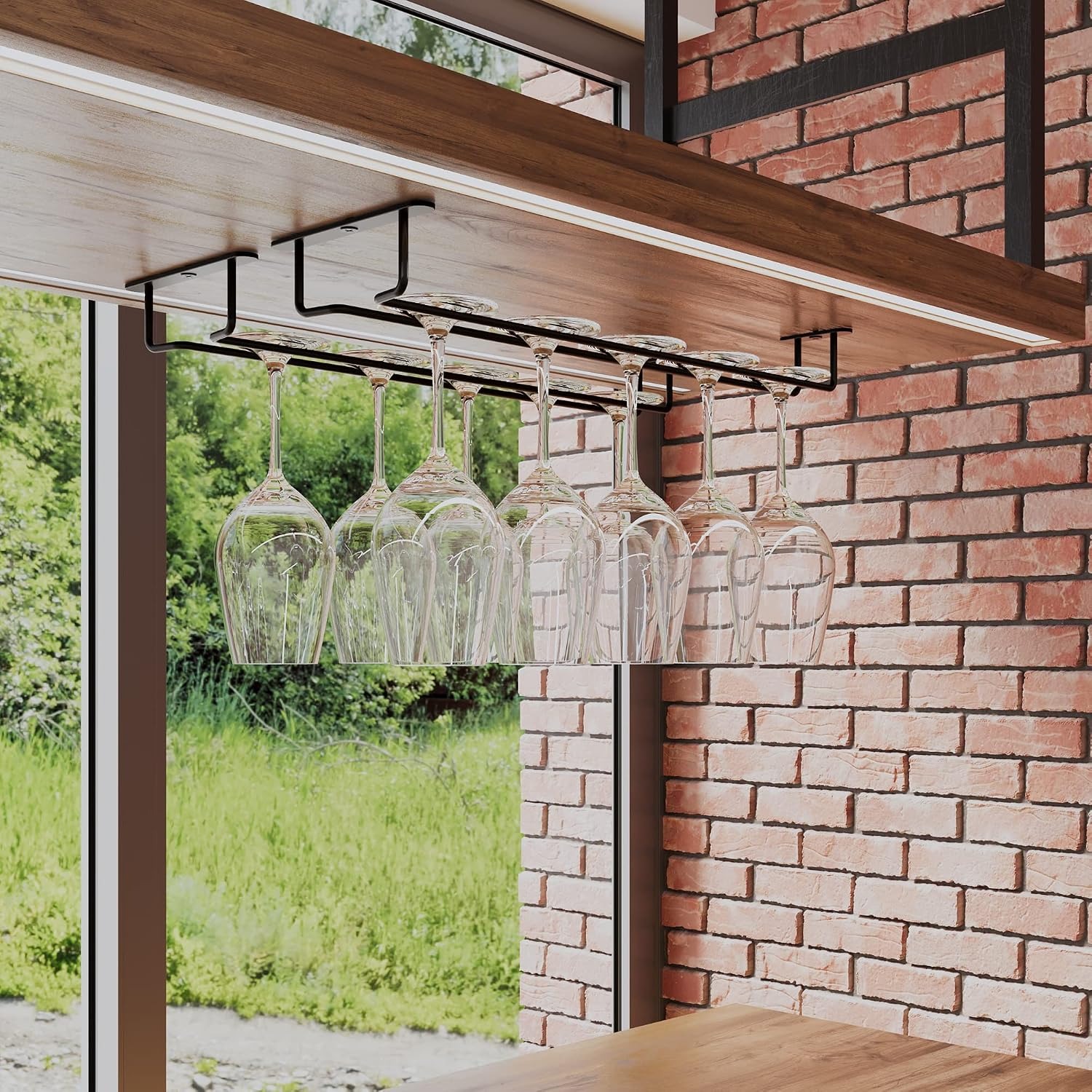
If you want a longer run, racks sit happily side by side. Two end to end gives you roughly 86 cm of hanging storage, and because the finish matches, it reads as one continuous unit rather than two separate pieces.
Daily use and care
Hanging glasses is a habit worth forming. Wash, rinse, hang stem-up to drain. The rack doubles as a drying spot, which saves on tea towel polishing and the smears that come with it. Just remember that water drips, so avoid mounting a drying rack directly above a power point or an appliance.
Keep a small gap between bowls. Packed tightly, glasses can touch and chime when a cabinet door closes nearby. A finger's width of space solves it.
Cleaning is quick. Wipe the rails with a soft damp cloth and dry them off. Avoid scouring pads, bleach and strong solvents, which can mark a painted finish. The rack is rust resistant and rated for indoor use, so keep it inside and away from constant damp.
Every few months, run a screwdriver over the mounting screws. Normal use and the small vibrations from closing cabinet doors can loosen things over time, and a quick check takes seconds.
Getting the layout right
A few arrangements work well.
One rack over the sink for drying, one above the bar cart or buffet for serving. This splits the function and keeps wet glasses away from where you pour.
Both racks under the same cabinet for a long single run. Best if you own a large set and want it all in one place.
Staggered on the same wall at two heights. This suits awkward kitchens where one continuous run is not possible, and it looks intentional when done evenly.
Whichever you choose, think about traffic. A rack mounted where people walk under it with a tall head will get bumped. Over a counter, a sideboard or a corner that nobody walks through is safer.
The short version
This is a two-rack set, two rows per rack, 43.2 cm wide and 12.7 cm deep, finished in rust-resistant black with hardware included. It hangs wine glasses by the stem under a cabinet, shelf or buffet, which frees counter space and keeps bowls out of the dust.
Measure three things before you order: cabinet depth, the vertical gap below, and the base width of your widest glass. Assemble on the counter, mark with a glass in hand, screw into something solid, and keep the load within about 2.3 kg per rack.
Done properly, it is one of those small changes you stop noticing within a week, right up until you visit a kitchen that does not have one.