
The complete guide
Choosing A Countertop Wine Rack That Actually Earns Its Counter Space
The pile of bottles problem
Wine has a habit of colonising a kitchen. You bring home a mixed case because the price was good, and within a week the bottles have scattered. Two in the pantry behind the pasta. One on the counter beside the fruit bowl. Three standing upright in a cupboard where you cannot read the labels, which means you keep reaching for the same one and forgetting the others exist.
A countertop wine rack solves a small problem properly. It gives twelve bottles a single, visible home. You can see what you own, you stop buying duplicates, and your counter stops looking like the end of a dinner party. That is the whole pitch, and for most households it is enough.
This guide covers how a rack like this works, who it suits, what to check before you buy, and how to look after it.
How a three-tier bamboo rack works
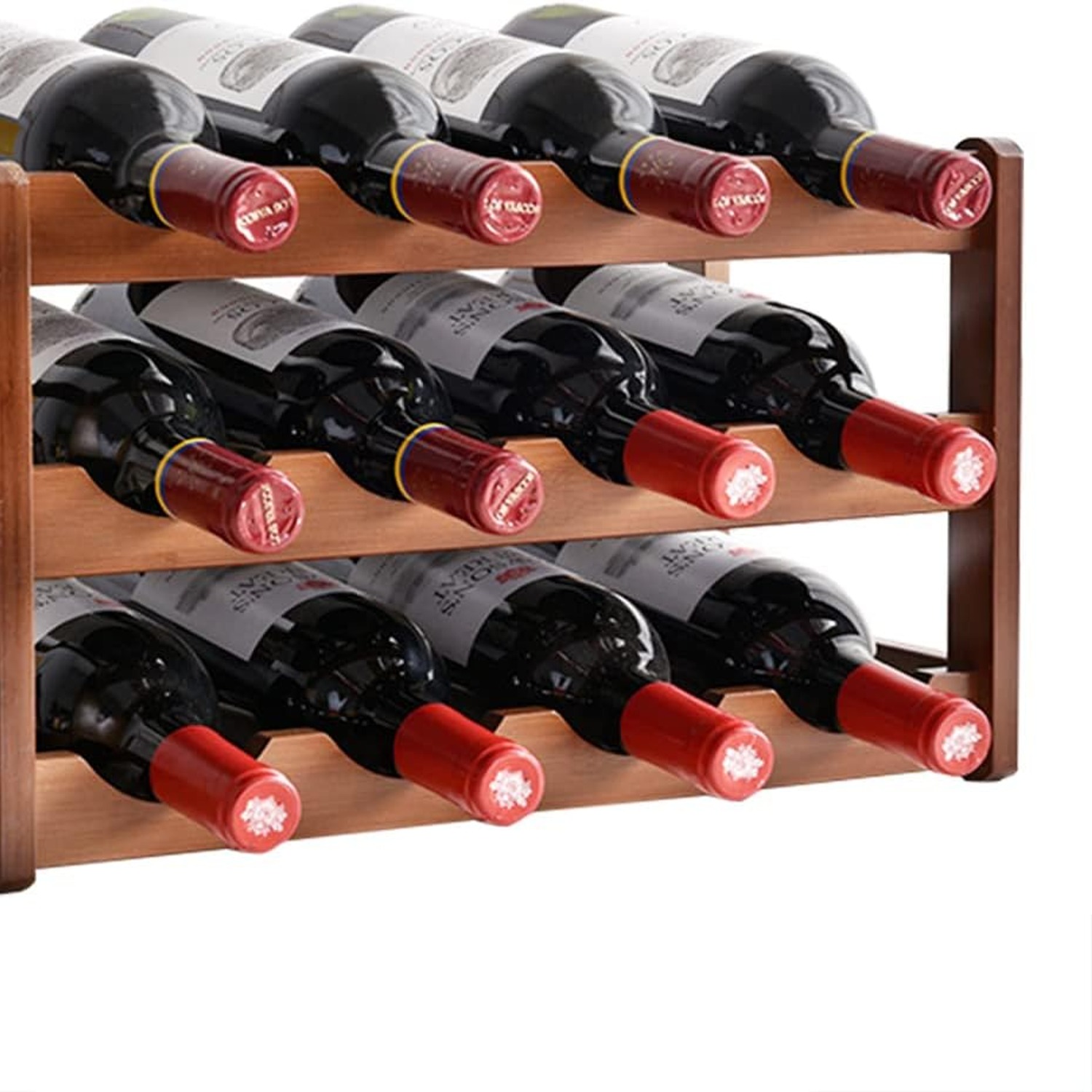
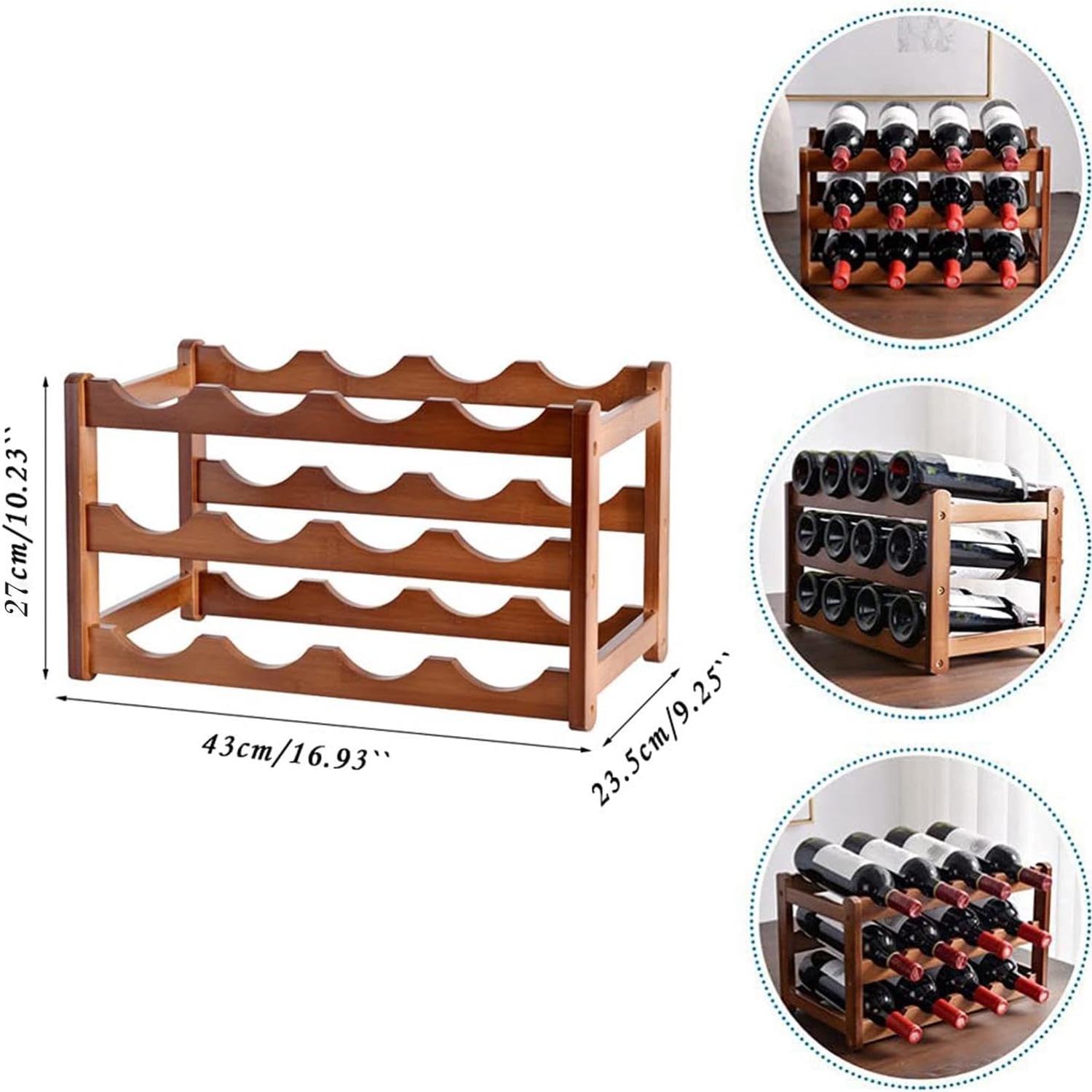
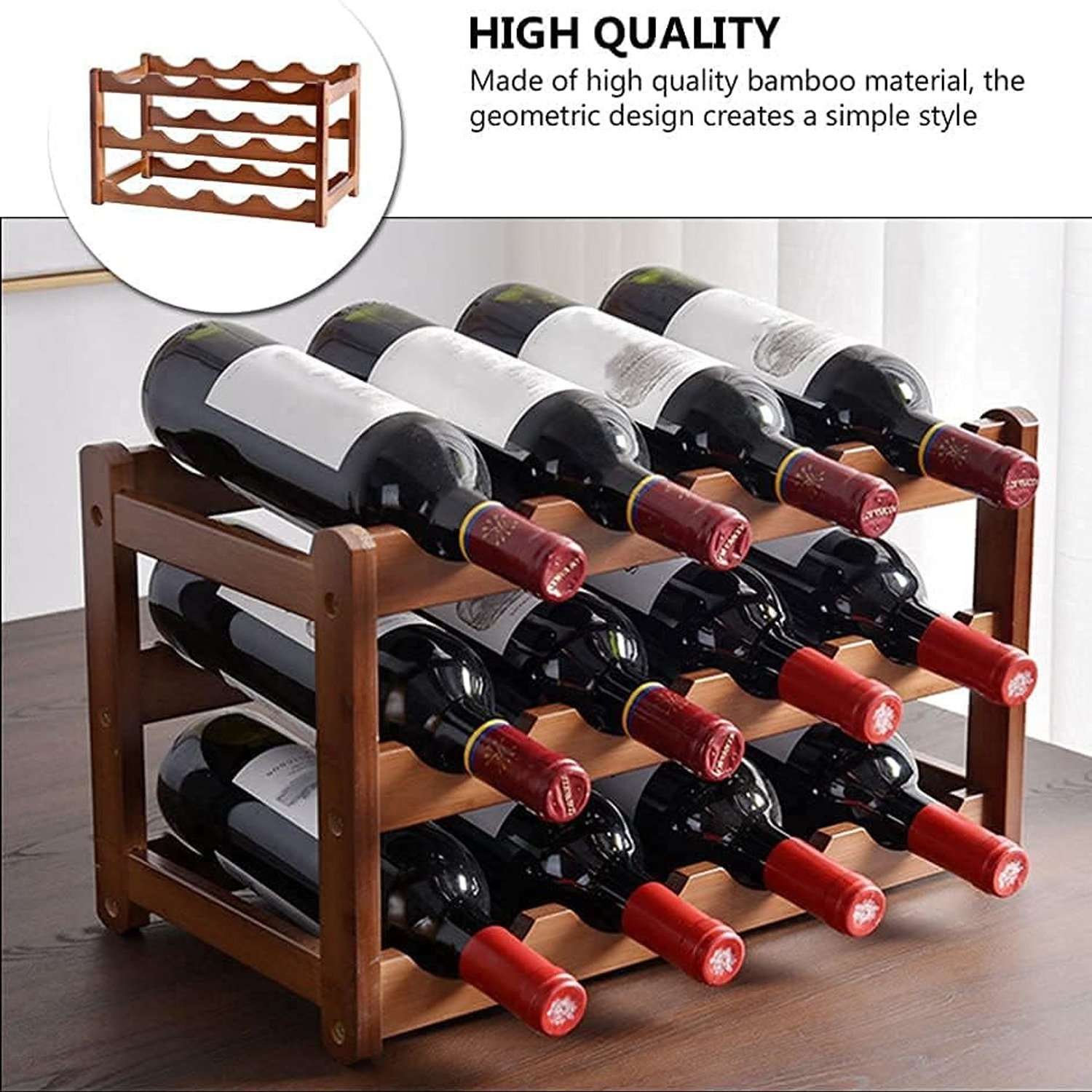
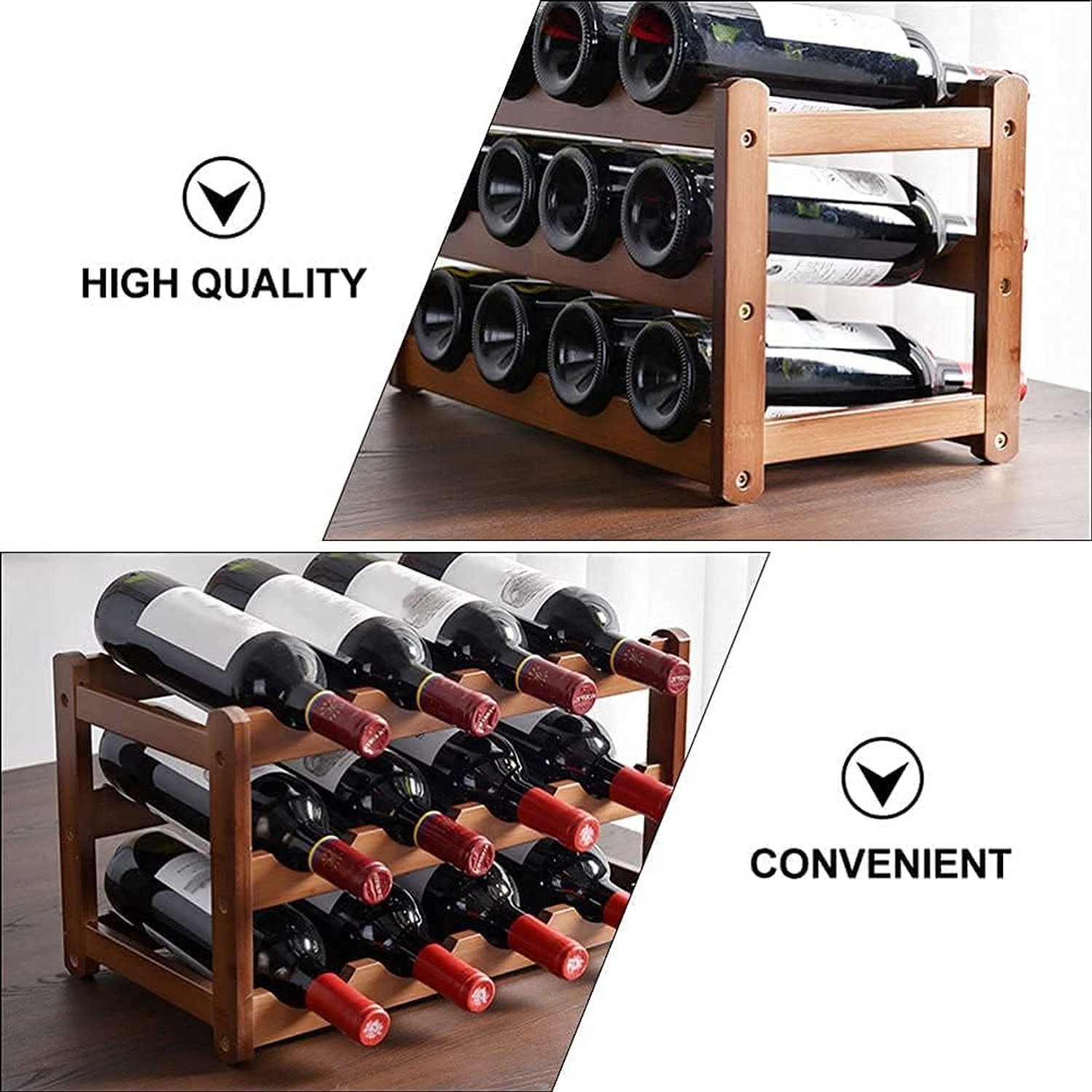
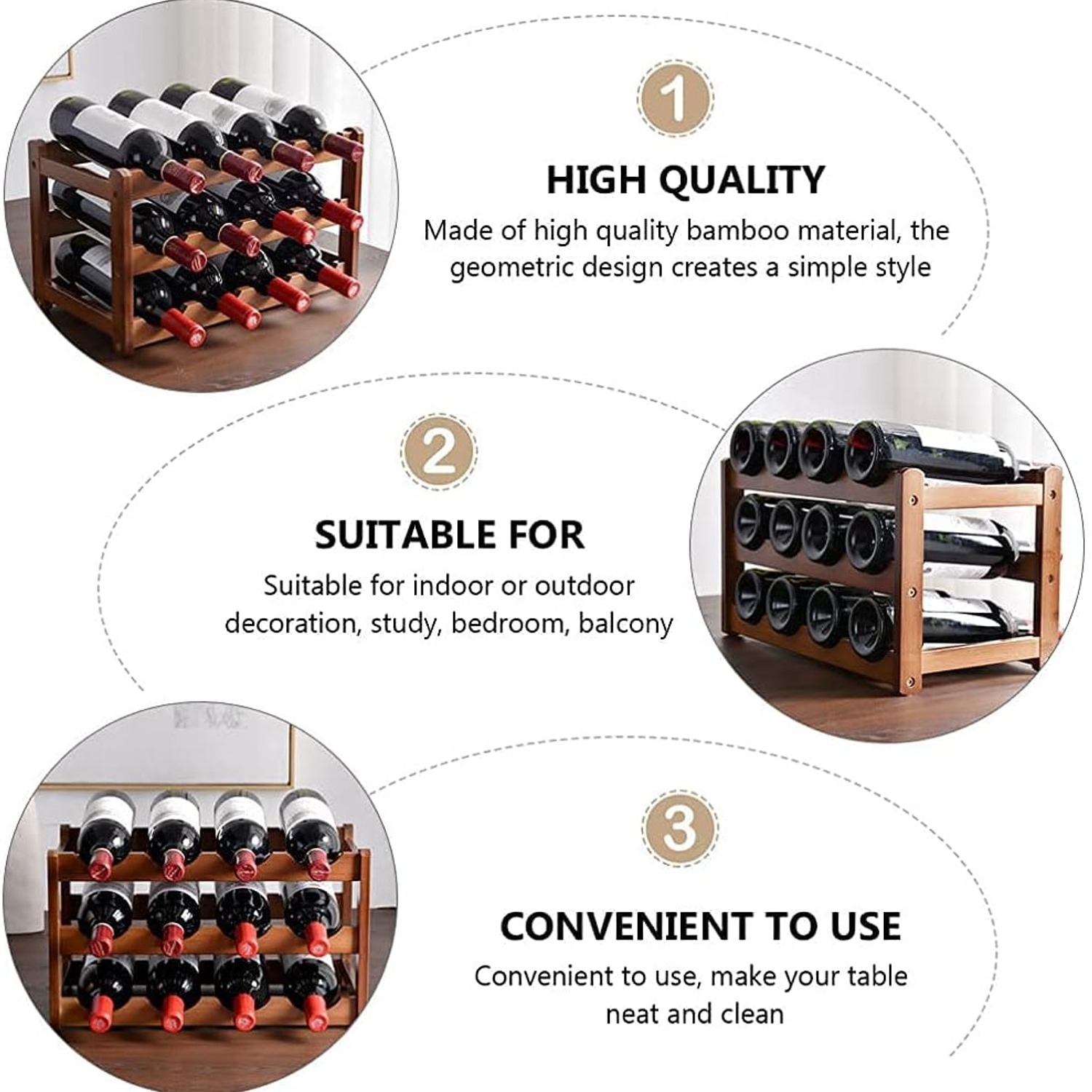
The design is simple on purpose. Three horizontal tiers, four bottle positions on each, twelve bottles total. The bottles lie on their sides with the necks pointing out, so every label faces you.
What stops them rolling is the shelf profile. Instead of flat planks, each tier is cut with a wave, so a bottle settles into its own dip. Pull one out and its neighbours stay put. That small bit of shaping is the difference between a rack you trust and one that makes you nervous every time you reach in.
The sections are joined with locating pins. Those pins do two jobs. They line everything up during assembly, and they stop the frame racking sideways over time. A timber rack that relies only on screws into end grain will eventually develop a lean. Pinned joints hold their shape much better.
The frame is bamboo with a painted finish. Bamboo is technically a grass, not a timber, and it grows back fast after harvest, which is part of why it has become so common in kitchen storage. It is light for its strength, which is how a rack that carries twelve full bottles can weigh 1.1 kg empty.
Assembled, it is 43 cm wide, 23.5 cm deep and 27 cm high. The depth matters more than people expect. Standard kitchen counters run around 60 cm, so at 23.5 cm the rack leaves working room in front of it rather than eating the whole surface.
Why bottles lie down
If you have only ever stored wine standing up, the horizontal thing can seem like a style choice. It is not.
A natural cork stays airtight because it is swollen tight against the glass. It stays swollen because it is damp. Lay a bottle on its side and the wine keeps the inside face of the cork wet. Stand it upright for six months and that cork slowly dries, shrinks a fraction, and lets air seep past. Air is what turns wine brown and flat.
For bottles you will drink this month, none of this matters. For anything you want to keep past a season, it matters a lot. Since a rack stores bottles horizontally anyway, you get the benefit for free.
Screw caps are a different story. They seal mechanically and do not care which way up the bottle sits. Plenty of excellent wine comes under screw cap now, so do not read horizontal storage as a quality signal. It is just good practice for anything corked.
Who this size suits
Twelve bottles is a specific number, and it suits a specific kind of drinker.
It works if you buy by the case occasionally and drink through it over a month or two. It works if you keep a handful of reds, a few whites and something for guests. It works in apartments, in rentals, and in kitchens where a floor-standing rack would be in the way.
It does not work if you are building a cellar. Someone holding sixty bottles for ageing needs a different setup, probably in a cool cupboard or a dedicated cabinet with temperature control. A countertop rack is for working stock, the bottles you are actively drinking.
It also suits people who like to see their wine. A closed cupboard hides everything. An open rack turns the collection into part of the room, which is why it doubles as a wine display stand on a sideboard or the top of a bar cabinet.
If you are after the best small wine rack for a flat or a shared house, the thing to weigh up is honestly just capacity against footprint. Twelve bottles in 43 cm of counter is a good ratio.
What to check before you buy
Measure the gap. The two numbers that trip people up are height and depth. At 27 cm tall, this rack clears most counter-to-cabinet gaps, but kitchens vary. Measure yours and leave a few extra centimetres so you can lift bottles in and out without scraping knuckles.
Check your bottle shapes. The opening is listed at 3.5 inches, sized for standard 750 ml bottles. Burgundy bottles with their wider shoulders, and sparkling bottles especially, run fatter. If most of your drinking is champagne or prosecco, measure a bottle before committing.
Think about where it will live. Wine dislikes heat, light and vibration. The worst spots in a kitchen are on top of the fridge, next to the oven, and in a sunny window. The best are the cool end of a counter, a dining room sideboard, or a pantry shelf.
Decide if you want to move it. A freestanding rack can shift from kitchen to table when you have guests. A wall unit cannot. If flexibility matters, countertop is the right call.
Accept the assembly. It comes flat-packed. That keeps the carton small, the shipping cost down and the risk of transit damage low. The trade-off is twenty minutes at the kitchen table with the instructions.
Putting it together and keeping it good
Work on a flat surface and do a dry run first, laying the pieces out so you can see how the tiers stack. Get the first joint square and the rest tend to follow. Snug the fixings without cranking them, since over-tightening into bamboo can crush the fibres around the hole.
Once it is up, load from the bottom tier first. Weight low down makes any freestanding rack more stable, and it reduces the chance of a nudge tipping it.
Care is minimal. Wipe with a dry cloth, which is the manufacturer's instruction. For a sticky ring where someone put down a glass, a barely damp cloth works, then dry it straight away. Bamboo does not like sitting water, and a painted finish does not like solvents or scouring pads.
Every few months, give the joints a quick check. If a pin has worked loose, push it back and re-snug the fixing. Thirty seconds of attention stops a wobble becoming a wonky rack.
Keep it out of direct sun. Prolonged sunlight fades the finish and, more importantly, damages the wine inside the bottles. Light-struck wine develops off flavours surprisingly quickly, particularly in clear and pale green glass.
As a gift
This is an easy present to get right. It is useful rather than decorative clutter, it looks tidy on a counter, and it suits almost any household that drinks wine. Pair it with two bottles and you have a complete housewarming or birthday gift that does not require knowing someone's taste in homewares.
It packs flat too, which makes it far easier to wrap and transport than a pre-assembled rack.
The short version
A 12 bottle bamboo wine rack is a small fix for a small, persistent annoyance. It collects the bottles that were scattered around your kitchen, lays them down so the corks stay sealed, and puts every label where you can read it.
Three tiers, four bottles each, 43 by 23.5 by 27 cm, 1.1 kg of bamboo with pinned joints and wave-cut shelves. Flat-packed, quick to assemble, wiped clean with a dry cloth.
Measure your space, check your bottle widths, keep it out of the sun, and it will quietly do its job for years.