

The complete guide
How To Choose A Countertop Wine Rack That Actually Fits Your Kitchen
The problem with bottles on the counter
Wine storage is one of those small household problems that never feels urgent until it does. You buy a mixed six, you bring home a bottle from a dinner, someone gives you one for your birthday, and suddenly there are bottles standing in a loose group near the toaster. One ends up behind the kettle. Another gets laid down in the pantry and forgotten for a year.
It is not a disaster. It just looks messy, and worse, it makes drinking the wine harder than it should be. You cannot see what you have. You reach for whatever is in front instead of what you actually feel like. And bottles standing free on a counter get knocked over more often than people admit.
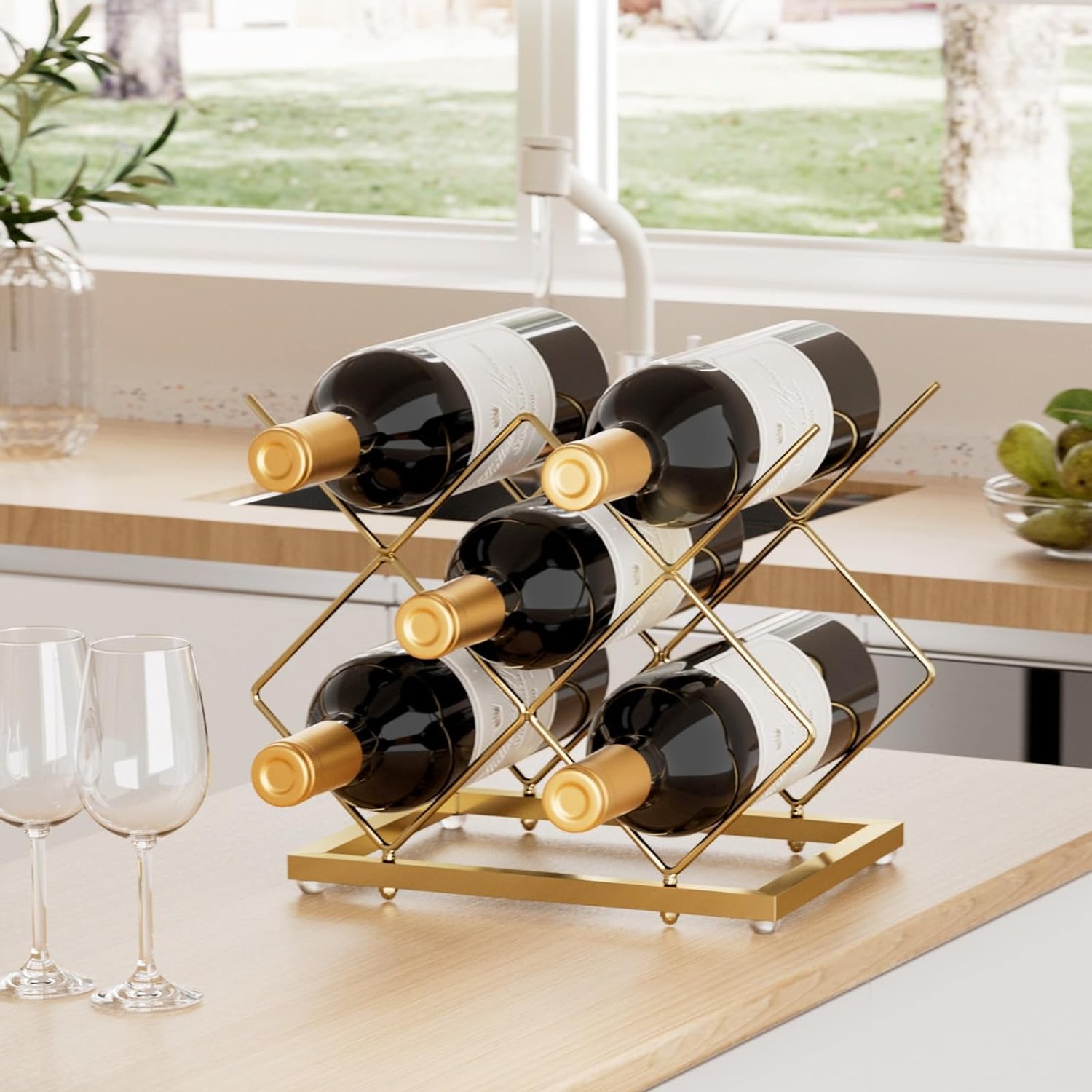
A countertop wine rack fixes this with almost no effort. It gives five bottles one clear home, puts the labels where you can read them, and takes up less counter space than the same five bottles standing loose would.
What this rack is
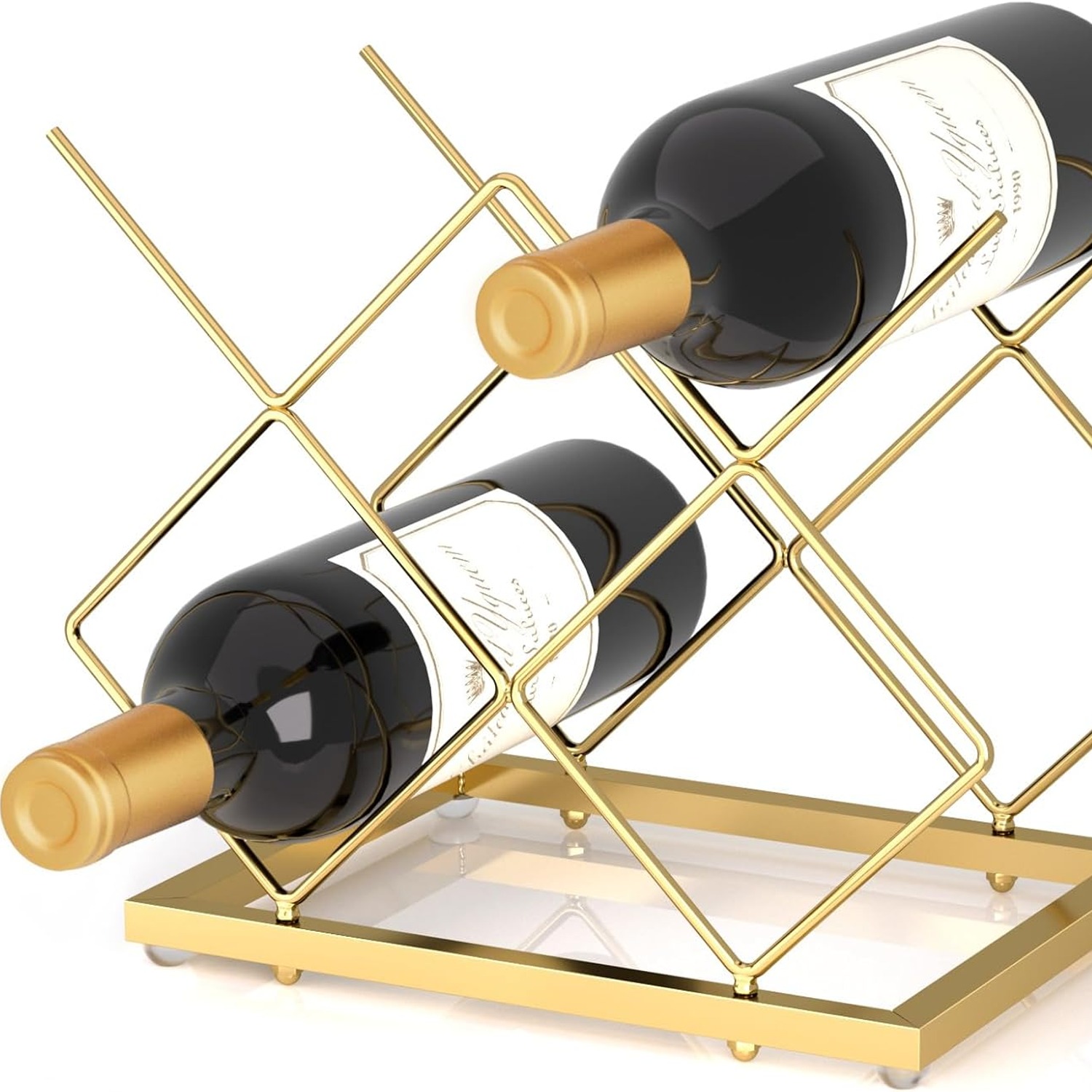
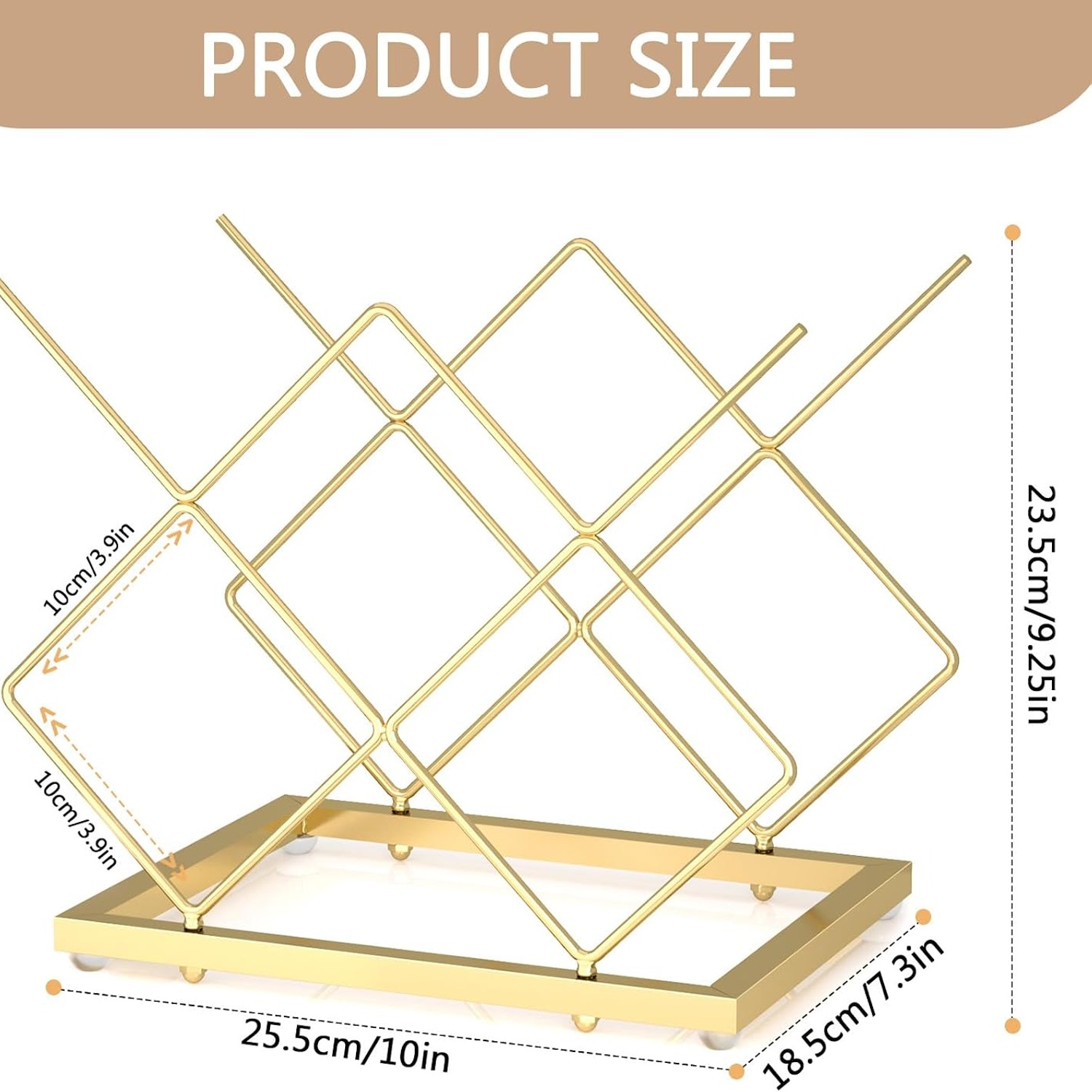
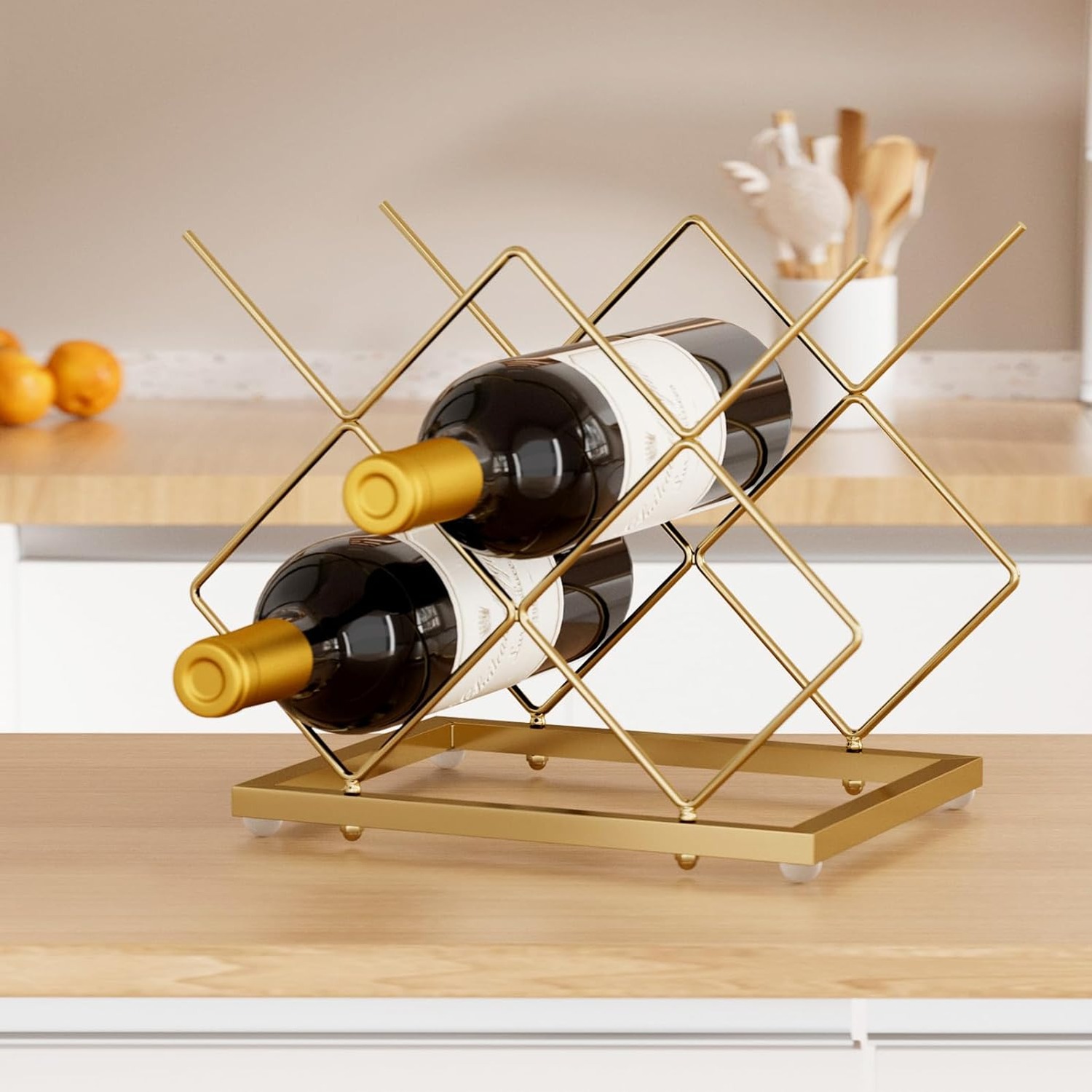
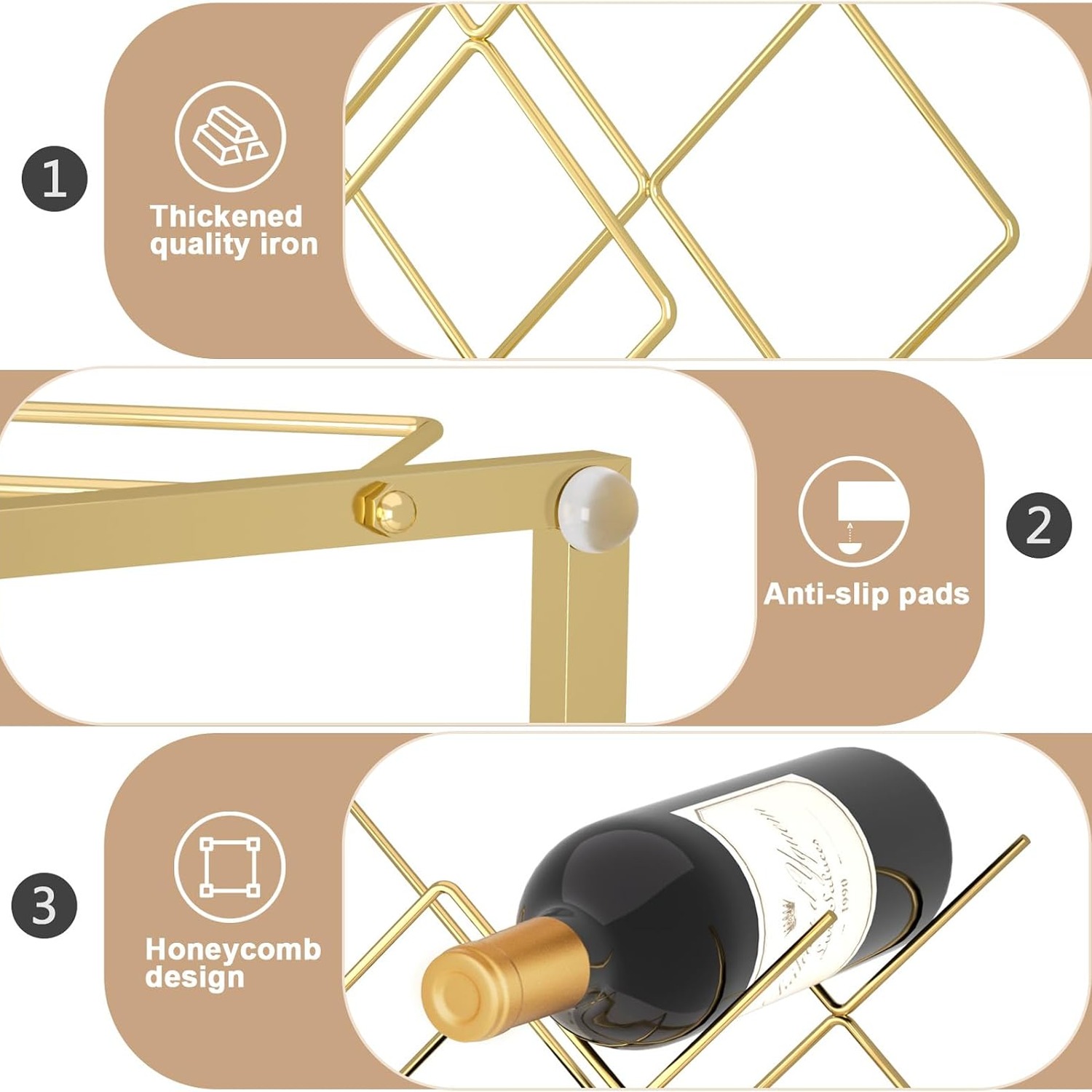
This is a small metal wine rack with a hexagonal frame and a brushed gold finish. It holds five standard size bottles. The base measures 25.5 cm deep by 18.5 cm wide, and the rack stands 23.5 cm tall. Empty, it weighs 0.55 kg.
The mounting type is tabletop, which is the plain way of saying it sits on a surface. No drilling, no brackets, no committing to a wall. You put it down, you load it, and if you rearrange the kitchen next month you pick it up and move it.
Assembly is required. The included component is the wire rack itself, so there is no hardware shelf full of extra parts to lose. It is a small item and the build is quick.
How the shape works for you
The hexagonal geometry is doing two jobs. The obvious one is looks. A geometric gold frame reads as a deliberate object on a counter rather than as storage you are trying to hide. It plays nicely with stone countertop, pale timber and darker cabinetry, and it suits the same spaces that already have brass tapware or gold-toned handles.
The less obvious job is visibility. Because the frame is open rather than solid, the labels stay readable. That sounds minor until you are standing in the kitchen on a Friday deciding what to open. If you can see the labels you pick on purpose. If you cannot, you pick whatever is nearest.
Who it suits
Five bottles is a very specific capacity, and it is worth being honest about who that works for.
It works beautifully for apartment kitchens, where counter space is genuinely limited and there is no cellar, no garage, no cool dark cupboard to fall back on. It works for people who buy a mixed six every so often and want the current rotation visible. It works on a bar cart, where a compact wine holder beside the glassware keeps everything in one zone.
It also works as a gift. Housewarmings, first apartments, a wine drinker who already owns every gadget. It is light to post, easy to wrap and useful on day one.
Where it does not work is serious collecting. If you have thirty bottles ageing, you need stable temperature, controlled humidity and a lot more space. A tabletop rack is for the bottles you will open soon, not the ones you are keeping for a decade.
Measuring before you buy
This is the step people skip, and it is the one that causes returns.
Check three numbers. First, the depth of your counter or shelf. You need at least 25.5 cm plus a comfortable margin so the rack is not perched on the edge. Second, the width available, which needs to clear 18.5 cm without crowding the kettle or the knife block. Third, and most commonly forgotten, the height clearance. The rack is 23.5 cm tall. If you are putting it inside a cabinet or under a wall-mounted shelf, you need that height plus a few extra centimetres so you can actually lift a bottle out at an angle.
Run a tape measure over the spot before ordering. It takes a minute and saves the hassle later.
Placement matters more than people think
Where you put a freestanding wine rack affects the wine inside it, not just the look of the kitchen.
Keep it out of direct sunlight. A sunny windowsill might seem like a nice display spot, but light and heat are both hard on wine. Keep it away from the oven, the dishwasher vent and the top of the fridge, where warm air gathers. A shaded corner of the counter, an interior shelf, or a spot in a dining room sideboard area are all better.
Also think about traffic. If the rack sits where elbows swing past it, bottles will get knocked. Push it back from the edge, and load the lowest positions first so the centre of gravity stays low.
Loading it properly
Start at the bottom. Settle each bottle into the frame so it sits in the structure rather than balancing on an edge. Fill from the lowest point up, which keeps the loaded rack stable.
Stick to standard 750 ml bottles. Sparkling bottles are usually wider and heavier, and magnums are in a different league entirely. The rack is specified for five standard size bottles, so test one unusual bottle before you commit to filling the whole thing with them.
If you want more than five bottles on display, a second rack beside the first is the way to do it. This model is listed as not extendable, and it is not built as a stacking system, so putting one on top of another is not the plan.
Keeping it looking good
Care is about as simple as it gets. Wipe with a dry cloth. That is the stated instruction and it is genuinely all the frame needs most of the time.
Dust settles in the joins of any open metal frame, so a quick pass every week or two is worth the ten seconds. If something spills, use a barely damp cloth and dry it straight away rather than letting moisture sit. Skip abrasive pads and strong cleaning sprays, because a brushed finish will dull or scratch if you scrub it hard.
When you move the rack, lift it rather than sliding it across the counter. Grit under the base is the most common cause of scratches, both on the rack and on the counter.
Comparing your options
If you are weighing up the best countertop wine rack for a small kitchen, the comparison usually comes down to four things.
Footprint is the first. A rack that holds twelve bottles is useless if it does not fit the counter. Capacity is second, and five is honest for everyday drinking rather than aspirational. Material is third, and metal gives you a slim profile that timber cannot match at the same capacity. Finish is fourth, and a brushed gold tone is warmer and more forgiving of fingerprints than polished chrome.
Price sits across all of it. A tabletop rack is a low-commitment purchase. If your storage needs grow later, you have not spent much, and the rack still earns its place on a bar cart or a sideboard.
The short version
This is a small gold wine rack that holds five standard bottles on a 25.5 by 18.5 cm base, stands 23.5 cm tall, and weighs 0.55 kg. It is metal, brushed, hexagonal, and sits on a tabletop rather than mounting to a wall. Assembly is required and the care routine is a dry cloth.
Measure your spot, keep it out of the sun, load from the bottom up, and it will do its job quietly for years. For the bottles you plan to drink rather than cellar, that is all a wine rack really needs to do.