

The complete guide
How To Choose A Countertop Wine Rack That Actually Fits Your Kitchen
The problem with storing wine in a cupboard
Wine is awkward to store. Bottles are heavy, round and keen to roll. Stand them upright on a shelf and they take up a surprising amount of height. Lay them flat and the first one you remove sends the rest sliding. Most homes end up with wine in two or three places at once: a few in the pantry, a couple in a cupboard, one in the fridge door that nobody can identify.
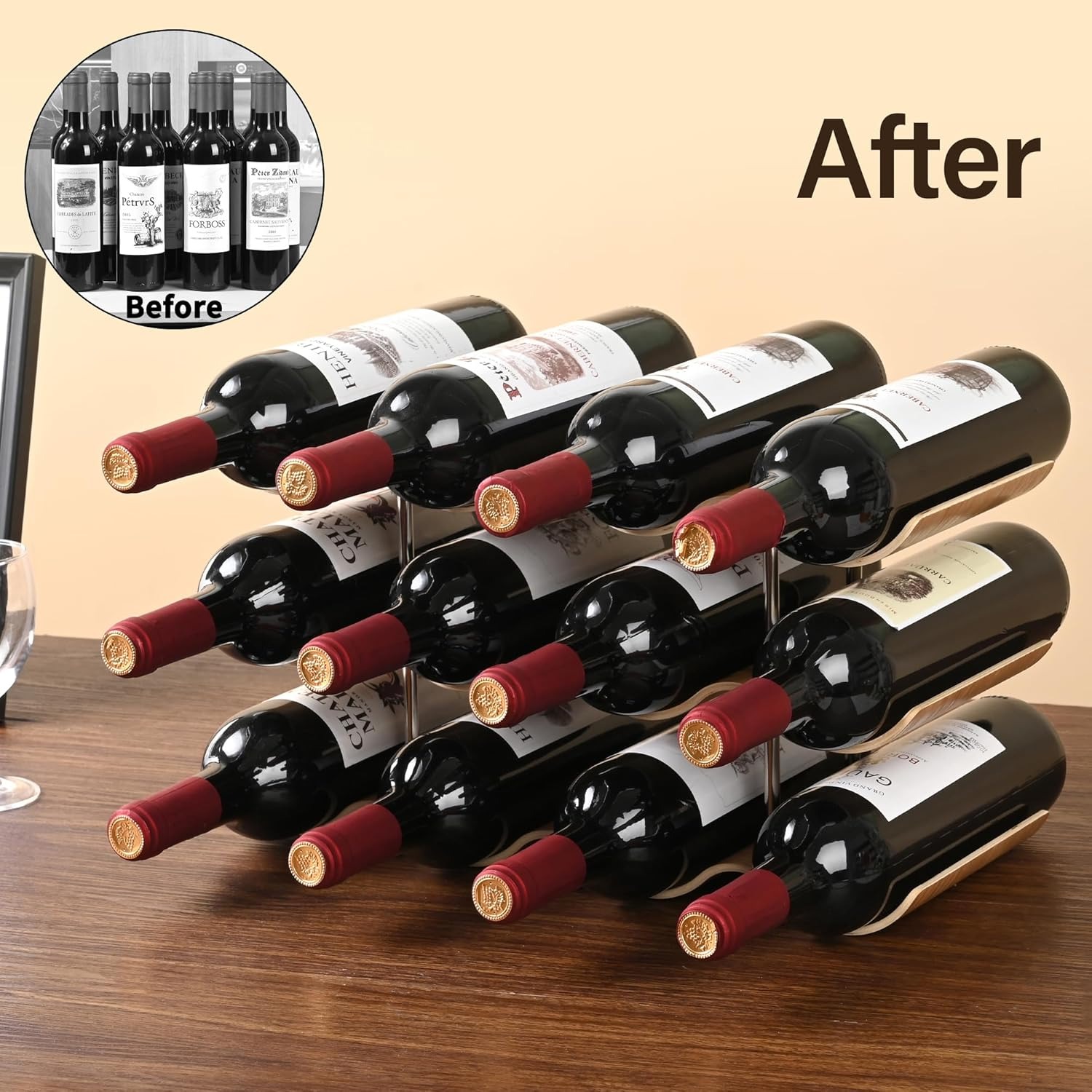
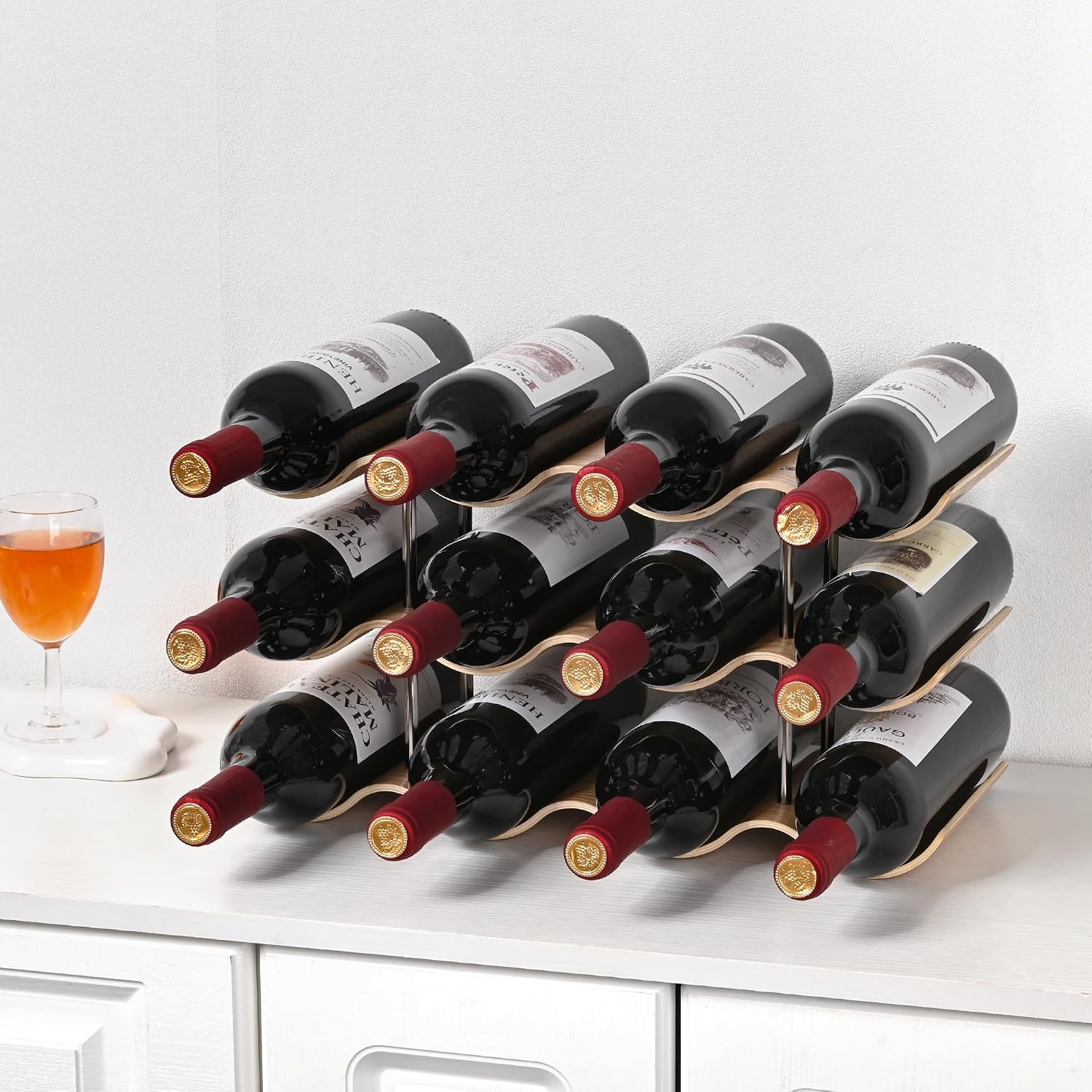
The real cost is not disorganisation. It is that you stop seeing what you own. Bottles pushed to the back of a cupboard get forgotten, and forgotten wine either gets drunk by accident on a Tuesday or sits there past its best. A countertop wine rack solves the problem by making the collection visible. Twelve bottles in a shallow row, labels facing out, all reachable without moving anything else.
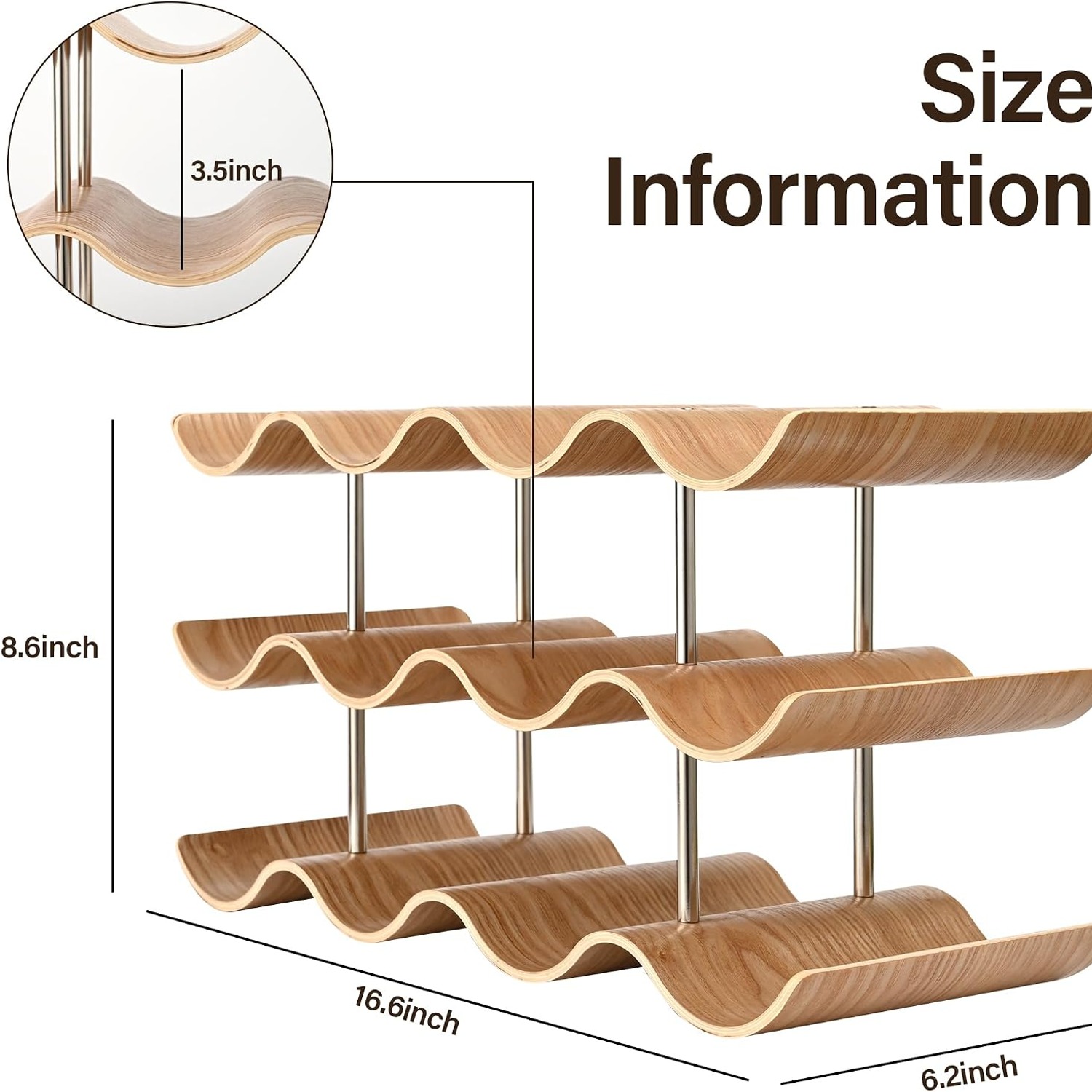
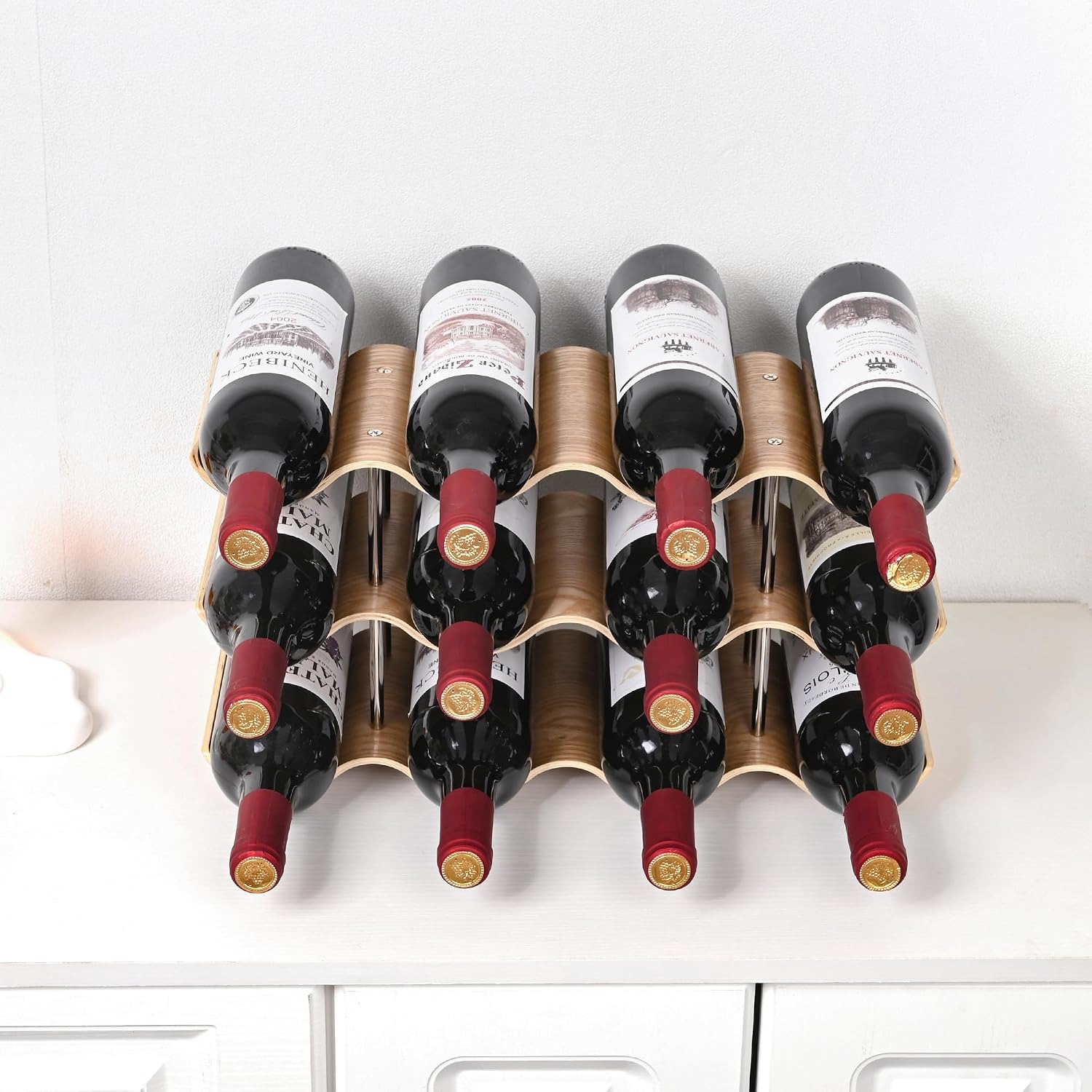
This wavy wooden wine rack takes that idea and keeps it small. At 42.2cm wide and 21.8cm tall, it occupies about the same counter space as a large chopping board stood on its side. It does not need a corner of the room. It needs a corner of a counter.
How the wavy design works
Look at a standard wine rack and you will usually see a grid: square or diamond holes, each one a tunnel for a bottle. Those work, but they are bulky, and the bottle rattles around inside the hole unless the fit is exact.
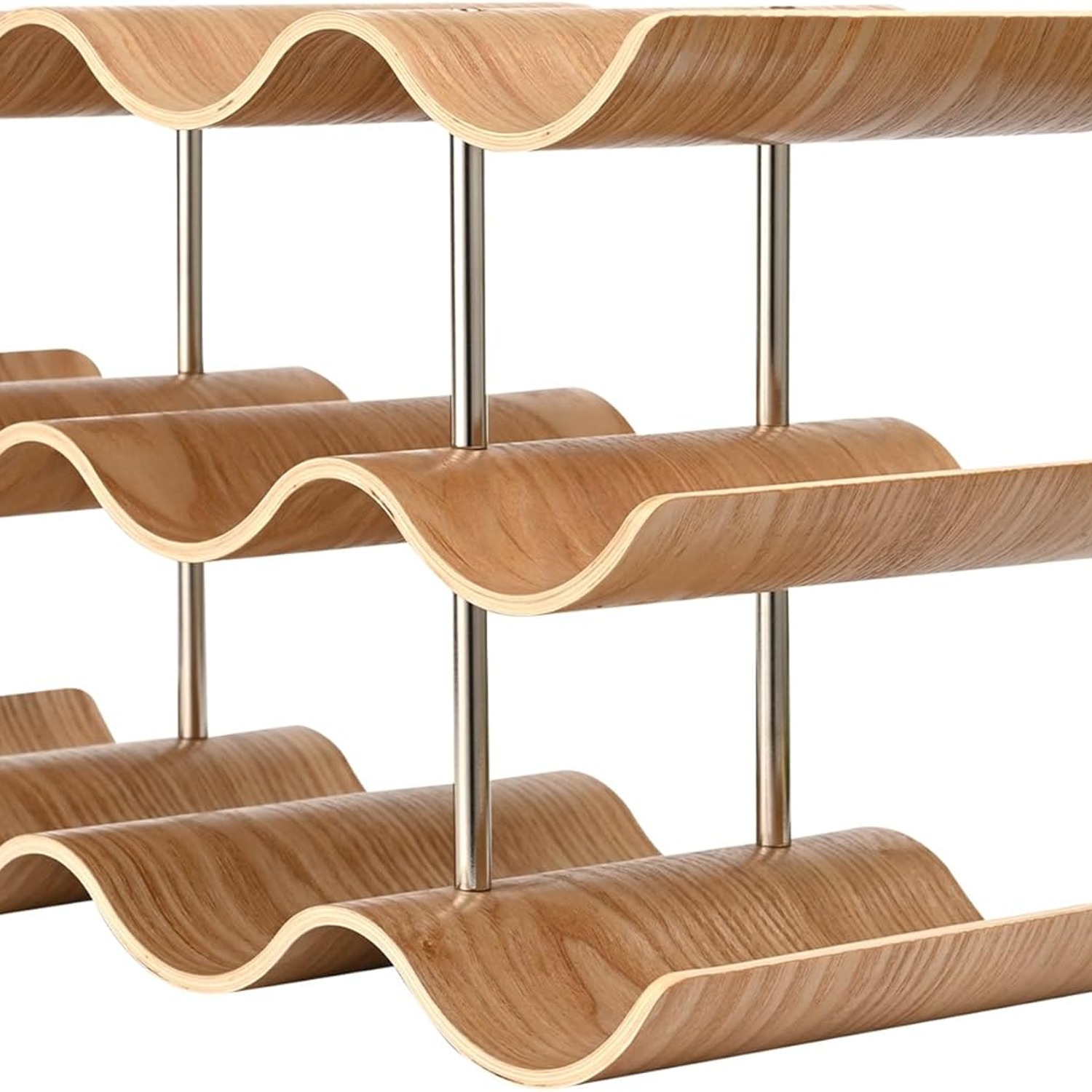
The wavy approach is different. Each tier here is a solid wood board that has been pressed under heat into a gentle S curve, so the top surface rises and falls. Every dip in that curve becomes a shallow cradle. Rest a bottle in one and gravity does the rest. The bottle settles into the low point and stays there. It cannot roll left or right, because it would have to climb the ridge on either side to do it.
That gives you two practical wins. The first is stability without bulk, since you do not need deep walls around the bottle when the shape itself is holding it. The second is easy access. You lift a bottle straight up and out rather than sliding it from a tunnel, which matters when the rack is on a counter with a cupboard overhead.
The three tiers are joined by silver double-pass nut struts. These are the metal part of the wood and metal build, and they do more than connect the boards. They set the vertical spacing so each tier sits at the right height above the one below, and they stop the whole structure racking sideways when it is loaded.
Who this rack suits
It suits people with more wine than shelf space. Apartment kitchens, small units, share houses, caravans parked for the season, offices with a staff bar. Anywhere a floor standing wine cabinet is simply too much furniture for the room.
It also suits people who want their wine where they can see it. There is a difference between storing wine and keeping wine, and this is a keeping rack. Twelve bottles is roughly a case, which for most households is a month or two of drinking plus a couple of bottles held back for something worth marking.
A third group worth mentioning is gift buyers. This is one of the easier presents to get right for someone who has started taking wine a bit more seriously. It flat packs, it goes together quickly, and it looks like a piece of kit rather than a gadget. If you are hunting for a wine lover gift that will actually get used, storage beats another novelty corkscrew.
It is less suitable if you are planning to age wine for years. Open shelving in a kitchen means temperature swings, light and vibration, none of which help a bottle improve. For that you want a cellar or a temperature controlled cabinet. Use this rack for the wine you intend to open.
Working out whether it fits
Measure before you buy. It takes two minutes and saves a return.
You need 42.2cm of width, 15.7cm of depth and 21.8cm of clear height. The height is the one people forget. If the rack is going on a counter with wall cupboards above, check the gap between countertop and cupboard base. Standard kitchens often leave 40cm to 50cm there, which is plenty, but a low splashback shelf or a rangehood can eat into it.
If you want the rack inside a cabinet, measure the internal shelf height rather than the cabinet door. Shelf spacing varies enormously between kitchens, and 22cm of clear internal height is not guaranteed.
Then think about depth. At 15.7cm the rack is shallower than most countertop, so bottles will not overhang the front edge. On a narrow bar shelf, check that the full depth is supported rather than cantilevered over an edge, especially once you add twelve bottles of weight.
Standard bottles and the awkward ones
Wine bottles are not one size. A Bordeaux bottle is narrow with high shoulders. Burgundy and Rhône shapes are wider and sloped. Champagne and sparkling bottles are wider again and noticeably heavier, because the glass has to hold pressure.
This rack handles the spread by splitting the tiers. The lower two tiers have eight slots between them sized for standard bottles, which covers the vast majority of still wine. The top tier has four wider slots specifically for oversized bottles. That is where the Champagne and the fat Burgundy shapes go.
If your collection runs heavily to sparkling, be realistic about the four wide slots. You will fill them quickly. The same applies to very large formats such as magnums, which are outside the intended range here. Measure the widest bottle you own before ordering and compare it against the slots.
There is also a balance point worth knowing. Heavier bottles are better on the lower tiers. It keeps the centre of gravity low and the rack feels more planted on the counter. Save the top tier for the oversized bottles it was designed for, not for stacking extras.
Assembly, in plain terms
The box has three wavy wooden boards, eight double-pass nut struts, eight Phillips screws and an instruction sheet. You supply a Phillips screwdriver.
The struts pass through the boards and the screws tighten from the outside, which is why they are called double-pass. Work on a flat surface, do each screw up finger tight first, then go round and firm them all properly. Tightening one side fully before starting the other is how you end up with a frame that sits slightly skewed.
Once built, give it a gentle push on the top tier. It should feel solid with no wobble. If there is movement, a quarter turn on each screw usually sorts it.
Revisit the screws every few months, particularly if you move the rack around or load and unload it often. Wood and metal fixings loosen slightly over time with handling. Thirty seconds with a screwdriver keeps it tight.
Looking after wood and wine
Care is simple. Wipe the rack with a dry cloth to clear dust. If something spills, use a barely damp cloth and dry it straight away rather than letting liquid sit on the timber. Avoid soaking it, avoid solvent cleaners and avoid abrasive pads, since all three will take the shine off a polished finish.
For the wine itself, position matters more than anything you do to the rack. Keep it away from the oven, the dishwasher vent and any window that gets afternoon sun. Heat is the fastest way to tire out a bottle, and direct light is not far behind. A shaded corner of the counter, a pantry shelf or an interior wall is ideal.
Cork needs a little moisture to stay sealed, which is why the bottles rest on their sides in the troughs rather than standing upright. Screw cap wine does not care either way, but there is no harm in treating everything the same.
The short version
This is a small, good looking way to keep a case of wine tidy and visible. The wavy wooden tiers cradle each bottle so nothing rolls, the metal struts keep the frame steady under load, and the 42.2cm by 15.7cm footprint means it fits on a counter, a bar or a cabinet shelf without a fight.
Eight standard slots and four wide ones cover a normal mix of bottles. Assembly takes a few minutes with your own screwdriver. Care is a dry cloth and a sensible spot out of the sun.
If you want to see what you own instead of digging through a cupboard, this does the job. Measure your space first, then order with confidence.