
The complete guide
How to Choose a 12-Bottle Freestanding Wine Rack
The pile of bottles problem
Wine storage starts the same way in most homes. You buy a bottle, it sits on the counter. You buy a case because it was on special, and now the counter is gone. Bottles migrate to the bottom of the pantry, behind the pasta, and before long you are crouching with a phone torch trying to work out which red is which.
That is not a cellar problem, it is a shelf problem. A few bottles do not need climate control or a dedicated room. They need somewhere upright, slim and visible, where each bottle has its own slot and nothing gets lost. That is the whole job of a freestanding wine rack, and it is a job a 12-bottle chrome frame does well.
Twelve is a sensible target. It covers one mixed case, which is how a lot of people actually buy wine. It leaves room for a couple of bottles you are saving without eating your entire kitchen. And when the rack is full, you can see at a glance that it is full, which is a useful signal in itself.
How a horizontal rack actually works
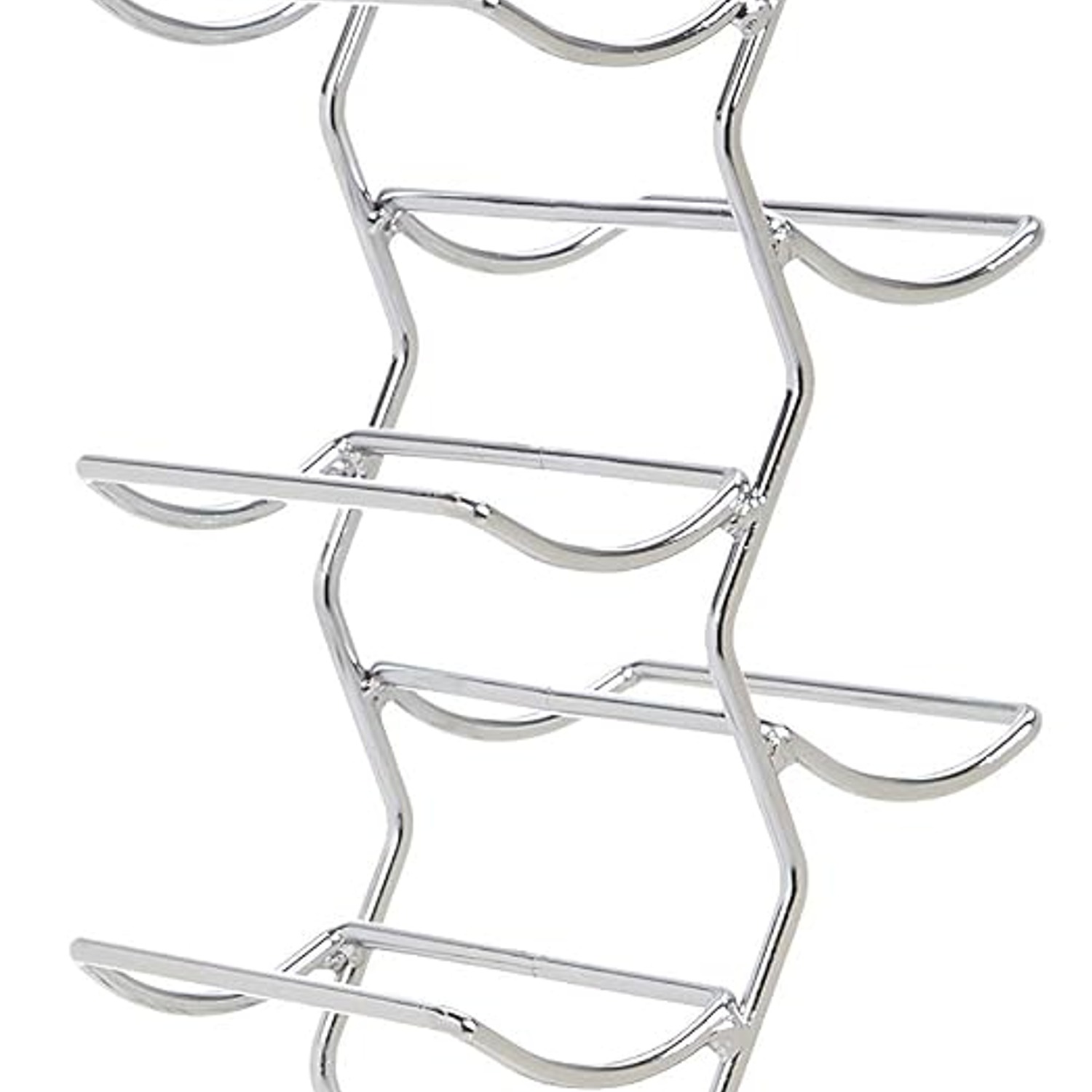
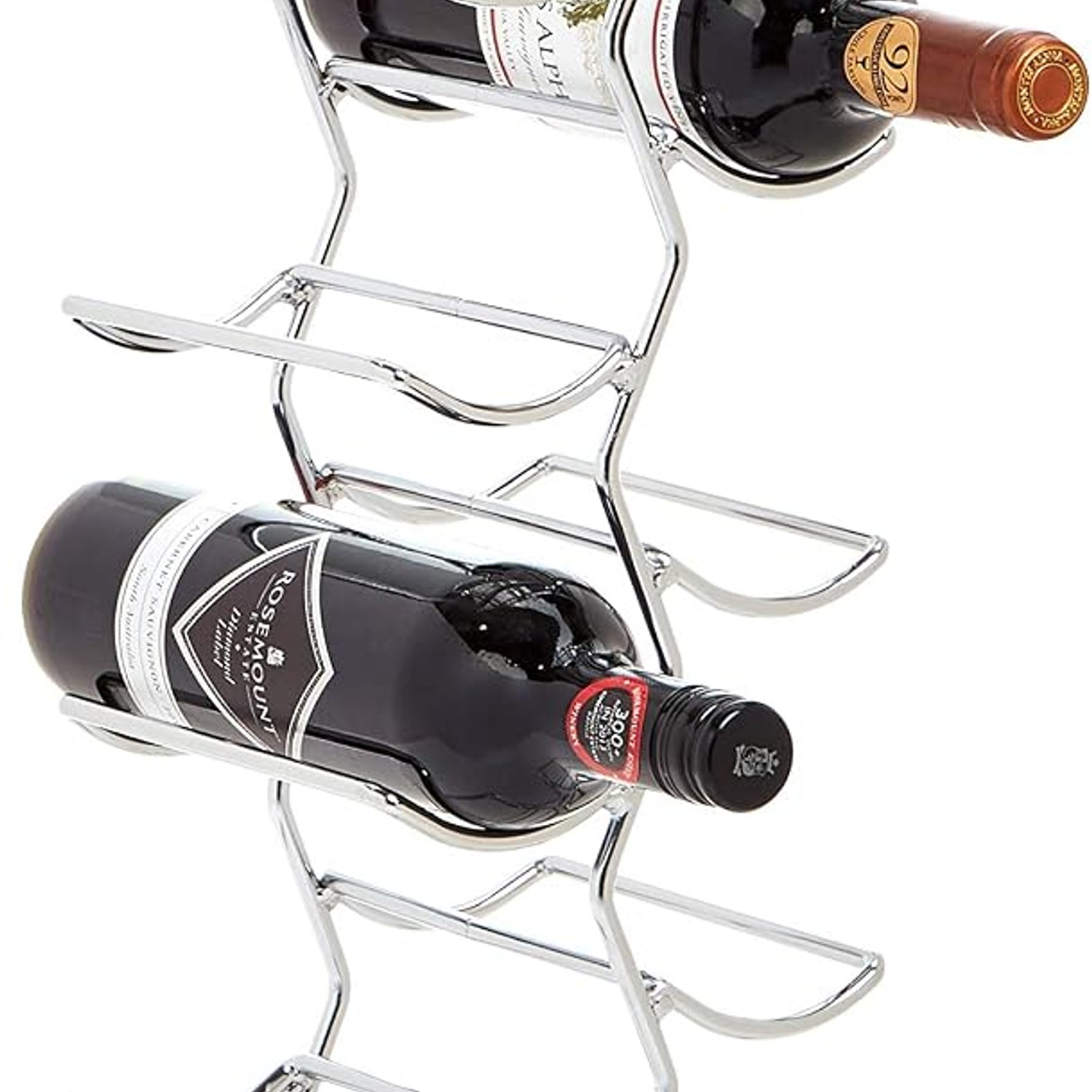
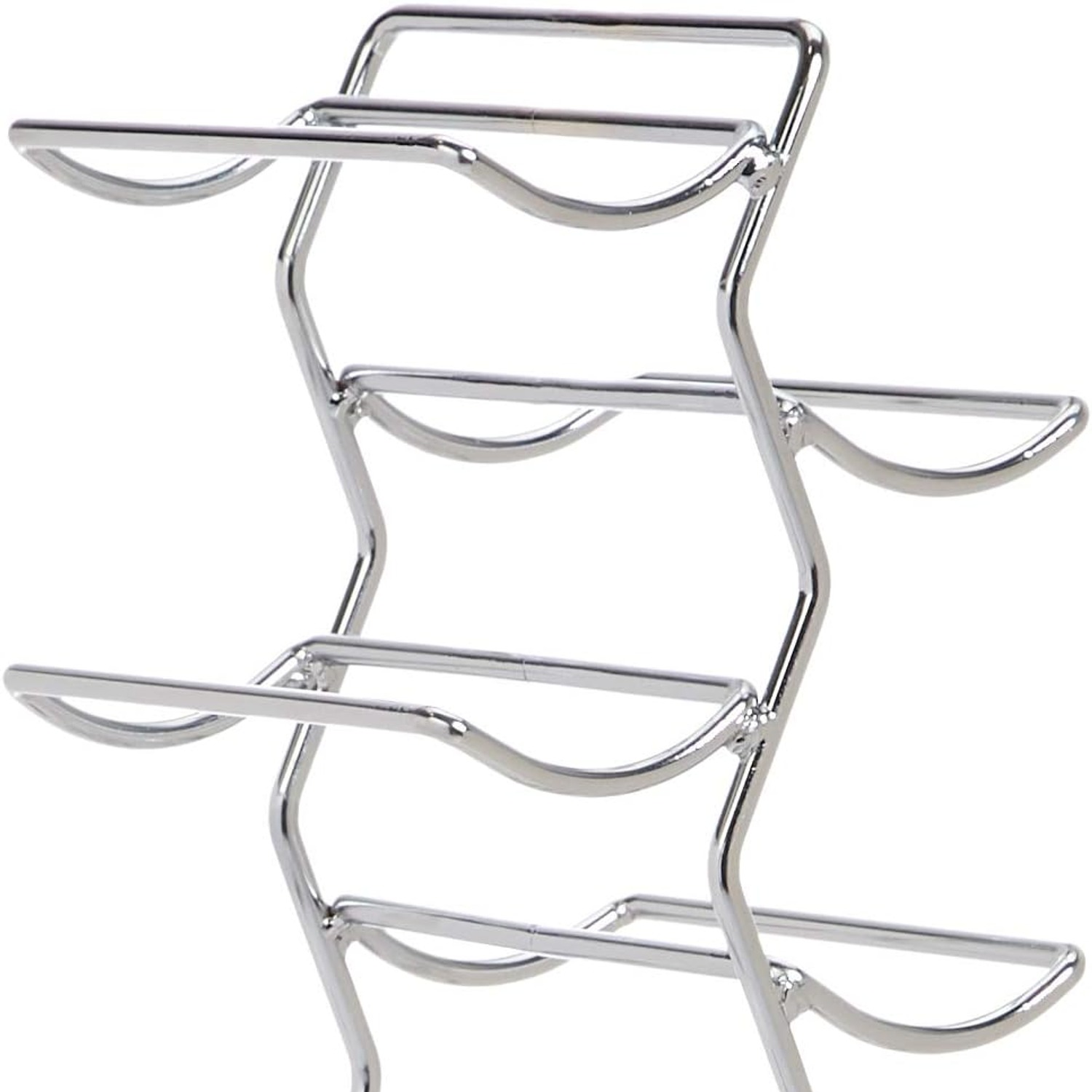
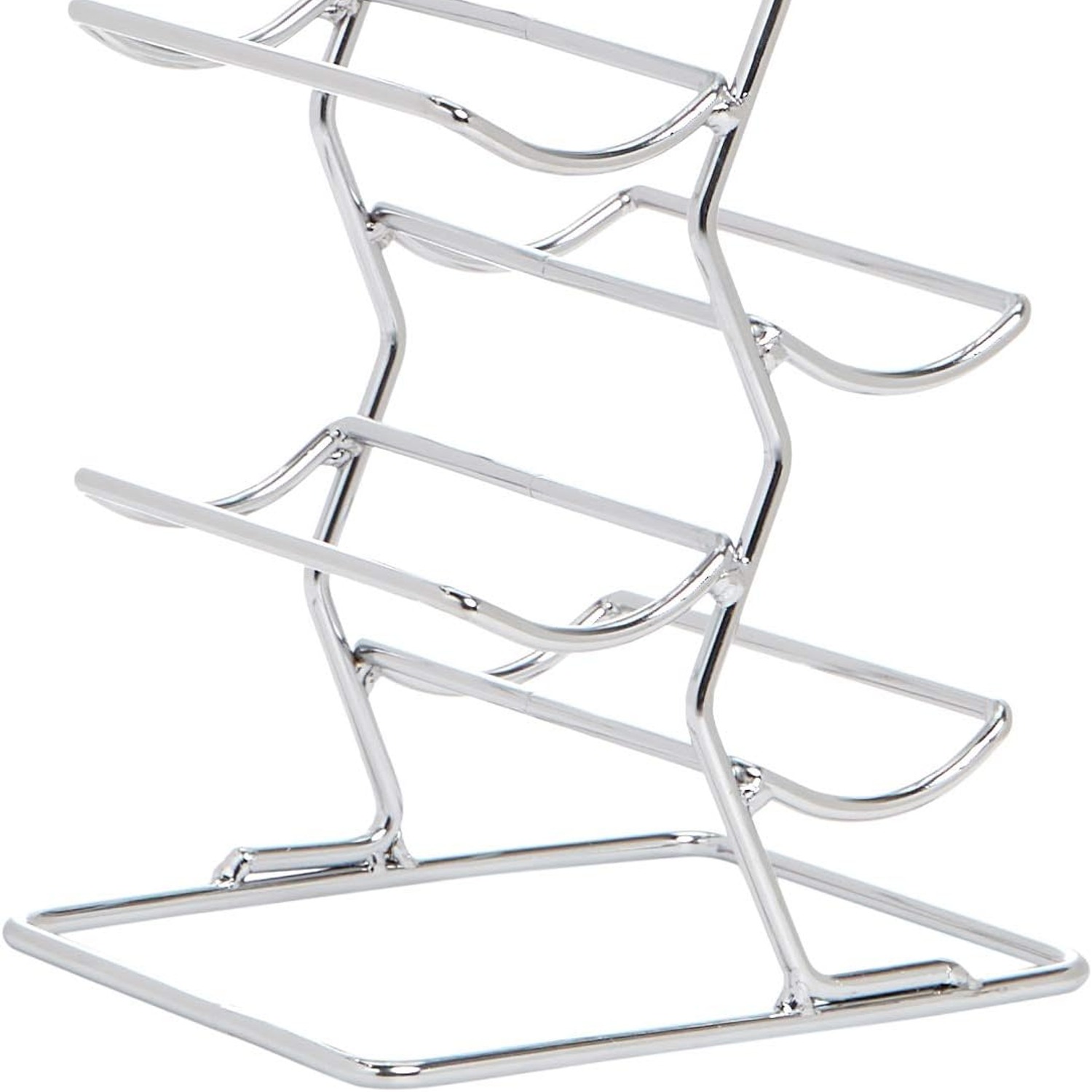
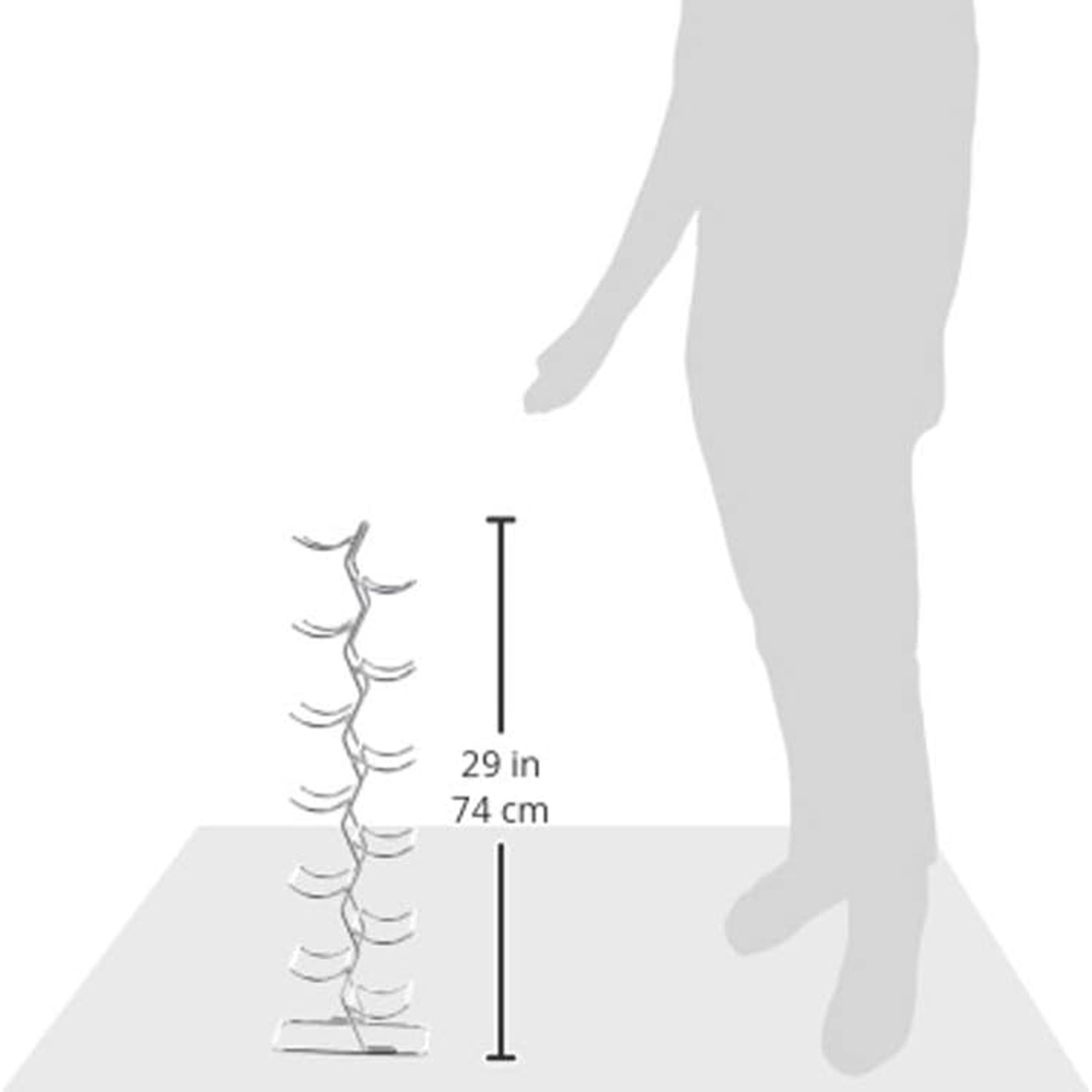
The rack in this listing stands 69.9 cm tall, is 21 cm wide and 17 cm deep. Bottles rest on their sides in cradles stacked up the frame. That horizontal position is not just a styling choice. With a natural cork, lying the bottle down keeps the wine touching the cork, so the cork stays swollen and sealed. A cork left dry for a long stretch can shrink slightly, which lets air creep in.
If every bottle in your collection has a screw cap, the cork argument stops mattering. The practical reasons still hold. Side-on bottles show their full label, so you can read vintages without lifting anything. They also slide out from the front, meaning you can pull a bottle from the middle without rearranging the rest.
The frame is open rather than panelled. That matters more than it sounds. An open chrome frame lets light through and does not read as another chunk of furniture in a small room. It also means dust lands on bars rather than collecting in closed shelves, and bars are easy to wipe.
Where it fits in a real home
At 21 cm wide, this is a narrow object. That is the main reason it works in homes where floor space is already spoken for. It slots into the gap beside a fridge, at the end of a kitchen counter run, in a dining room corner, or inside a walk-in pantry.
Height is the measurement to check. At nearly 70 cm, the rack will not fit on a standard counter under overhead cabinets, since that gap is usually around 50 to 60 cm. If you want it on a counter, it needs to be on an island or an open run with nothing above. Otherwise, floor is the natural home, which is exactly what floor standing mounting means.
Think about the environment too. Wine does not like heat, light or swinging temperatures. Avoid standing the rack beside an oven, on top of a dishwasher, or in a sunny window. A shaded corner on an interior wall is boring and perfect. If you are shopping for the best kitchen wine rack position, the coolest, darkest spot you can spare usually wins.
Choosing between rack types
There are four common ways to store a dozen bottles at home, and they suit different situations.
A freestanding floor rack, like this one, uses vertical space and stays movable. You can shift it when you rearrange a room, and there is nothing to drill. A countertop rack is shorter and handier if you drink the bottles quickly, but it eats counter space you probably want for cooking. Wall-mounted racks free the floor entirely, though you are committing to holes in a wall and to a stud or anchor check. Cabinet inserts look clean but lock you into one piece of furniture forever.
For renters and anyone who moves house, the freestanding version is the easy answer. It requires no fixings, no landlord conversation and no patching when you leave. Among the best no assembly wine rack options, one that ships ready to stand up is genuinely less work than it sounds, because flat-pack metal frames with a dozen small bolts are a tedious hour you never get back.
Why chrome, and what to know about it
Chrome is a plated finish, bright and reflective, and it does two useful things in a kitchen or dining room. It picks up whatever light is around, which keeps a dark corner from feeling heavy. And it coordinates easily, since chrome sits alongside stainless appliances, glass tabletops, brushed handles and painted cabinets without fighting them.
The trade-off is that chrome shows fingerprints and water spots. Neither is a real problem if you wipe the frame with a damp cloth now and then and dry it afterwards. What chrome does not forgive is abrasives. Scouring pads, gritty cream cleansers and steel wool will leave a dull patch that you cannot polish back out. Soft cloth, mild damp, dry finish. That is the whole routine.
Keep it away from constant moisture as well. Plated finishes handle normal indoor humidity fine, but an unventilated damp cellar or a spot next to a leaking pipe is asking for trouble over years.
Loading and living with it
Load from the bottom row and work upwards. Heavy bottles low means a low centre of gravity and a rack that does not wobble if someone brushes past. Champagne and sparkling bottles are the heaviest, so they belong on the lower cradles.
Stand it on something level and firm. Tile, timber and low-pile carpet are all fine. Thick plush carpet lets the feet sink unevenly, which can introduce a slight rock, so a thin board under the rack solves that in a second if you need it.
Rotate your stock. Put newly bought bottles at the top and drink from the bottom, or keep one side for everyday drinking and the other for bottles you are holding. Either system beats the alternative, which is finding a forgotten bottle three years later and wondering.
The empty frame weighs 2.24 kg, so moving it is a one-person job when it is unloaded. When it is full it is not, so unload before you shift it rather than dragging a loaded rack across a floor.
Common mistakes worth skipping
The most frequent one is buying before measuring. Height catches people out, every time. Pull out a tape measure and check the clear height of your intended spot, not just the width.
The second is putting a rack somewhere convenient rather than somewhere sensible. Beside the stove is convenient. It is also the hottest spot in the house, and repeated heating ages wine faster than almost anything else.
The third is over-cleaning. Chrome does not need polish, wax or specialty sprays. A damp cloth and a dry one is the entire maintenance plan, and anything harsher is a step backwards.
The short version
If you have a dozen or so bottles and nowhere tidy to put them, this does the job without taking over a room. Twelve bottles, stored on their sides, in a chrome frame that is 21 cm wide, 17 cm deep and 69.9 cm tall, weighing 2.24 kg empty. No assembly, so it works the day it arrives.
Check your height clearance, pick a cool spot out of the sun, load the heavy bottles low, and wipe it with a damp cloth when it looks dusty. That is genuinely all there is to it. For an everyday collection that gets drunk rather than cellared for decades, simple wine bottle storage like this is usually all anyone actually needs.