
The complete guide
How to Choose a 12-Bottle Wine Rack for a Small Space
The pile-of-bottles problem
Wine collects quietly. You buy two for dinner, somebody brings one over, you grab a case because it was on special, and within a month there are bottles standing upright behind the slow cooker and lying sideways under the sink. Nothing is damaged, exactly. It just looks messy, you cannot see what you have, and the good bottle you were saving ends up opened on a Tuesday because it was the one in front.
A rack fixes the practical side of this. It gives every bottle a defined slot, keeps them horizontal, and puts the labels where your eye can read them. A dozen bottles is the sweet spot for most households. It is enough to cover a few weeks of dinners plus a couple you are keeping for a reason, without turning a corner of the kitchen into a storage project.
What this rack actually is
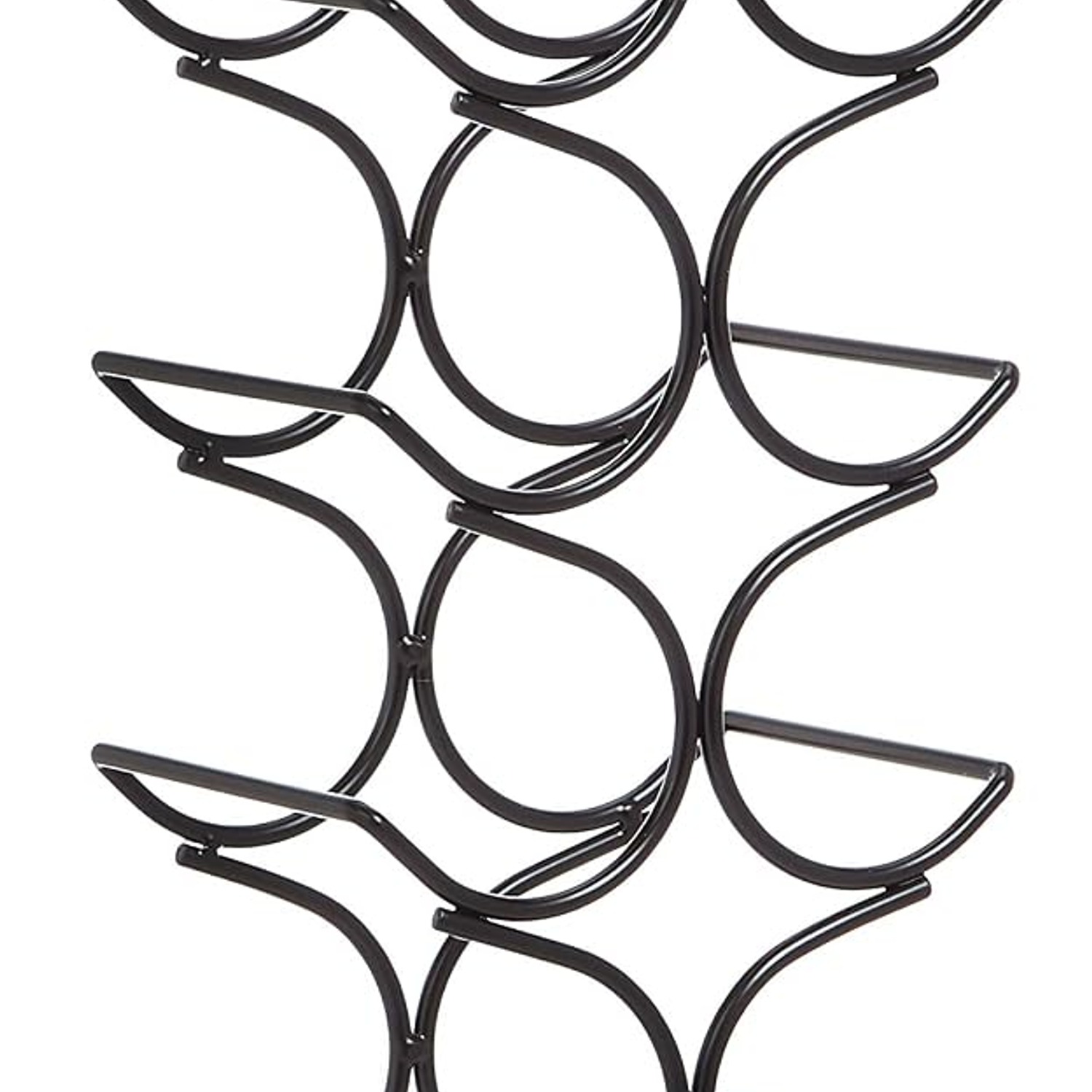
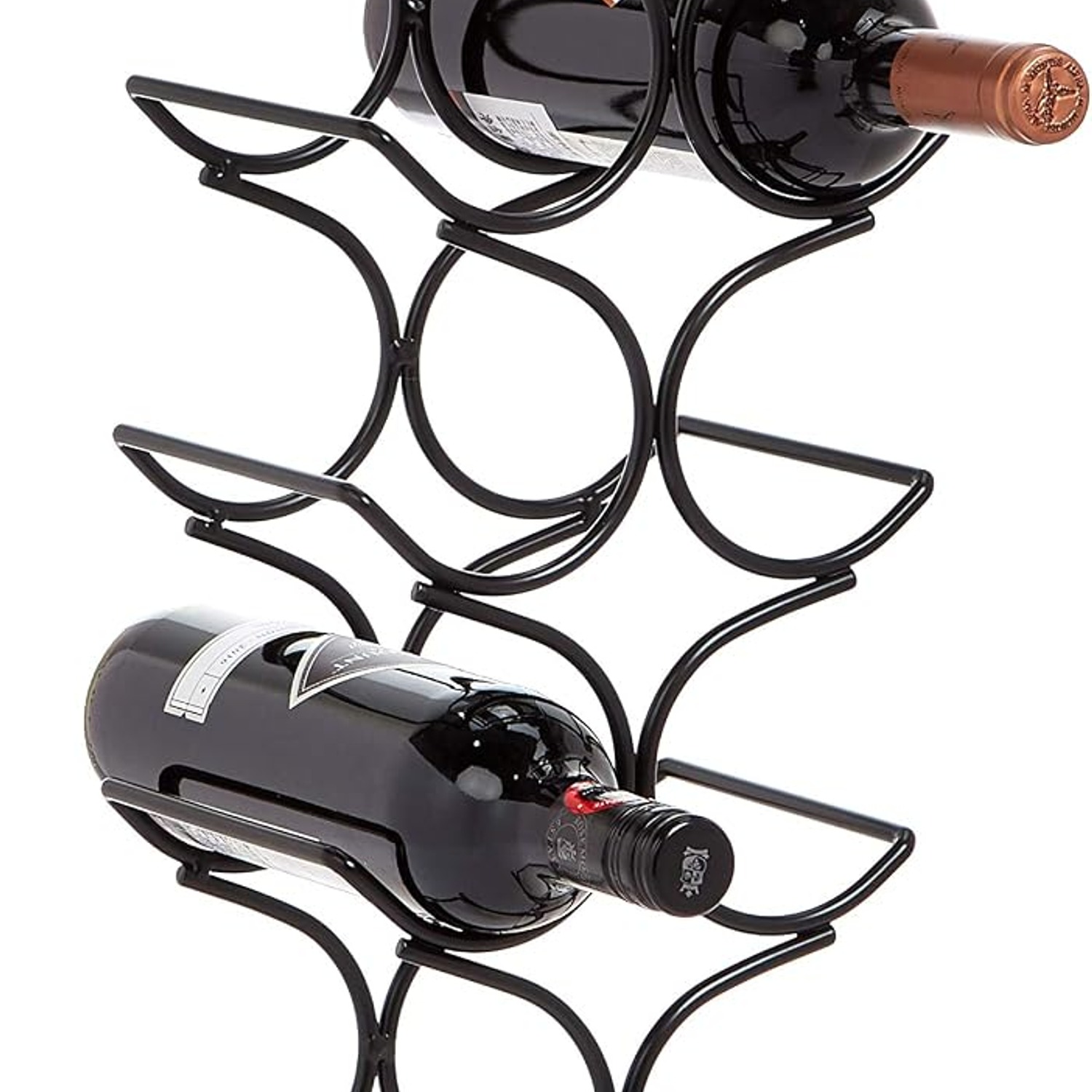
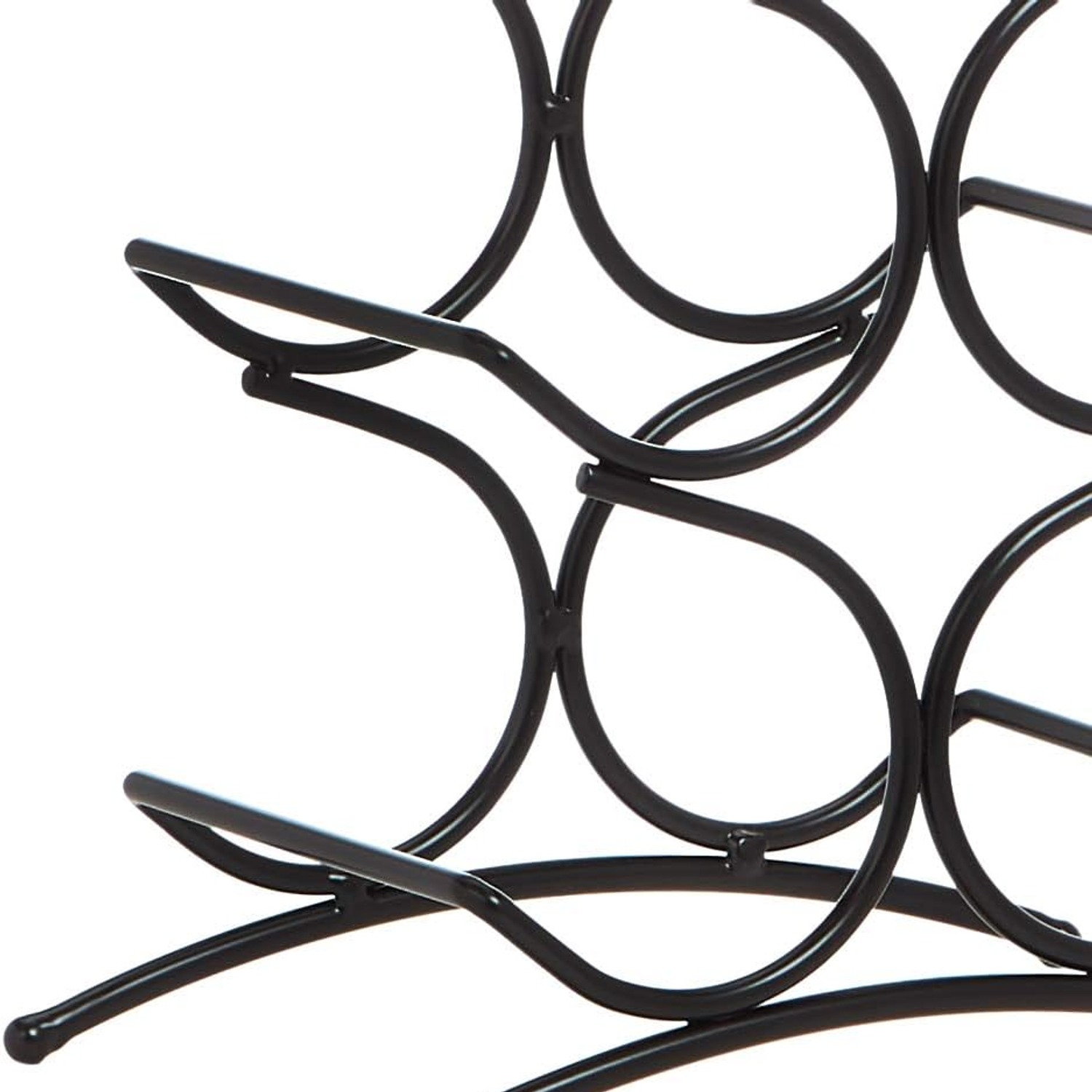
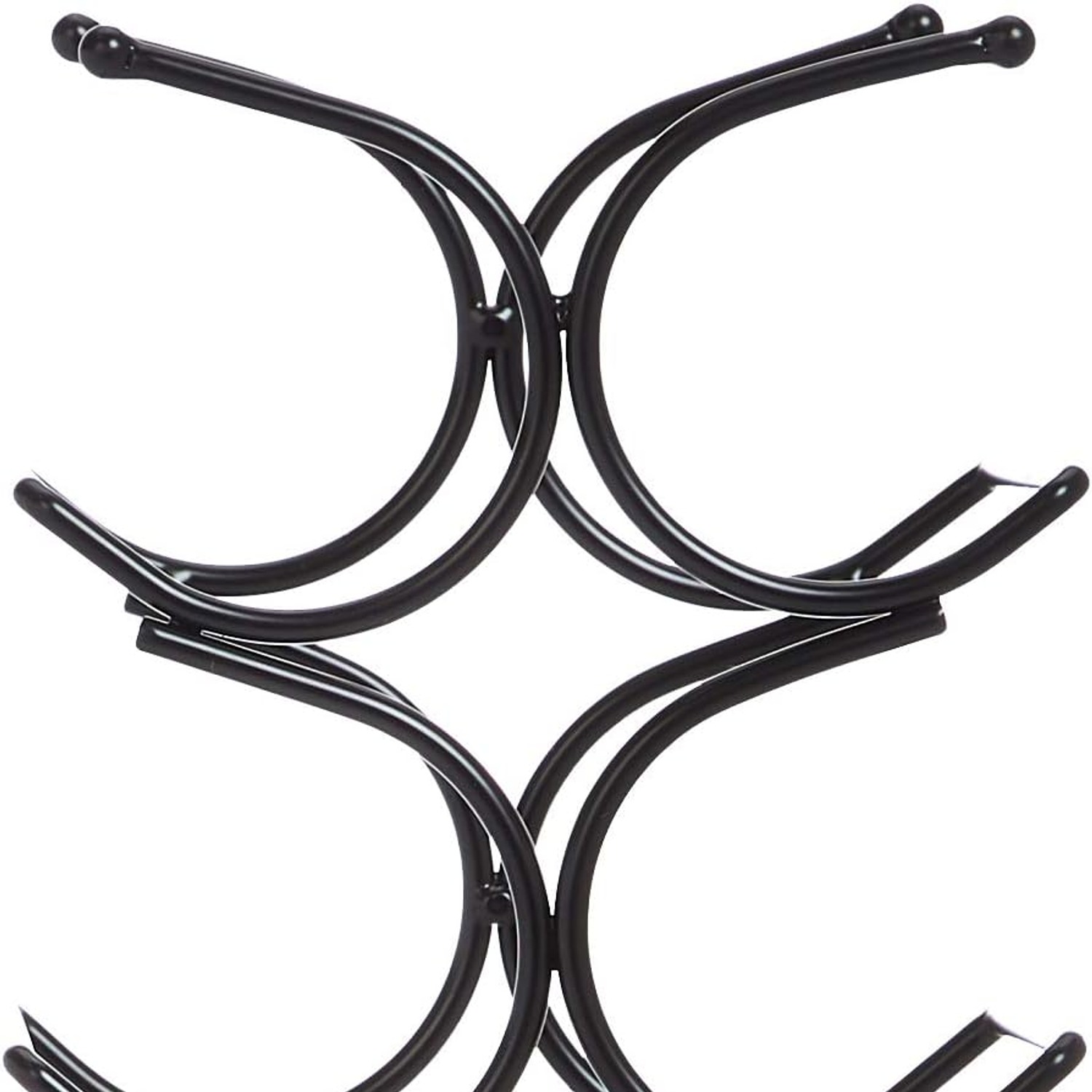
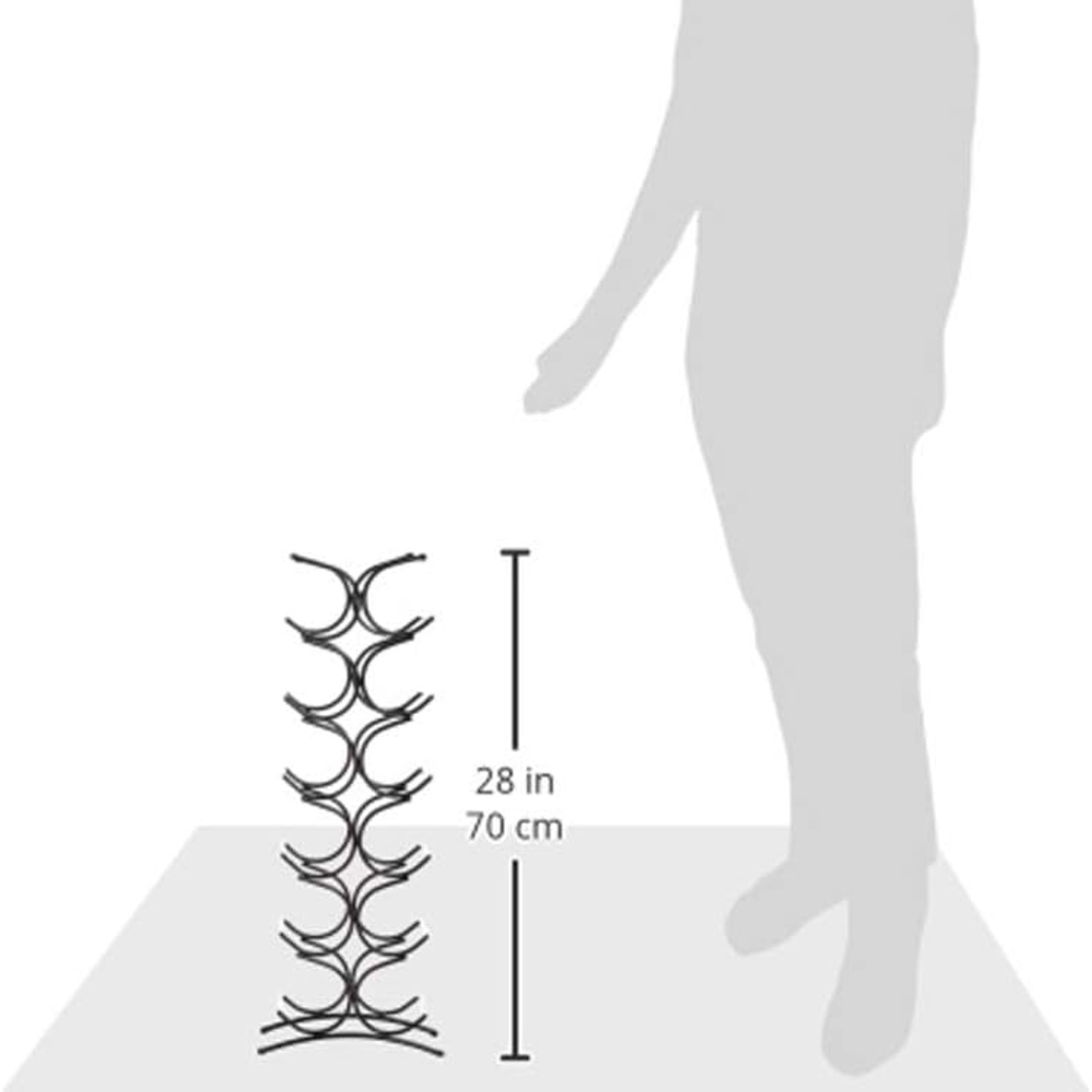
The short version: a black metal frame, 24.9 cm wide, 16 cm deep and 67.8 cm tall, holding twelve bottles lying on their side. It weighs 2.09 kg empty and arrives with no assembly needed. The style is described as traditional, which here means a plain, upright shape with no decorative flourishes.
The depth is the number worth noticing. Sixteen centimetres is very slim for a wine rack. Many floor racks are 30 cm or more deep, which means they intrude noticeably into a walkway. This one sits closer to the wall than a kitchen bin. That is what makes it workable in a flat, a galley kitchen or a dining room where the furniture is already tight.
Why bottles lie down
Storing wine on its side is an old habit with a specific purpose. A natural cork needs to stay in contact with the wine. If a corked bottle stands upright for months, the cork slowly dries out, shrinks a fraction, and lets air creep past the seal. Air is what turns a nice bottle into vinegar.
If every bottle you own has a screwcap, the seal argument does not apply. The cap is not going anywhere. But horizontal storage still wins on two counts. It packs more bottles into less space, and it means you can read the labels without lifting anything. For a best wine bottle holder in a small home, both of those matter more than theory.
Picking the right spot
Three things age wine faster than time does: heat, light and movement. You cannot control all of them in an ordinary house, but you can avoid the worst offenders.
Heat is the big one. A rack sitting in afternoon sun through a west-facing window, or wedged between the oven and the dishwasher, puts the wine through a daily temperature cycle. That pushes the liquid in and out of the cork and dulls the flavour. Somewhere cool and shaded is better, even if it is slightly less convenient.
Light fades labels and can create off flavours in clear and pale green glass. A pantry, a hallway corner away from windows, or the shaded side of a dining room all work well. If the only space you have is bright, consider a cupboard with the door left ajar, or simply accept that bottles will move through quickly enough not to matter.
Movement is the smallest concern for everyday wine. Constant vibration from a fridge motor or a washing machine is not ideal for anything you are ageing, but for wine you will drink this month it makes little practical difference.
Floor, counter or sideboard
This rack is listed as tabletop mount, which in practice means it is happy standing on any flat surface, including the floor. Where you put it changes how it behaves.
On the floor, it reads as a piece of furniture. The top bottles sit near waist height, easy to reach, and the lower bottles are a short bend away. This is the usual choice for a best freestanding wine storage setup in a lounge or dining room corner.
On a counter or sideboard, it becomes a display. You get easier access to every slot, and the rack takes over dead counter space that was not doing much anyway. Just measure your overhead clearance first. With 67.8 cm of height, it will not fit under a standard upper cabinet, so you need an open stretch of counter.
Inside a pantry or cupboard is the third option, and it is underrated. The slim depth means it can live against the back wall of a walk-in pantry without blocking the shelves, keeping the wine dark and cool.
Matching it to the room
Black is the easiest finish to place. It is quieter than chrome, warmer than white, and does not fight with timber grain or stone. Against pale cabinetry it reads as a deliberate accent. Against dark joinery it mostly disappears, which is sometimes exactly what you want.
Because the shape is traditional rather than sculptural, it does not lock you into a particular look. If you repaint, change your dining chairs or move house, a plain black metal frame still works. That is a real advantage over racks that lean heavily on one trend.
How much capacity do you need
Twelve bottles is roughly a case. For most households that is three to six weeks of normal drinking plus a few holdbacks. If you buy by the case and drink steadily, one rack is enough. If you tend to stockpile when there is a sale, think about whether you want two side by side. Two of these in a row gives twenty four bottles across a footprint under 50 cm wide, which is still less than a kitchen chair.
Going bigger than that usually means a different type of storage altogether. Cabinets and temperature-controlled units make sense once you are past thirty or forty bottles. For everyone else, a slim twelve-bottle column is the right scale. Worth remembering, too, that half-full racks look fine. There is no need to fill every slot for the thing to look intentional.
Loading and living with it
Load from the bottom up. Keeping the heaviest weight low makes any freestanding rack more stable, and it means you are not reaching over full bottles to place new ones. Push each bottle fully back so the base rests against the frame. A bottle sitting half out is the one that gets knocked.
Put the wines you plan to drink soon at the top where they are easiest to grab, and the ones you are holding onto lower down. It sounds obvious, but it stops you opening the keeper by accident on a weeknight.
If you need to move the rack, empty it first. The frame weighs just over two kilograms on its own, but twelve full bottles add well over fifteen kilograms, and lifting that by the frame puts strain on joints that were not designed for it.
Keeping it looking right
Care is genuinely simple. Dust the frame with a dry cloth every so often. If a drip dries on a crossbar, a slightly damp cloth will lift it, then dry the area properly afterwards. Avoid solvents, bleach sprays and scouring pads. Painted metal does not forgive abrasives, and a scratched black finish shows every mark.
Keep it indoors and dry. Garages, laundries and covered patios all have more moisture than a painted metal frame enjoys over the long run, and the temperature swings are not good for the wine either.
The short version
If you have a dozen bottles and nowhere sensible to put them, this does the job without taking over the room. Twelve bottles, stored on their side, in a black metal frame 16 cm deep. No assembly, light enough to move, plain enough to go anywhere. It will not control temperature and it is not a cellar, but for the everyday job of getting wine off the counter and into one tidy, visible place, a slim twelve-bottle rack is hard to beat.