
The complete guide
How to Choose a Wall Mounted Wine Rack That Actually Fits Your Home
The problem with keeping wine at home
Most people do not have a cellar. They have a cupboard under the sink, a bottom shelf in the pantry, or a cluster of bottles on the counter that keep getting shuffled around while someone chops vegetables.
That works, sort of, until it does not. Bottles get knocked. Labels face the wrong way, so you pull out three before you find the one you wanted. Good wine ends up behind a bag of flour and gets forgotten for a year.
The real issue is not storage capacity. For most households, six bottles is plenty. The issue is that wine does not have a place of its own. It lives in the leftover gaps, and leftover gaps are always the first thing to get cluttered.
A wall mounted rack fixes that by giving the bottles a dedicated spot that nothing else can take over. It uses the one surface in every home that is nearly always empty, which is the wall.
How a six tier wall rack works
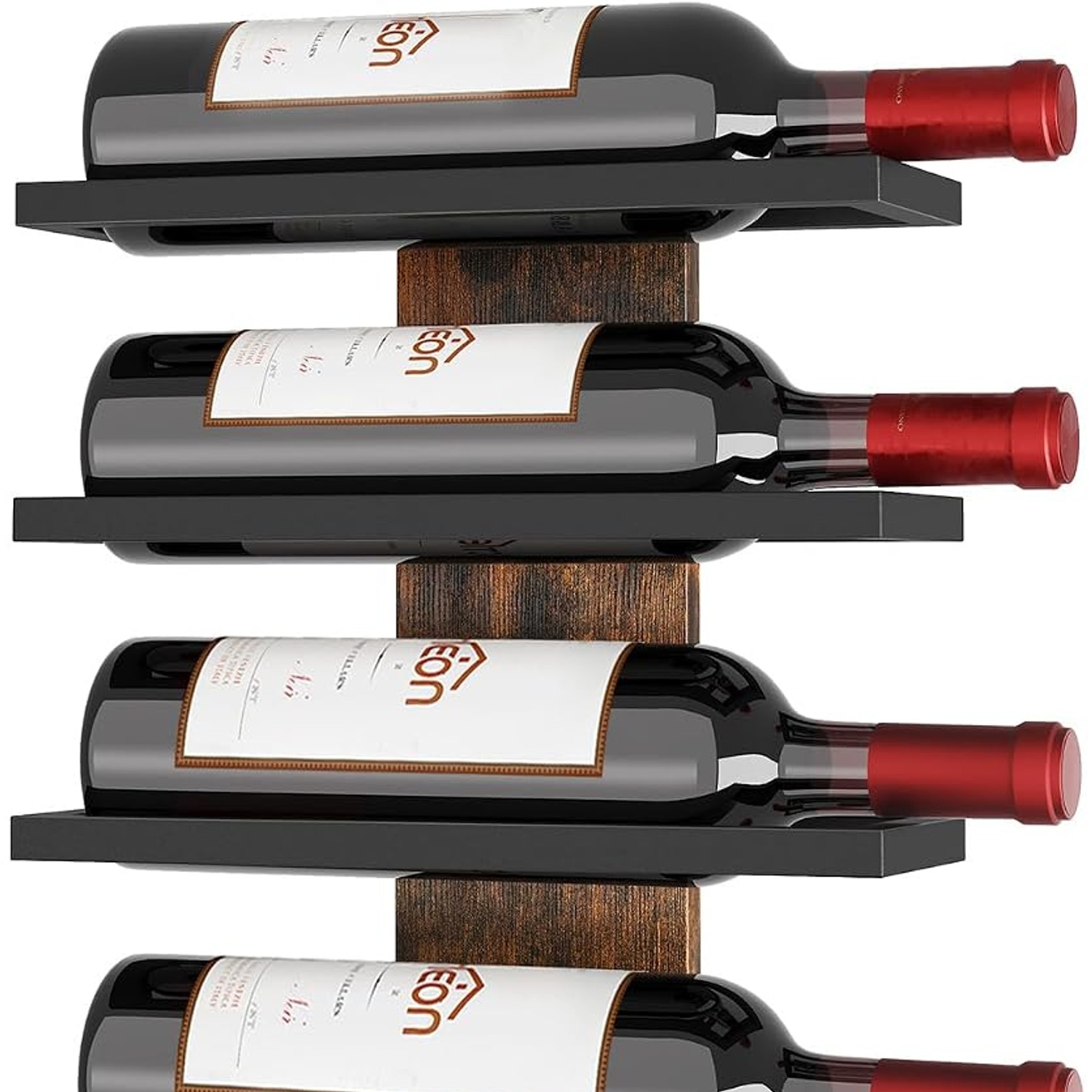
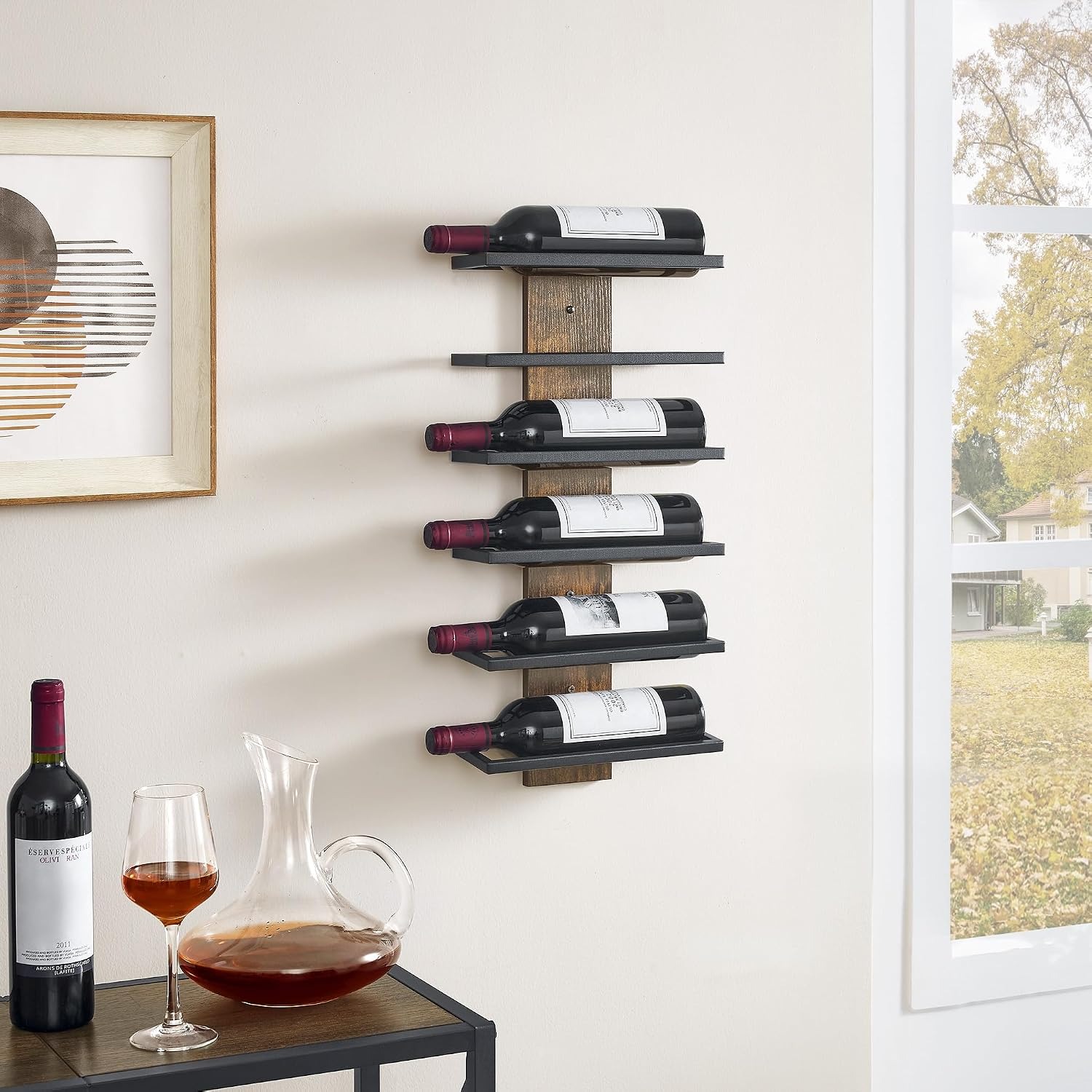
The design here is simple on purpose. Six levels, each sized to cradle one bottle on its side. The whole column stands 60 cm tall, spans 27.5 cm across and projects only 10.2 cm from the wall.
That depth figure matters more than people expect. Ten centimetres is about the width of your hand. You can walk past it in a hallway without brushing your shoulder. You can mount it beside a doorway without it looking bulky. A floor standing rack, by comparison, eats a whole square of floor plus the room you need to stand in front of it.
Laying bottles on their side is the traditional method for a good reason. If a bottle is sealed with a cork, the cork needs to stay in contact with the wine. Dry cork shrinks, lets air in, and the wine turns. Screw caps do not care, but there is no harm in storing them horizontally too, and they look better that way.
The build pairs timber shelves with a metal frame. The wood carries the warmth and the grain. The metal holds the shape so the tiers stay square under load. The finish is a rustic brown that reads as warm rather than orange, which is why it tends to sit happily against white plaster, exposed brick or painted boards.
Who this suits
It suits apartment dwellers first. When floor space is the scarce thing, vertical storage is the obvious answer, and this is one of the best small space wine storage shapes available because it barely exists in the third dimension.
It suits people who drink wine rather than collect it. If you buy six bottles at a time and work through them over a month or two, you need display and access, not temperature-controlled long term storage. This gives you both.
It suits renters too, with one caveat. You do need to drill. Check your lease, and if you would rather not put holes in the plaster directly, a common workaround is to mount the rack on a backing board first, then fix the board with as few holes as possible.
It is less suited to serious collectors. If you are ageing bottles for a decade, you want a cool, dark, stable environment, not a kitchen wall. Use this for your drinking stock and keep the long term bottles somewhere else.
Choosing the right spot
Start with light. Direct sunlight is the fastest way to ruin wine, so avoid a wall that catches afternoon sun through a window. Shade is your friend.
Then think about heat. The top of a fridge, directly above a dishwasher, and the wall next to a cooktop are all warmer than the rest of the room. Wine prefers cool and steady. Even a couple of metres away from a heat source makes a difference.
Vibration is the third thing, and the one most people never consider. Constant shaking disturbs the sediment in older bottles. A wall that backs onto a laundry or shares a stud with a washing machine is not ideal.
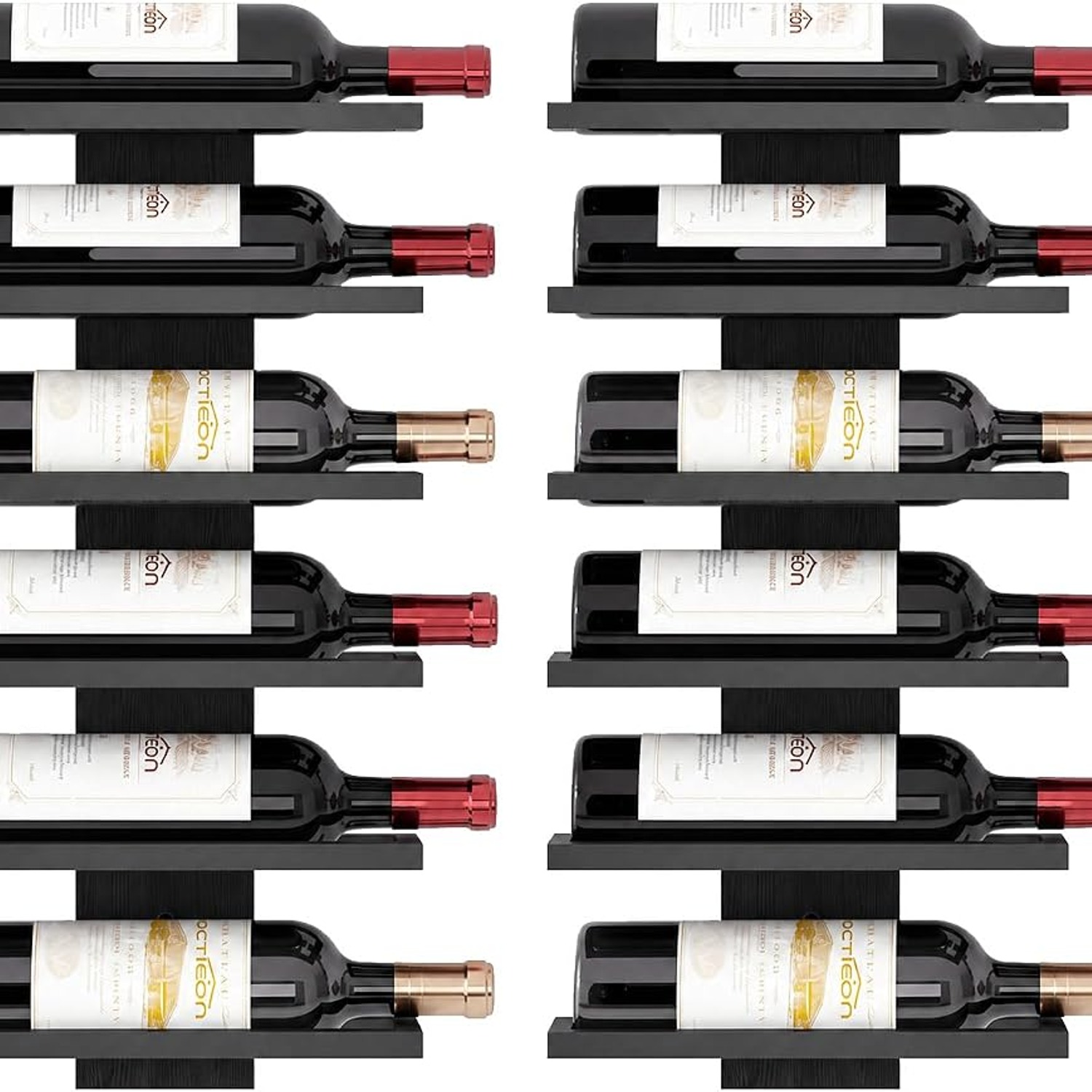
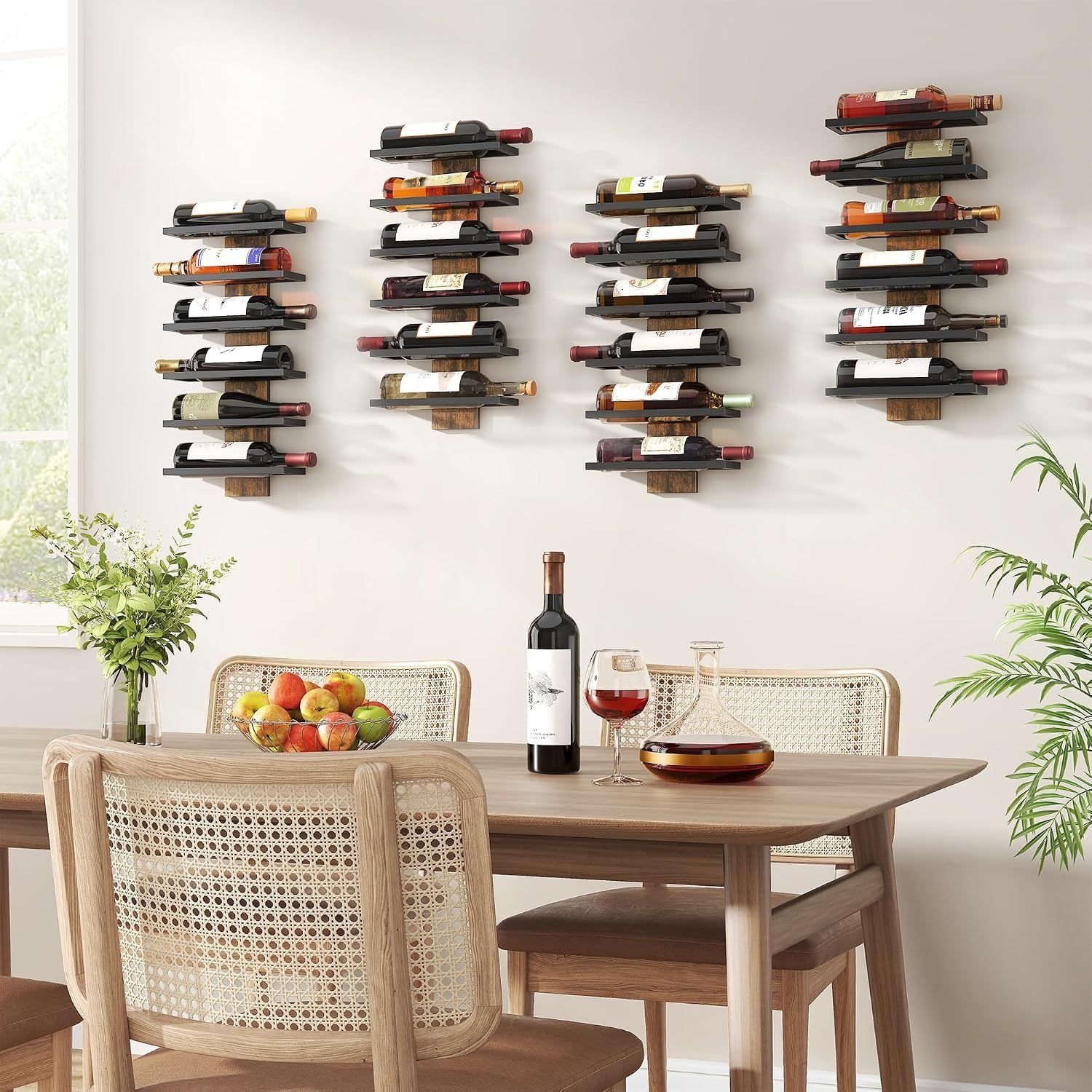
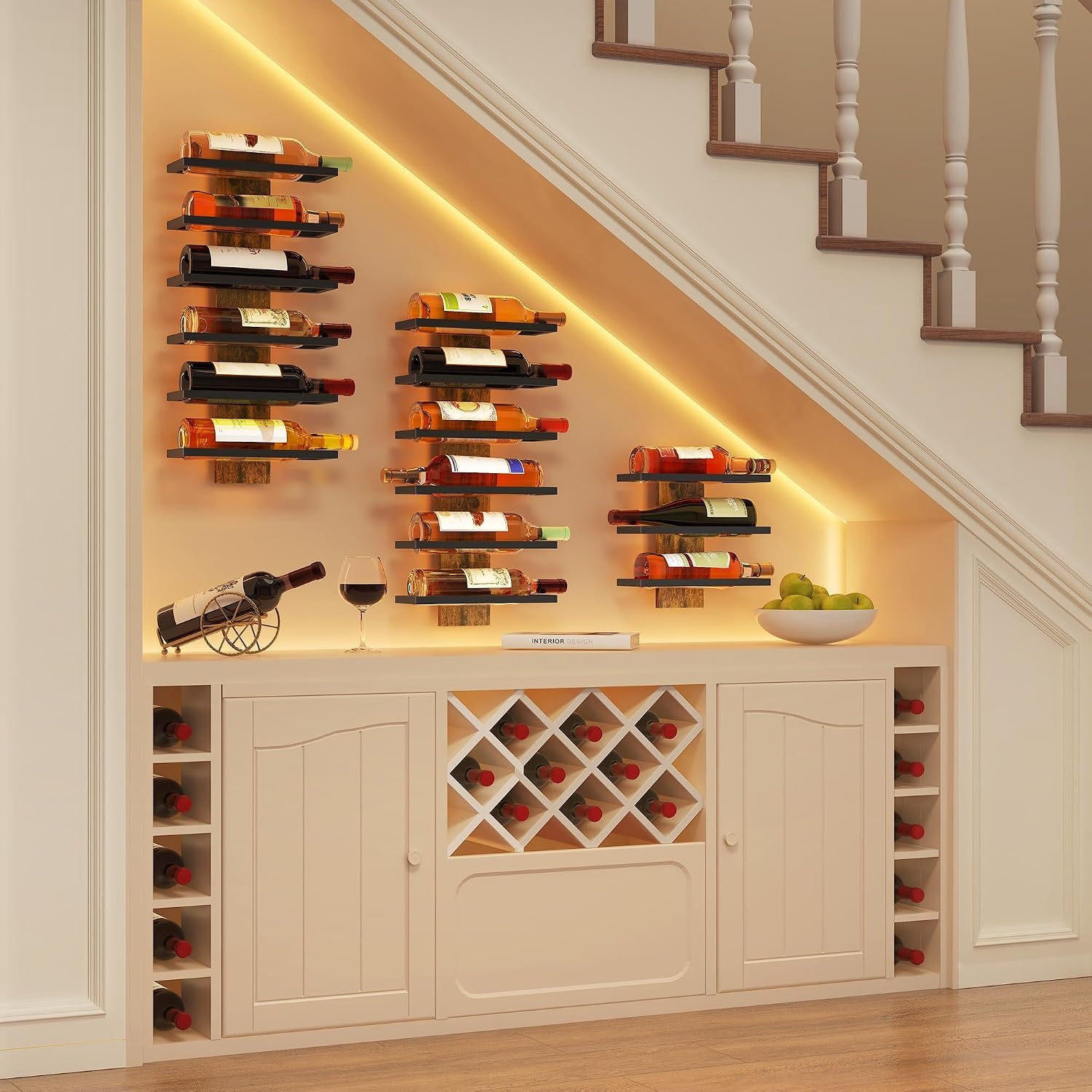
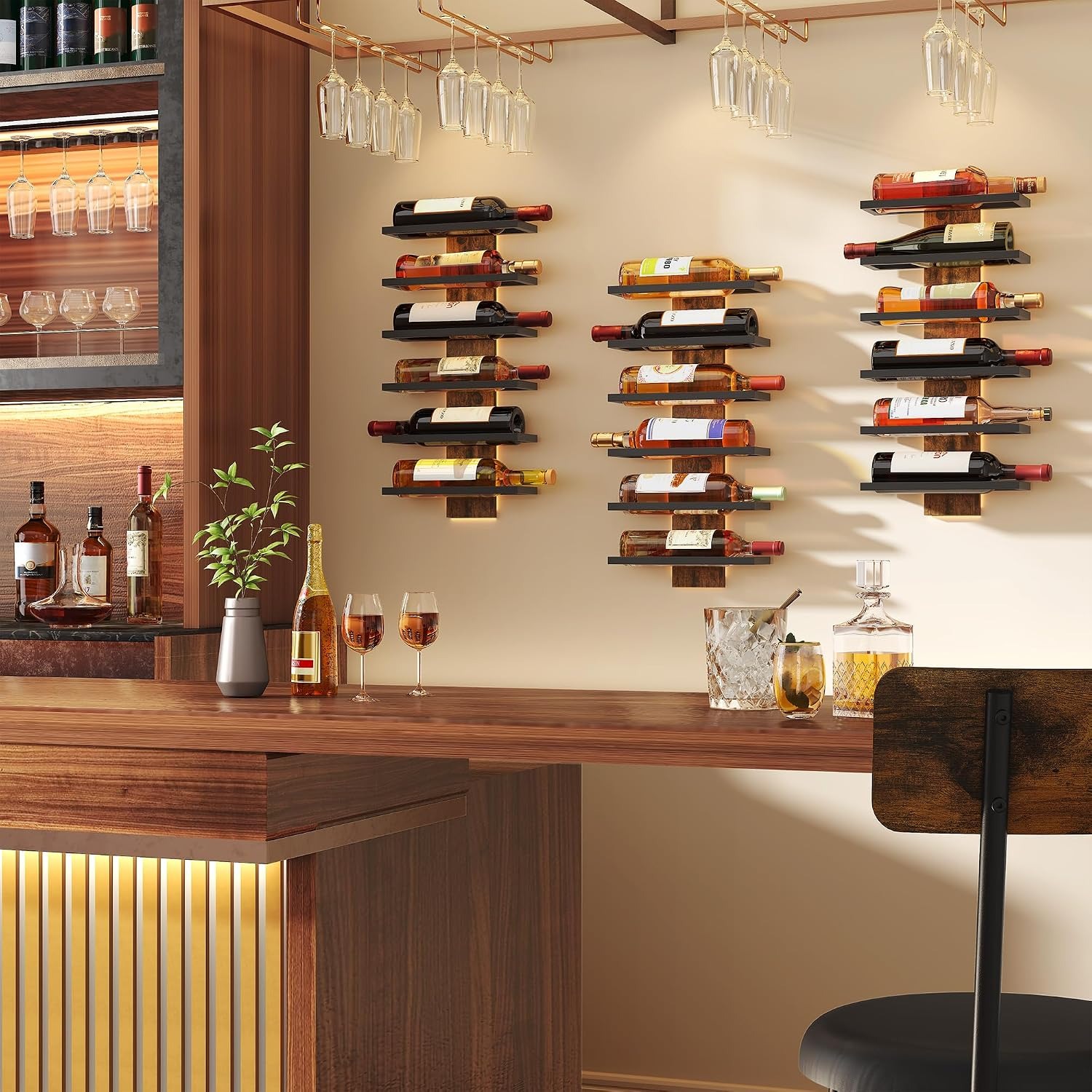
After that, it is about how the room reads. A single column of six bottles works well in a narrow spot where a shelf would be too deep. Two columns side by side turn a blank wall into a feature. Stacking them vertically gives you twelve bottles in a tall, thin line, which looks sharp beside a doorway or in a stairwell.
Mounting it properly
Assembly comes first, and the parts are numbered so you follow a sequence rather than guessing. The box includes an installation guide and installation tools. Lay everything out before you start and tick parts off the list.
Wall fixings are where you should spend a minute thinking. The rack itself is light at 1.26 kg, but six full bottles add roughly seven or eight kilograms more. That total is easy for a solid fixing to handle and too much for a bare screw in drywall.
If you can find a timber stud, use it. A stud finder costs very little and takes the guesswork away. If there is no stud where you want the rack, use proper drywall anchors rated well above the load you expect. For brick or concrete, a masonry bit and wall plugs do the job.
Mark your top fixing point first, check it with a spirit level, then work down. Getting the top right means everything below it lines up. Multiple screws are used to fix the rack to the wall, which spreads the load and stops the unit from pivoting when you pull a bottle out from the bottom tier.
Once it is up, load it from the bottom and work upward. Give it a gentle tug before you trust it with your good bottles.
Looking after it
Care is genuinely easy. Wipe it with a dry cloth. That is the stated instruction and it covers almost everything you will face in normal use.
For a sticky mark or a drip, use a cloth that is barely damp and dry the spot straight after. Do not soak timber, do not use abrasive pads, and skip the strong solvents. The lacquered or polished finish does its job as long as you do not scrub through it.
The metal carries a brushed or powder coated finish that holds up well indoors. Keep it out of permanently damp rooms and wipe any spills off quickly, and it will stay looking right.
One small habit worth building: every few months, give the wall screws a quick check and nip them up if anything has worked loose. Takes thirty seconds and prevents the only real failure mode these racks have.
Using it for more than wine
The tiers do not know what is in them. Plenty of people buy this as a wine bottle display and end up using half of it for something else.
Rolled hand towels sit neatly in each level, which makes it a tidy bathroom storage piece. Folded tea towels work the same way beside a sink. In a kitchen, a run of oil, vinegar and sauce bottles fits the cradles well and keeps the counter clear.
That flexibility is worth remembering if your wine habits change. Nothing is wasted.
The short version
Six bottles, one per tier, in a 60 cm column that sits 10.2 cm off the wall. Timber and metal in a rustic brown finish. Assembly required, with numbered parts, a guide and tools in the box.
Pick a cool, shaded, low vibration wall. Use fixings that match your wall type and do not skimp on them. Wipe it with a dry cloth and check the screws occasionally.
If you drink your wine rather than archive it, and you would rather see your bottles than dig for them, that is the whole argument for a rack like this. It gives six bottles a home and asks for almost no room in return.