
The complete guide
How To Choose And Fit An Under Cabinet Wine Glass Rack
The problem with storing wine glasses
Wine glasses are the most awkward thing in most kitchens. They are tall, so they fight with standard shelf heights. They are narrow at the base and wide at the top, so they do not stack. They are fragile exactly where they touch everything, which is the rim. And they tend to arrive in sets of six, which means the moment you buy a second set you have a storage problem.
What usually happens is one of two things. Either the glasses go to the back of a top shelf, where they collect dust inside the bowl and nobody can reach them without a stool, or they live permanently on the counter. Counter storage looks fine for about a week, then a stray elbow or a sliding chopping board finds one.
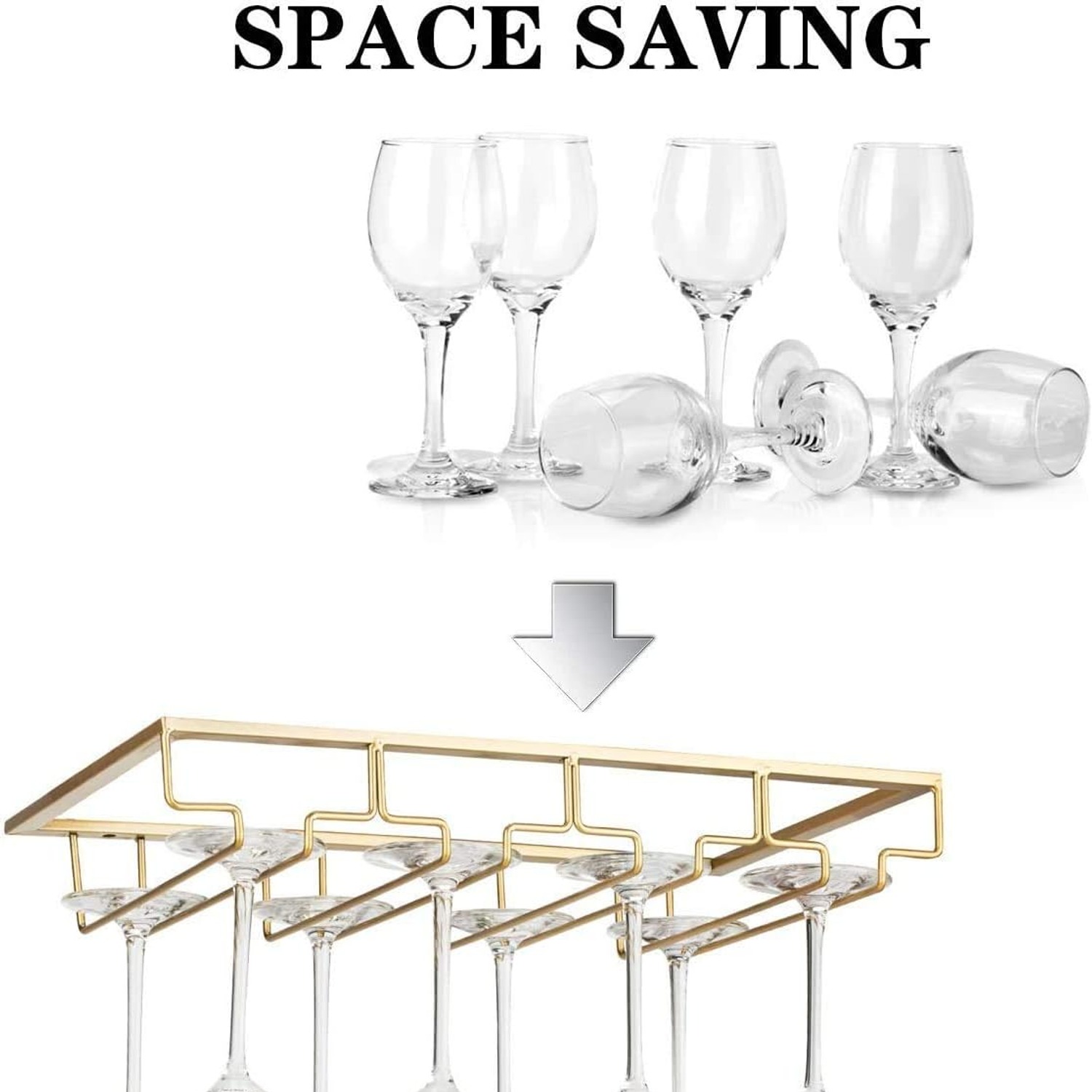
A hanging rack fixes the problem by changing where the glasses live. Instead of competing for shelf space, they hang in the gap under a cabinet, a strip of air that almost nobody uses for anything.
How an under cabinet rack works
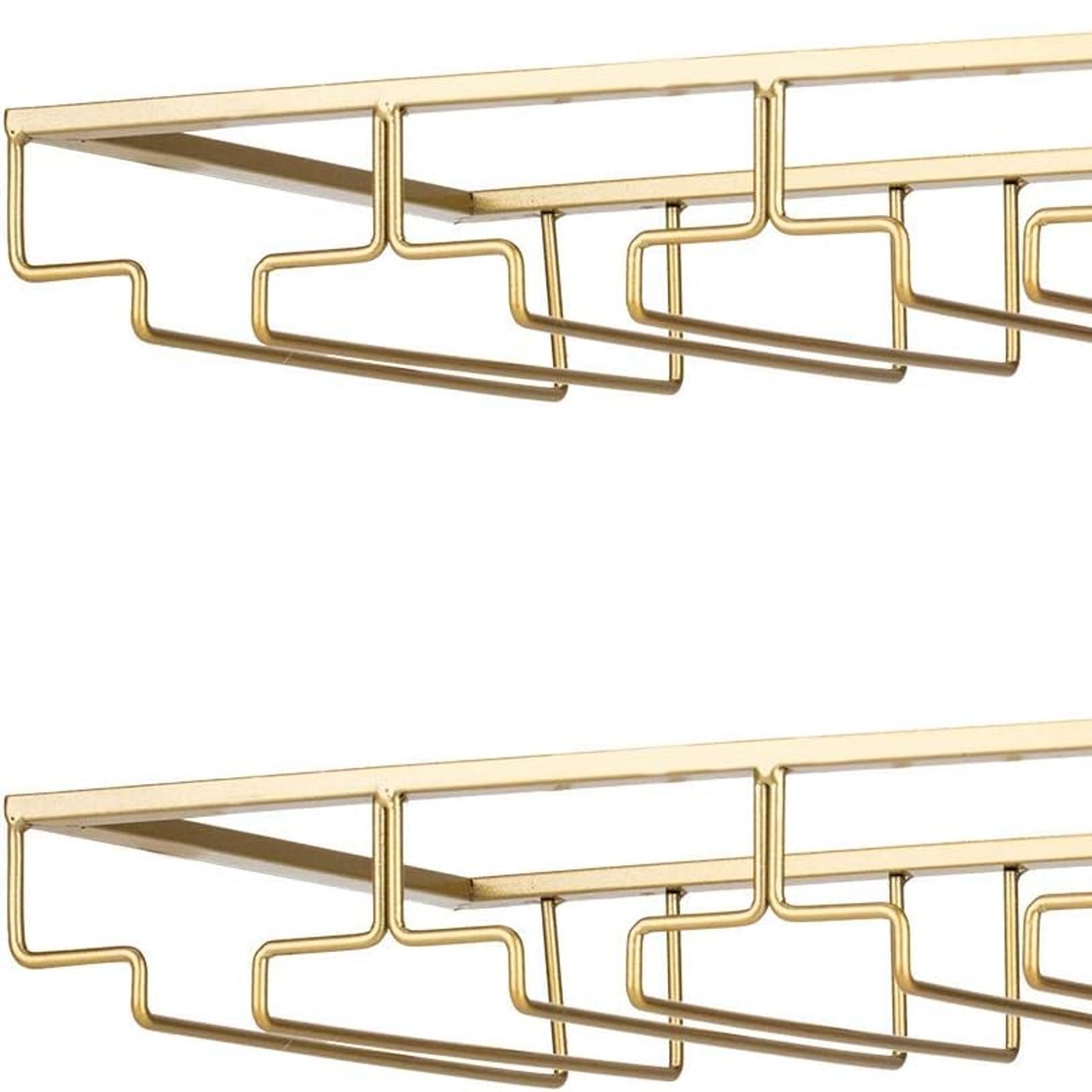
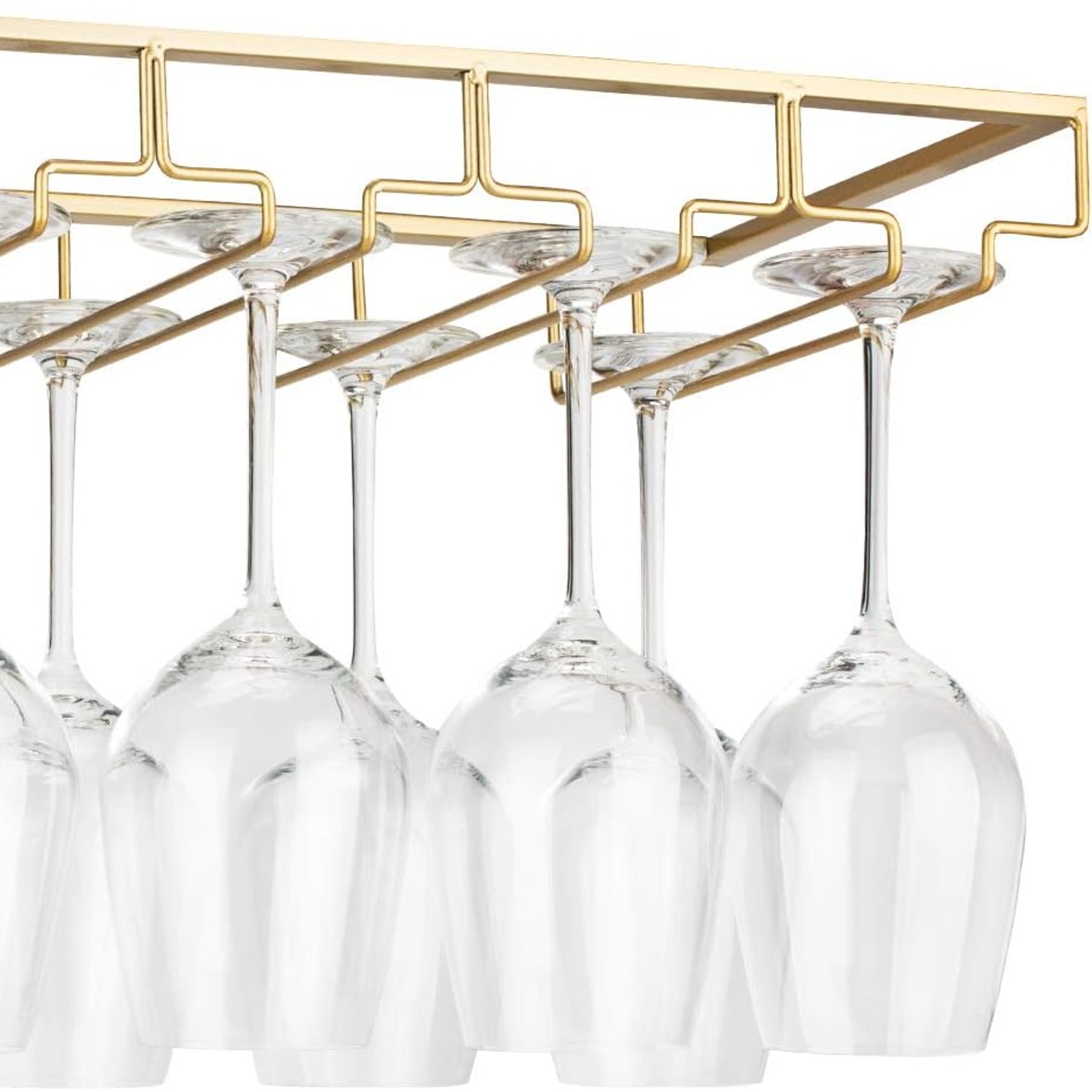
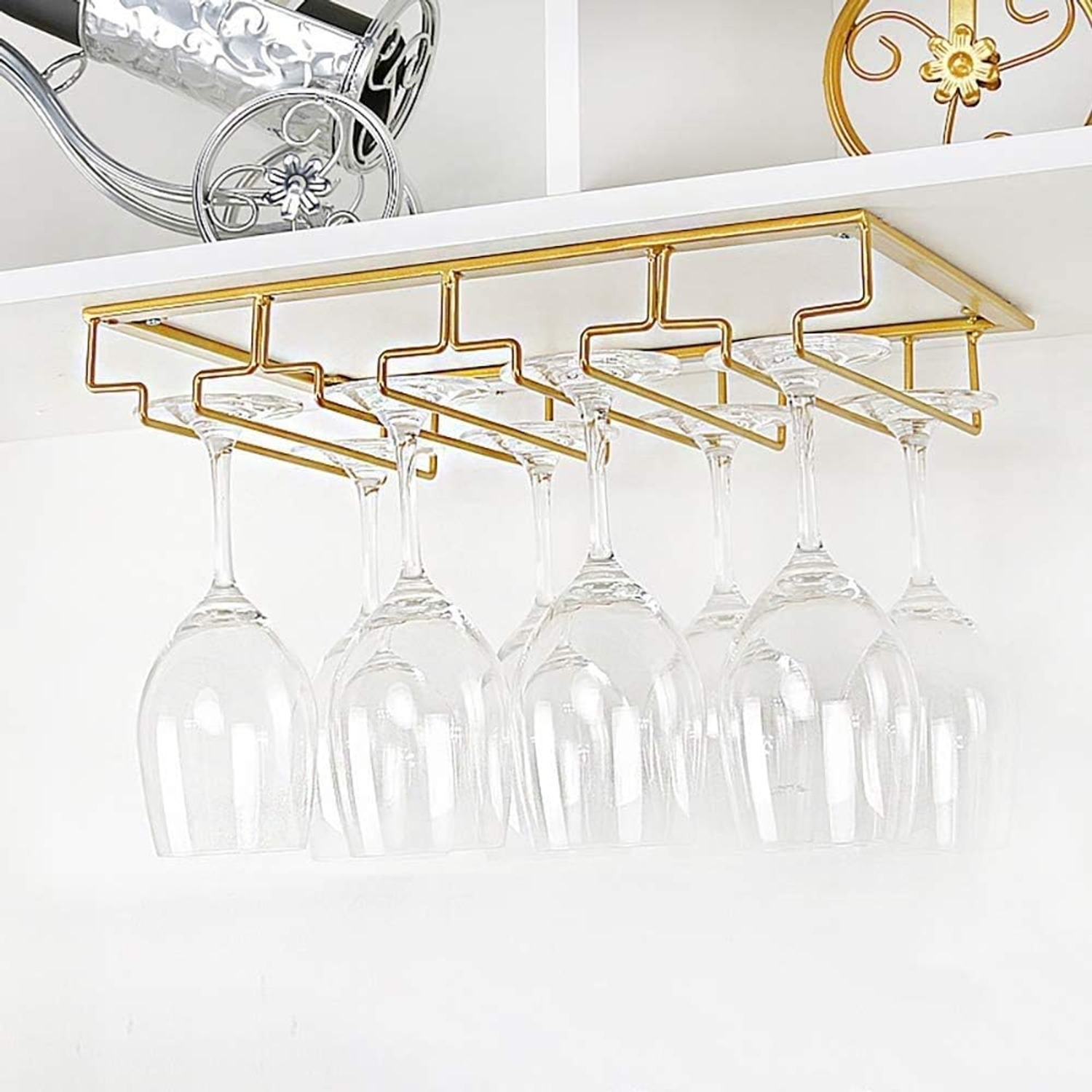
The idea is simple. A rail screws to the underside of a cabinet or shelf. The rail has slots running along it that are wide enough for a glass stem but narrower than a glass base. You slide the foot of the glass into the slot from the open end, and the glass hangs upside down with the base resting on top of the rail.
That upside down position does more than look tidy. Dust lands on the outside of the bowl rather than settling inside it, so glasses are ready to use instead of needing a rinse first. The rim hangs free, well away from any hard surface. And because each glass sits in its own slot, taking one out does not shift the others along.
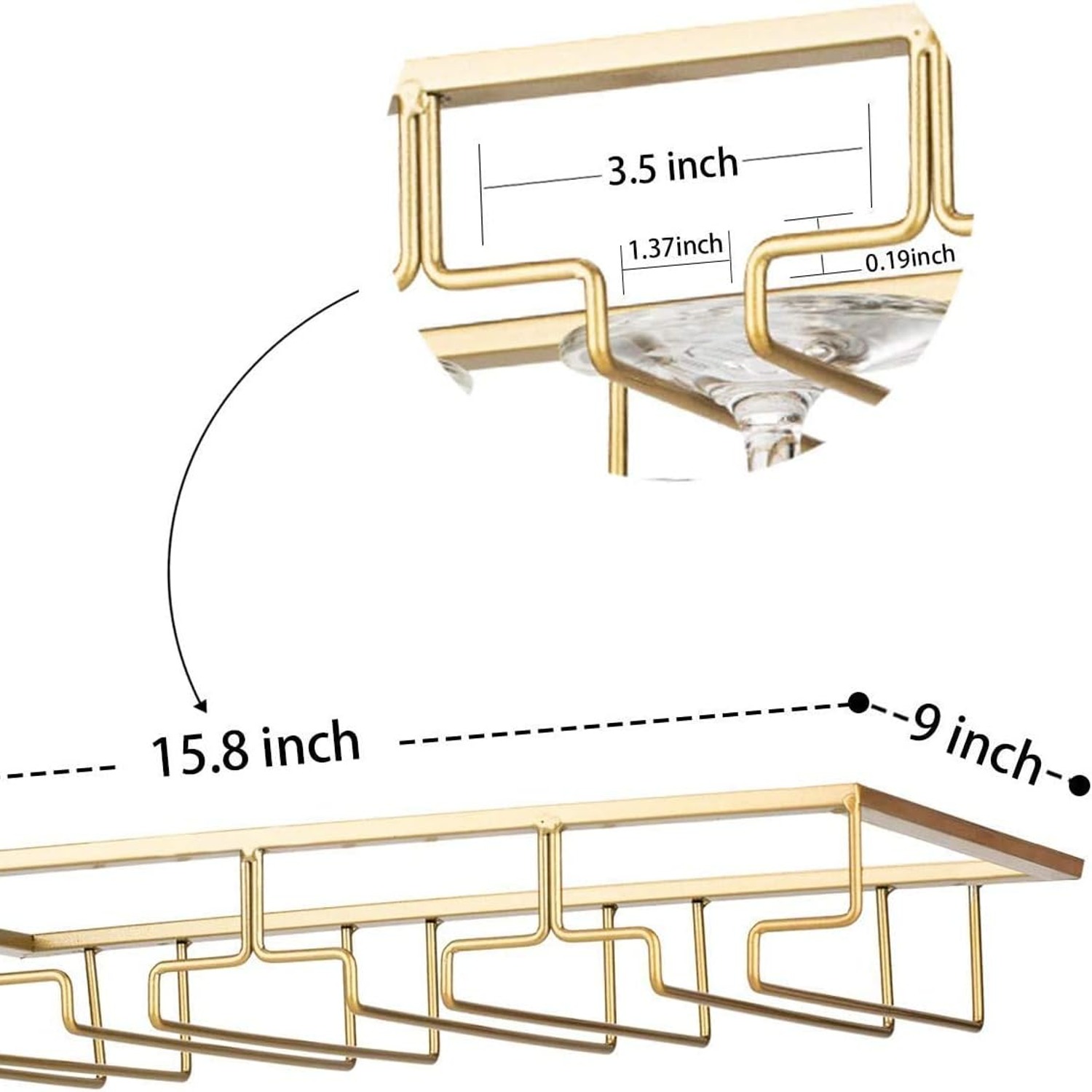
Each rail in this pack is 34.3 cm deep, 24.3 cm wide and 8.2 cm high. Depending on the width of your glass bases, one rail holds somewhere between six and nine glasses. The stated shelf weight capacity is 816 grams per rack, which is a sensible reminder that this is stemware storage and not a general purpose shelf.
Who it suits
This kind of rack earns its place fastest in small kitchens. If your cupboards are already full and you still want somewhere proper for your glassware, going under the cabinet is the only free real estate left.
It also suits anyone building a home bar. A rail of hanging glasses above a bar cart or a drinks cabinet reads as deliberate rather than as clutter, and it keeps everything within arm's reach when you are actually pouring. The gold powder coated finish gives it a bit of warmth against darker cabinetry, and because the glasses themselves are part of the display, the whole thing changes character depending on what you hang up there.
Renters do well with it too, provided the kitchen cabinets are standard carcass construction and you are allowed to put screws into them. Four small screw holes under a cabinet are about as low impact as wall mounted storage gets.
The people it does not suit are those with stemless glassware, those with glass or thin veneer shelving they cannot screw into, and anyone wanting outdoor storage. The product is listed as indoor use.
Checking your space before you order
Three measurements settle it.
First, the depth of your cabinet underside. The rack is 34.3 cm deep, so you need that much clear run front to back. On a shallow wall cabinet the rail may overhang slightly at the front, which is usually fine but worth knowing in advance.
Second, the clearance below the cabinet. Add the 8.2 cm rack height to the height of your tallest wine glass. Then check that total against the gap between the underside of the cabinet and whatever sits below, whether that is a counter, a splashback shelf or a kettle. You want room to lift a glass out without it catching.
Third, the cabinet base itself. Tap it and have a look underneath. Solid timber or decent plywood is ideal. Thick particle board with a laminate face usually works. Thin board with a hollow core behind it does not, and neither does glass. If your cabinet base is not up to it, the usual fix is to screw a timber batten in first and mount the rail to that.
Fitting it properly
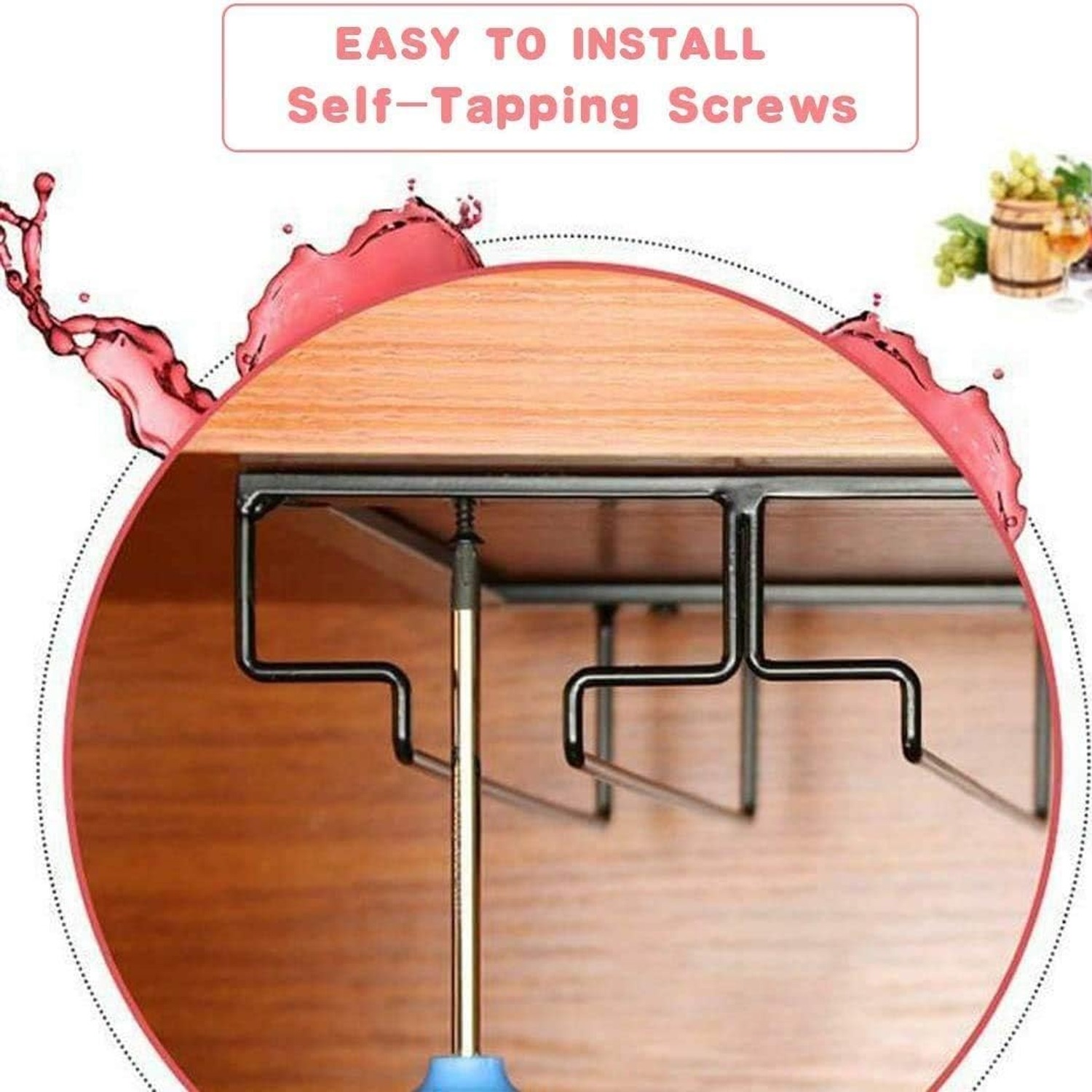
Assembly is required and the mounting hardware is included. Allow a few minutes rather than an afternoon.
Hold the rail in position and mark your screw points with a pencil. Take your time getting it level, since a rail that slopes even slightly will let glasses drift toward the low end over time. In hardwood, drill small pilot holes first. In softer board, you can usually drive the screws straight in.
Drive the screws until the rail sits flush and firm, then stop. Overtightening into board strips the hole and leaves you with a rail that moves. Once it is up, give it a gentle downward tug before you hang anything. If it feels solid, load it.
When you hang the glasses, leave a small gap between each one. Packed shoulder to shoulder, glasses tap together whenever the cabinet door swings, and that is the kind of small noise that becomes irritating fast. A little breathing room also makes each glass easier to lift out with one hand.
Looking after it
Care is undemanding. Wipe the rails with a soft damp cloth and dry them off. Steer clear of abrasive pads, scouring powder, bleach and strong solvents, all of which can dull or lift a powder coated finish. A wipe every few weeks is plenty for most kitchens, though a rack over a cooktop will need it more often because of airborne cooking grease.
Dry your glasses before you hang them, or at least let them drain properly. Hanging a wet glass now and then does no harm, but water sitting against metal day after day works against any coating.
Once or twice a year, take the glasses off and check the screws. Cabinets get used, doors get closed hard, and fixings can loosen a fraction over time. Thirty seconds with a screwdriver is all it takes.
Getting the most from a two pack
Having two rails opens up a few arrangements worth thinking about.
Side by side under one long cabinet gives you a single continuous row and the most storage in one place. Mounted under two separate cabinets, you can split glasses by type, with reds in one spot and flutes in the other. Or split them by room entirely, with one in the kitchen and one over a bar cart in the living area.
There is also the simple option of keeping one and giving the other away. A hanging stemware rack is a genuinely useful housewarming gift, especially for someone who has just moved into a place with more glassware than cupboard space.
The short version
Wine glasses do not store well on shelves, and they do not survive long on counters. An under cabinet rack moves them into unused space, hangs them where dust cannot settle in the bowl, and keeps the rim clear of anything hard.
This pack gives you two powder coated gold rails, each 34.3 cm by 24.3 cm by 8.2 cm, each holding roughly six to nine glasses, with a stated capacity of 816 grams per rack and the mounting hardware in the box. Measure your cabinet depth and clearance, check the base will take a screw, mount it level, and leave a small gap between glasses.
Do that, and the whole thing takes a few minutes and gives your counter back.